Swapping bread flour for all-purpose? Protein changes more than just chew
Thursday 10 September 2026 17:00 - Juliette Hess
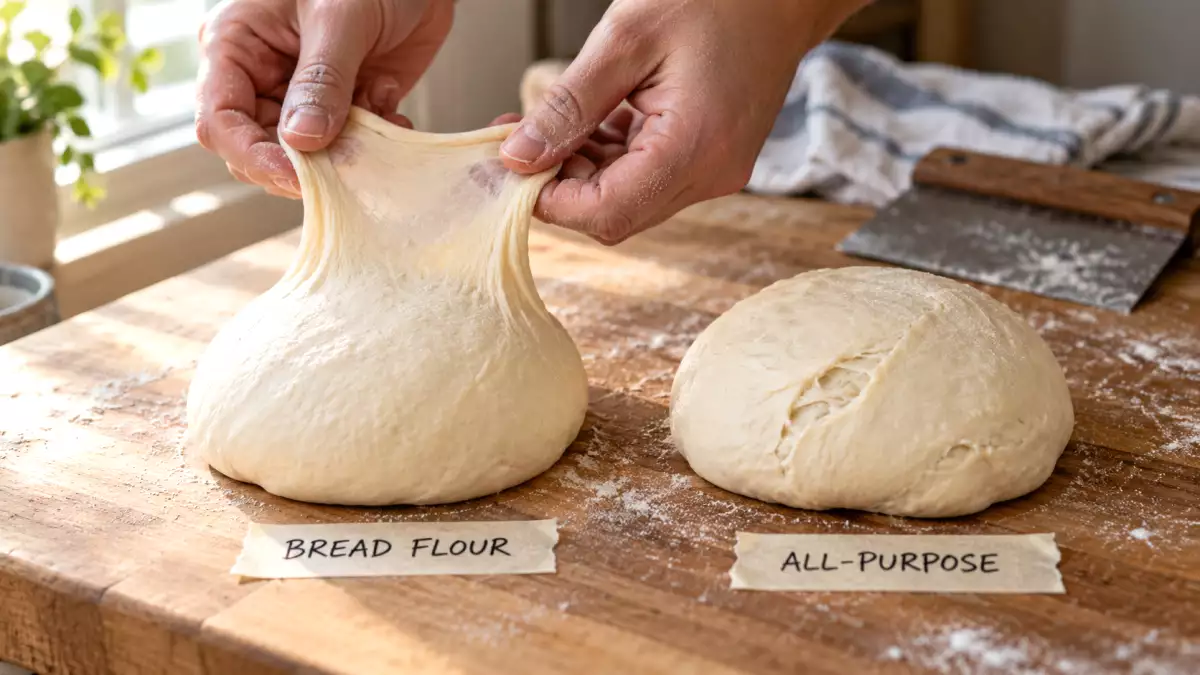
Bread flour generally has a higher protein content than all-purpose flour, which means it can build a stronger gluten network when mixed with water and kneaded or stretched. That extra strength is useful for breads, bagels, pizza dough and other recipes that need structure. All-purpose flour is more flexible: it can work in many recipes, but it usually creates a softer, less elastic dough.
So can you swap them? Often, yes; but the result may change. Bread flour may make a recipe stronger, chewier and more absorbent. All-purpose flour may make it softer, more tender and sometimes a little less tall or less elastic. The best swap depends on what you are baking and whether structure or tenderness matters more.
Why protein is the real difference
The main difference between bread flour and all-purpose flour is usually protein content. Higher-protein flour can form a stronger gluten network when it is hydrated and worked.
That gluten network matters because it traps gas, gives dough elasticity and helps baked goods hold their shape. In bread, that can mean better structure and a chewier crumb. In tender bakes, it can make the result feel firmer than expected.
That is why the swap is not only about flavour. It changes the behaviour of the dough.
That gluten network matters because it traps gas, gives dough elasticity and helps baked goods hold their shape. In bread, that can mean better structure and a chewier crumb. In tender bakes, it can make the result feel firmer than expected.
That is why the swap is not only about flavour. It changes the behaviour of the dough.
What happens if you use bread flour instead of all-purpose?
Bread flour can make dough feel stronger, tighter and more elastic. It may also absorb more liquid, so a dough that looked balanced with all-purpose flour can feel slightly drier or firmer with bread flour.
In breads, pizza dough, rolls and bagels, that can be useful. More strength can support a better rise and a chewier bite.
In biscuits, pancakes, cakes, muffins or delicate pastries, bread flour can make the texture tougher or less tender, especially if the batter is mixed too much.
In breads, pizza dough, rolls and bagels, that can be useful. More strength can support a better rise and a chewier bite.
In biscuits, pancakes, cakes, muffins or delicate pastries, bread flour can make the texture tougher or less tender, especially if the batter is mixed too much.
What happens if you use all-purpose instead of bread flour?
All-purpose flour can work in many bread recipes, especially simple loaves and everyday rolls. The dough may feel softer, less elastic and easier to tear, and the final crumb may be less chewy.
If the original recipe expects bread flour, all-purpose flour may produce a loaf that spreads more, rises a little less or has a softer structure.
This does not mean the bake will fail. It means the result may be more tender and less sturdy.
If the original recipe expects bread flour, all-purpose flour may produce a loaf that spreads more, rises a little less or has a softer structure.
This does not mean the bake will fail. It means the result may be more tender and less sturdy.
Hydration is the detail people forget
Protein affects how flour handles water. Higher-protein bread flour often takes up more liquid, which means the same recipe can feel different even if every measurement is unchanged.
If bread flour makes the dough too stiff, add a small amount of water gradually rather than correcting all at once. If all-purpose flour makes the dough too loose, give it time to rest before adding extra flour, because flour continues to hydrate as it sits.
A good swap is not only a flour swap. It is a texture check.
If bread flour makes the dough too stiff, add a small amount of water gradually rather than correcting all at once. If all-purpose flour makes the dough too loose, give it time to rest before adding extra flour, because flour continues to hydrate as it sits.
A good swap is not only a flour swap. It is a texture check.
When the swap usually works well
The swap is most forgiving in recipes where texture has some flexibility: simple sandwich bread, dinner rolls, pizza dough, flatbreads and rustic loaves.
Bread flour will push those recipes toward more chew and structure. All-purpose flour will push them toward softness and a more tender crumb.
If you are baking for everyday eating rather than a very specific bakery-style result, the swap is often acceptable.
Bread flour will push those recipes toward more chew and structure. All-purpose flour will push them toward softness and a more tender crumb.
If you are baking for everyday eating rather than a very specific bakery-style result, the swap is often acceptable.
When the swap can cause problems
The swap is riskier when the recipe depends on tenderness or delicacy. Cakes, muffins, pancakes, biscuits, scones and pie crusts are usually better with all-purpose or lower-protein flour.
Using bread flour in those recipes can make the texture tougher, especially if the batter or dough is overmixed.
On the other side, using all-purpose flour in very chewy breads, bagels or high-hydration doughs may make the dough harder to handle and the final structure weaker.
Using bread flour in those recipes can make the texture tougher, especially if the batter or dough is overmixed.
On the other side, using all-purpose flour in very chewy breads, bagels or high-hydration doughs may make the dough harder to handle and the final structure weaker.
How to adjust when you swap
If you replace all-purpose flour with bread flour, expect more strength and possibly more water absorption. Mix gently in tender recipes and watch for dough that feels too stiff.
If you replace bread flour with all-purpose flour, expect a softer dough. Avoid adding too much extra flour immediately; instead, rest the dough, use gentle folds and shape with a little patience.
The best adjustment is to follow the dough, not just the measuring cup.
If you replace bread flour with all-purpose flour, expect a softer dough. Avoid adding too much extra flour immediately; instead, rest the dough, use gentle folds and shape with a little patience.
The best adjustment is to follow the dough, not just the measuring cup.
The takeaway
You can often swap bread flour and all-purpose flour, but the result will not always be identical. The key difference is protein, and protein changes more than chew.
It affects gluten strength, water absorption, rise, dough handling and tenderness. Bread flour is best when you want structure and chew. All-purpose flour is best when you want flexibility and a softer result.
For bread and pizza, the swap is usually manageable. For delicate bakes, choose carefully; because the flour can change the whole texture.
It affects gluten strength, water absorption, rise, dough handling and tenderness. Bread flour is best when you want structure and chew. All-purpose flour is best when you want flexibility and a softer result.
For bread and pizza, the swap is usually manageable. For delicate bakes, choose carefully; because the flour can change the whole texture.
 Juliette Hess
I have been creating culinary content for Petitchef since 2017.
I love travelling and discovering new dishes, trying out new food trends and exploring new restaurants.
I’m a huge fan of pasta and noodles in all their forms ❤ from udon noodles to tagliatelle, I love cooking them and even making them from scratch!
I’m currently preparing, filming and photographing your next recipe, and I hope you’ll enjoy it!
I love travelling and discovering new dishes, trying out new food trends and exploring new restaurants.
I’m a huge fan of pasta and noodles in all their forms ❤ from udon noodles to tagliatelle, I love cooking them and even making them from scratch!
I’m currently preparing, filming and photographing your next recipe, and I hope you’ll enjoy it!
Comments