Traditional Cod Pil-Pil: Step-by-step methods to thicken the emulsion sauce gently without curdling
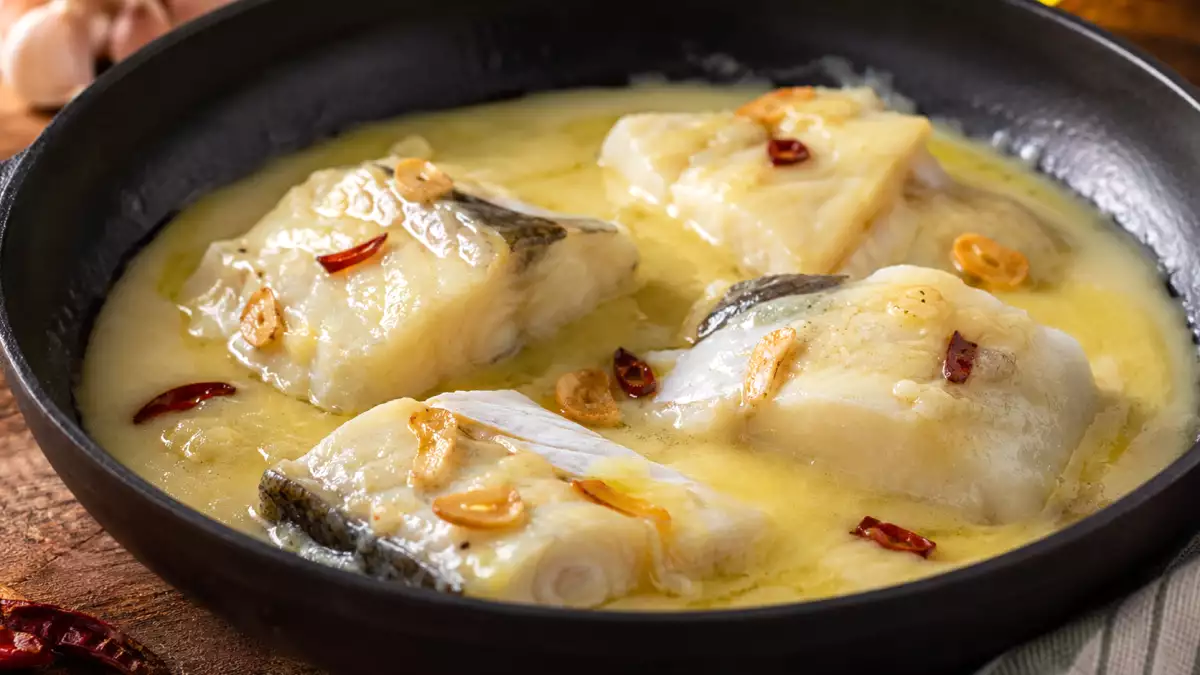
There’s something surprising about cod pil-pil: using cod, olive oil, garlic, and chili peppers, you can create a creamy, glossy sauce without adding cream, flour, or eggs.
The secret lies, to a large extent, in the fish itself. When the cod is cooked gently, the skin and the areas around it release water and substances from its tissues. Among these is gelatin formed from collagen. These juices are essential for thickening the pil-pil sauce later on.
In the pan, we have two elements that, at first, tend to separate: the oil and the water contained in the fish juices. By stirring them properly, the oil disperses into tiny droplets and eventually forms a sauce that binds with the watery part.
That’s why making a good pil-pil depends less on having a special skill than on controlling the heat, making the most of the cod juices, and adding the oil gradually.
What Is Pil-Pil sauce, really?
Pil-pil is an emulsion. This culinary term describes a mixture of two liquids that normally separate, such as water and oil.
A vinaigrette makes this easy to see. Even if we shake it and it appears homogeneous for a few moments, after a while the oil separates again. When we shake it, what we’re doing is breaking the oil down into very small droplets and dispersing them throughout the liquid.
Something similar happens in pil-pil. Instead of vinegar, we use the watery juices released by the cod. The gelatin and other components in these juices help thicken the sauce, while the stirring helps the oil disperse and form the emulsion.
The cod’s skin is particularly important because it contains abundant collagen. During cooking, some of that collagen contributes to the gelatinous juices we’ll use to thicken the sauce.
When properly bound, pil-pil is glossy and creamy, with enough body to coat the fish. The amount of oil it can hold may vary depending on the cod and the amount of juices it has released. That’s why it doesn’t make much sense to insist on incorporating every last drop of oil if the sauce already has a good texture.
Temperature is key to making pil-pil turn out right
One of the most common problems when preparing cod al pil-pil is cooking it over too high a heat.
Excessive heat can dry out the cod pil-pil and make it difficult for the sauce to thicken. It’s not that the gelatin stops working at a specific temperature, the problem arises when the oil is too hot.
Cook the cod over low heat, without frying it vigorously, so that it remains juicy and releases its juices. Then, remove it and let the oil cool slightly before thickening the sauce. If it sizzles loudly, it’s too hot.
Don't throw away the liquid that comes out of the cod
When you remove the cod, it’s normal to find a whitish or slightly cloudy liquid at the bottom of the pot. Don’t throw it away: these are the juices the fish released during cooking, and they’ll serve as the base for thickening the pil-pil sauce.
As the casserole cools, the oil will separate from these juices. Take this opportunity to set aside a good portion of the oil, then begin to thicken the sauce using the liquid from the cod and a little oil. When it starts to thicken, gradually add the rest of the oil until you achieve the desired texture.
How to thicken pil-pil by swirling the pot
The classic way to thicken pil-pil sauce takes advantage of the movement of the pot itself.
Once cooked, remove the cod. This prevents it from continuing to absorb unnecessary heat and also keeps the fillets from breaking apart while you’re preparing the sauce.
Leave the fish juices and a small amount of warm oil in the pan. Then begin to swirl the pan in a circular motion, steady and gentle.
At first, you’ll see the oil and liquid quite separate. As you continue moving the pan, a lighter, slightly thicker sauce will begin to form. That’s the sign to keep going.
Then add a little more of the reserved oil and keep stirring. Once it’s incorporated, add another small amount.
Adding the oil little by little is one of the most important steps in this recipe. An emulsion that has already begun to form accepts new amounts of fat more readily. If you pour in too much oil at once before that base has formed, the process becomes much more difficult.
There’s no exact time frame for achieving this. The amount of sauce, the pan used, the temperature, and the cod’s own juices all play a role. The best approach is to pay attention to how the texture changes.
How to make Pil-Pil using a strainer
The strainer method has become popular because it allows you to thicken the pil-pil in a convenient and fairly controllable way.
The ingredients remain the same. What changes is the way you create the motion needed to promote emulsification.
Remove the cod and set aside most of the oil. Leave a small amount of the fish juices in the pot and pass a fine-mesh strainer over them in circular motions.
A whitish cream will soon begin to form. At that point, gradually add the warm oil while continuing to move the strainer.
The fine mesh helps disperse the oil into small droplets and speeds up the thickening process. This method can be especially handy when working with a heavy saucepan or when you haven’t yet mastered the traditional technique.
Once the desired texture is achieved, return the cod to the sauce and gently heat the mixture, avoiding a vigorous boil.
What to do if the Pil-Pil curdles
If the pil-pil separates, there’s no need to start over: it’s simply because the oil and the cod juices have separated. First, remove the fish and let the mixture cool slightly.
To restore the sauce, take a little of the gelatinous liquid and stir it until it begins to emulsify. If there’s very little liquid left, you can add a small amount of warm water. When it starts to thicken, slowly incorporate the separated oil, stirring the pot or using a strainer.
You don’t need to add all the oil: stop when the pil-pil is creamy and has a nice body. The leftover oil can be used to cook potatoes, vegetables, or rice.
Do you have to dry the cod before making pil-pil?
It’s a good idea to pat the surface of the cod dry with paper towels to remove excess moisture before placing it in the oil. This helps reduce splattering and allows for better control over the cooking process.
This should not be confused with trying to remove the fish’s natural moisture. During cooking, we actually want the cod to release its juices, since we’ll use them later to make the sauce.
If you’re working with salted cod, there’s another step that’s even more important: it must be properly desalted. The salt content depends on the thickness of the pieces and the desalting process, so it’s worth checking it before cooking.
The secrets to making great cod Pil-Pil at home
To ensure the pil-pil thickens easily, cook the cod over low heat and reserve all the liquid it releases. Once done, remove the fish and let the oil cool slightly before starting on the sauce.
Start with the cod juices and a small amount of oil. When you see the mixture begin to thicken, continue adding the oil in small amounts while stirring constantly.
If the oil sizzles loudly, lower the heat. If the sauce has already thickened and coats the cod well, there’s no need to keep adding oil. And if the pil-pil separates, let it cool slightly and then re-emulsify it little by little.
The secret to a good pil-pil lies in the technique
Traditional cod pil-pil is prepared with very few ingredients, so the technique and the quality of the ingredients play a huge role in the final result. When the sauce is well-blended, it should coat the fish without being heavy, while the garlic, chili pepper, and oil complement the flavor of the cod without overpowering it.
Understanding what happens in the pot makes the recipe much easier. There are no secret tricks: it’s all about the cod’s natural juices, oil, a moderate heat, and the stirring needed to blend them into a creamy sauce. Once you understand that, making a pil-pil sauce at home becomes much less of a mystery.
 Patricia González
Comments