Want to cut sugar from a cake? Here's the most you should use for your cakes and adjust recipes
Wednesday 26 August 2026 10:00 - Leandra Masha
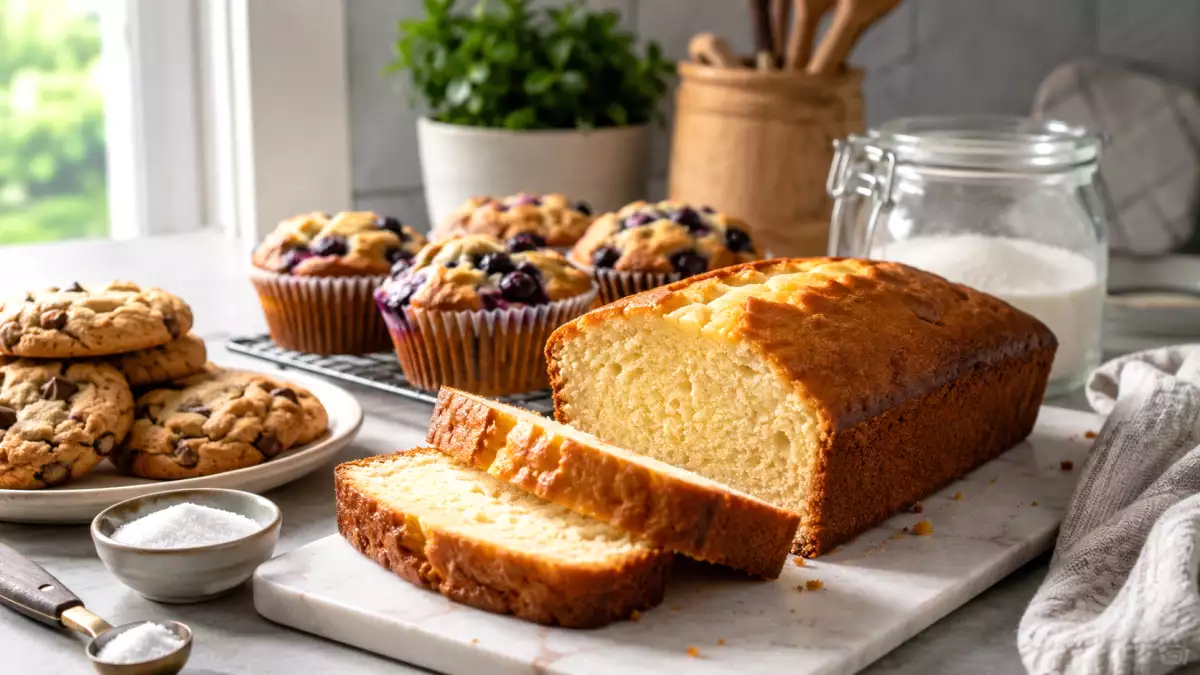
In reality, sugar isn’t just there to add sweetness. In baking, it also affects moistness, browning, texture, shelf life, and even how cookies spread in the oven. If you cut back too much at once, the result can change quickly: a drier cake, denser cookies, a cake that doesn’t rise as much, a surface that’s too pale… In short, the dessert is still edible, but it doesn’t necessarily have the texture you’d expect.
The good news is that you can still cut back on sugar in many homemade recipes. Just take it step by step and don’t apply the same rule to a muffin, a cookie, a meringue, or caramel. Here are some simple guidelines to keep in mind before tweaking your favorite recipes.
By how much can you reduce the sugar in a traditional cake?
For simple cakes, pound cakes, muffins, breakfast cakes, or lighter versions of pound cake, a good starting point is to reduce the sugar by about 10%.
In practical terms, if a recipe calls for 200 g of sugar, you can start by reducing it to 180 g. This reduction is generally subtle enough not to significantly affect the texture. The cake may be slightly less sweet, but it often retains its moistness and structure.
If the recipe already contains naturally sweet ingredients, such as very ripe bananas, apples, pears, dates, raisins, or milk chocolate, you can sometimes reduce the sugar a bit further—by about 15 to 20%. These ingredients add flavor, moisture, and a sweet sensation that partially compensate for the reduction.
On the other hand, cutting the sugar in half right off the bat really changes the recipe. The cake will bake, yes, but it may turn out denser, drier, less golden, and have a shorter shelf life.
In practical terms, if a recipe calls for 200 g of sugar, you can start by reducing it to 180 g. This reduction is generally subtle enough not to significantly affect the texture. The cake may be slightly less sweet, but it often retains its moistness and structure.
If the recipe already contains naturally sweet ingredients, such as very ripe bananas, apples, pears, dates, raisins, or milk chocolate, you can sometimes reduce the sugar a bit further—by about 15 to 20%. These ingredients add flavor, moisture, and a sweet sensation that partially compensate for the reduction.
On the other hand, cutting the sugar in half right off the bat really changes the recipe. The cake will bake, yes, but it may turn out denser, drier, less golden, and have a shorter shelf life.
Why does sugar affect texture and cooking?
In baking, sugar serves several purposes. It retains some of the moisture in the batter, which helps the cake stay moist. When worked into the batter with butter, it also helps incorporate a little air, resulting in a lighter texture.
During baking, it helps the cake brown and form a nice crust. That’s why a cake with less sugar may remain lighter in color, even when it’s fully baked on the inside. The pitfall would be to leave it in the oven longer just to achieve a more golden color—this risks making it dry.
Reducing the sugar too much can therefore cause several changes: a denser batter, a less golden surface, less rise, a shorter shelf life, and a texture that crumbles more easily.
During baking, it helps the cake brown and form a nice crust. That’s why a cake with less sugar may remain lighter in color, even when it’s fully baked on the inside. The pitfall would be to leave it in the oven longer just to achieve a more golden color—this risks making it dry.
Reducing the sugar too much can therefore cause several changes: a denser batter, a less golden surface, less rise, a shorter shelf life, and a texture that crumbles more easily.
The Easy-to-Remember Chart
For everyday cakes, start by reducing the sugar by about 10%. You can try reducing it by 15 to 20% if the recipe includes ripe fruit or ingredients that are already sweet.
For cookies, shortbread, and biscuits, stick to around 10 to 15%. Sugar greatly affects their shape, crispness, and how they spread during baking.
For more technical recipes, such as meringues, macarons, caramel, certain icings, or jams, it’s best to avoid making random changes. In these recipes, sugar plays a structural role. Changing the amount can prevent the recipe from turning out correctly.
For cookies, shortbread, and biscuits, stick to around 10 to 15%. Sugar greatly affects their shape, crispness, and how they spread during baking.
For more technical recipes, such as meringues, macarons, caramel, certain icings, or jams, it’s best to avoid making random changes. In these recipes, sugar plays a structural role. Changing the amount can prevent the recipe from turning out correctly.
In cookies, sugar affects the crispness
Cookies are more delicate than you might think. In cookie dough—whether for cookies, shortbread, or butter cookies—sugar helps the dough spread during baking and contributes to its crispness.
If you reduce the sugar too much, the cookies may remain thicker, become denser, and lose their crumbly texture. A reduction of 10 to 15% is therefore a more reasonable place to start.
If the recipe contains chocolate chips, a filling, a cream, or a very sweet ingredient, the reduction will be less noticeable in the taste. But be careful: don’t automatically add milk or another liquid just because the dough seems drier. This can make it sticky and completely alter the result.
If you reduce the sugar too much, the cookies may remain thicker, become denser, and lose their crumbly texture. A reduction of 10 to 15% is therefore a more reasonable place to start.
If the recipe contains chocolate chips, a filling, a cream, or a very sweet ingredient, the reduction will be less noticeable in the taste. But be careful: don’t automatically add milk or another liquid just because the dough seems drier. This can make it sticky and completely alter the result.
When can we reduce the sugar content by as much as 20 or 25 percent?
A larger reduction—around 20 to 25 percent—works best in desserts that already contain a lot of sweet or moist ingredients.
This is often the case with banana bread, apple cake, pear cake, milk chocolate muffins, or desserts containing dates, raisins, or a sweet filling.
In these cases, you need to consider the dessert as a whole. A cake base intended to be filled, frosted, or served with cream can be less sweet. On the other hand, a very simple cake, served plain, may taste bland or too dense if the sweetness is reduced too much.
This is often the case with banana bread, apple cake, pear cake, milk chocolate muffins, or desserts containing dates, raisins, or a sweet filling.
In these cases, you need to consider the dessert as a whole. A cake base intended to be filled, frosted, or served with cream can be less sweet. On the other hand, a very simple cake, served plain, may taste bland or too dense if the sweetness is reduced too much.
Recipes Where It's Best Not to Improvise
Some recipes rely on a precise balance. In meringues, sugar helps stabilize the egg whites and achieve a dry texture. In macarons, it influences the structure. In caramel, it is the main ingredient. In jams, it also affects shelf life and texture.
For this type of recipe, it’s best to follow the specified proportions or choose a tried-and-true recipe that uses less sugar. Changing the quantities at random can result in a soft, unstable, overly runny, or irreparable final product.
For this type of recipe, it’s best to follow the specified proportions or choose a tried-and-true recipe that uses less sugar. Changing the quantities at random can result in a soft, unstable, overly runny, or irreparable final product.
How can you make a dessert less sweet without changing the batter?
It’s not always necessary to change the cake base. Sometimes, the overly sweet taste comes mainly from what you add after baking: frosting, powdered sugar, glaze, milk chocolate, or very sweet cream.
To balance the sweetness more easily, you can reduce the amount of powdered sugar on top, replace milk chocolate with dark chocolate, or add unsweetened cocoa powder, coffee, plain yogurt, lemon zest, or a small pinch of salt. These ingredients don’t remove the sugar from the recipe, but they make the sweetness less overpowering.
Also be careful with substitutions: honey, maple syrup, fruit compote, or blended fruit do not behave like granulated sugar. They add liquid and can alter the moisture content of the batter. Therefore, they cannot always be substituted in equal amounts.
To balance the sweetness more easily, you can reduce the amount of powdered sugar on top, replace milk chocolate with dark chocolate, or add unsweetened cocoa powder, coffee, plain yogurt, lemon zest, or a small pinch of salt. These ingredients don’t remove the sugar from the recipe, but they make the sweetness less overpowering.
Also be careful with substitutions: honey, maple syrup, fruit compote, or blended fruit do not behave like granulated sugar. They add liquid and can alter the moisture content of the batter. Therefore, they cannot always be substituted in equal amounts.
Mistakes to Avoid When Cutting Back on Sugar
The first mistake is to drastically reduce the sugar in a recipe you’ve never made before. If you don’t know the original texture, it will be hard to tell what’s changed.
It’s best to proceed in stages: weigh the ingredients, note the new amounts used, monitor the baking process, and be sure to taste the dessert the next day as well. A successful reduction isn’t judged solely by how it looks right out of the oven— moistness and shelf life matter too.
Also, avoid extending the baking time just because the cake isn’t as golden. With less sugar, it may remain lighter in color. If the knife comes out clean, there’s no need to keep baking.
It’s best to proceed in stages: weigh the ingredients, note the new amounts used, monitor the baking process, and be sure to taste the dessert the next day as well. A successful reduction isn’t judged solely by how it looks right out of the oven— moistness and shelf life matter too.
Also, avoid extending the baking time just because the cake isn’t as golden. With less sugar, it may remain lighter in color. If the knife comes out clean, there’s no need to keep baking.
The easy-to-remember rule
To start, reduce the sugar by about 10% in simple cakes. You can increase this to 15 or 20% in recipes that include ripe fruit or ingredients that are already sweet. For cookies, stick to around 10 to 15%. For meringues, macarons, caramel, technical frostings, and jams, avoid making random changes.
Reducing sugar is possible, but it’s best to do so gradually. The palate adapts very well to less-sweet desserts, and a gradual reduction allows you to preserve what you truly love about a cake: a beautiful texture, perfect baking, and a truly indulgent treat.
Reducing sugar is possible, but it’s best to do so gradually. The palate adapts very well to less-sweet desserts, and a gradual reduction allows you to preserve what you truly love about a cake: a beautiful texture, perfect baking, and a truly indulgent treat.
 Leandra Masha
My name is Leandra Masha, I am Italian of Albanian origin and I am currently an intern at Petit Chef. Cooking is my greatest passion: I love watching recipes, discovering new flavors and drawing inspiration from cuisines from all over the world. I enjoy learning new techniques and experimenting with something different every time.
Comments