What Erling Haaland actually eats in a 6,000‑calorie day: the full menu behind the powerhouse
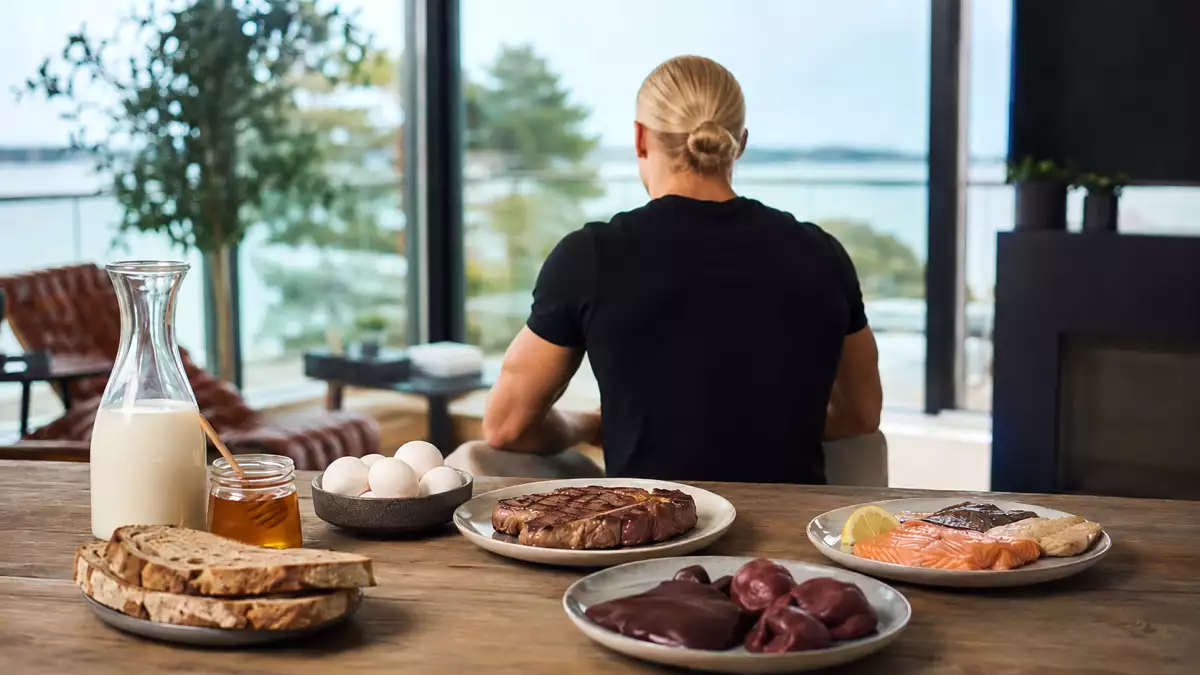
Yes, you read that right: 6,000 calories. Not the typical “plate of pasta and chicken breast,” but a dietary routine designed to support training, games, muscle recovery, and an extraordinary physique.
According to several recent accounts, his diet revolves around high-energy, nutrient-rich foods, such as eggs, red meat, milk, honey, sourdough bread, and even organ meats like liver and heart.
How many calories does Haaland eat per day?
Haaland’s diet is often described as a plan of about 6,000 calories a day—a huge amount compared to the average person’s needs. But we need to make one thing clear right away: Haaland doesn’t eat that much because “he likes to overdo it”; at least, not only for that reason. His body burns a tremendous amount of energy through training, games, the gym, recovery, and the demands of life as a professional soccer player.
For a top-level athlete, calories aren’t a number to fear... they’re fuel. The point isn’t just to eat a lot, but to eat enough so as not to run out of fuel.
What does Haaland eat in a day?
Haaland’s diet has become famous because it doesn’t seem like the glossy, ultra-minimalist diet often associated with athletes. No tiny, magazine-cover-worthy portions: here, we’re talking about simple, nutrient-dense, and very filling foods.
Among the foods associated with his diet are
- fresh eggs;
- sourdough bread;
- milk, often referred to as raw milk;
- honey;
- high-quality red meat;
- cuts such as steak and ribeye;
- offal, including liver and heart;
- fish and foods rich in healthy fats;
- targeted supplements, incorporated into a controlled routine.
What’s interesting is that Haaland’s diet isn’t focused solely on protein. Of course, meat plays an important role, but the overall picture also includes fats, carbohydrates, micronutrients, and a strong emphasis on recovery.
Why does Haaland eat liver and heart?
The detail that has sparked the most curiosity is precisely this: liver and heart. For many Italians, it’s something like “your grandma chasing you around with a plate”; for others, it’s the stuff of Nordic documentaries. In reality, offal is very nutrient-dense.
Liver, for example, contains iron, vitamin A, and B vitamins. Heart is a unique source of protein, often appreciated by those seeking highly nutritious foods. That said, it doesn’t mean everyone should start eating offal for lunch tomorrow. Haaland follows an athlete’s regimen, which is likely monitored and tailored to his daily training.
Does Haaland's diet help you lose weight?
No, and it’s important to be clear about this. Haaland’s 6,000-calorie diet isn’t designed for weight loss. It’s designed to support a professional soccer player with an extremely high energy expenditure. For a sedentary person, or even someone who’s just moderately active; 6,000 calories a day would easily be too much.
This diet is meant to maintain strength, muscle mass, energy, and recovery. It’s not a shortcut to getting in shape, and it’s not a one-size-fits-all model. The fascination lies precisely in the fact that it highlights just how different an athlete’s body is from that of someone living a normal life.
The real secret isn't just the food
The most underrated aspect of Haaland’s diet is that it doesn’t stand alone. Nutrition is just one piece of the puzzle. Alongside food are sleep, stretching, physical therapy, the sauna, cold baths, exposure to morning light, and a focus on the quality of recovery.
In short, Haaland doesn’t just eat 6,000 calories and then plop down on the couch with the remote control. Those calories feed into a well-oiled machine: training, rest, muscles, breathing, routine, and discipline.
Can you follow Haaland's diet?
Better not, at least not to the letter. Haaland’s diet is tailored to Haaland: a tall, powerful, professional striker who is supported by trainers and accustomed to enormous physical demands. Copying it without expending the same amount of energy would make little sense.
What you can learn, however, is simpler:
- choose real, minimally processed foods;
- prioritize protein;
- don’t forget about carbohydrates and fats;
- prioritize sleep;
- focus on recovery, not just training;
- avoid extreme fad diets without professional advice.
And be careful with raw milk: it’s often mentioned in Haaland’s diet, but it’s not something to be taken lightly, as it can pose health and hygiene risks. It’s always best to consult an expert, especially when it comes to specific dietary habits.
Why does Haaland's diet spark so much curiosity?
Because she looks like she stepped out of a Viking saga with a soccer ball at her feet: muscle, strength, discipline, and 6,000 calories a day. But beneath that spectacular exterior lies a much more concrete message: an athlete doesn’t build their performance with a single trick, but through many choices repeated every day.
Haaland’s diet is striking because it’s extreme, of course. But it also conveys a simple truth: to play at that level, the body must be treated as a tool of the trade. And in his case, more than a tool, he really seems like a Norwegian engine running at full speed.
 Leandra Masha
Comments