What to check: Nearly 1 in 3 dietary supplement ads on social media have issues to watch for
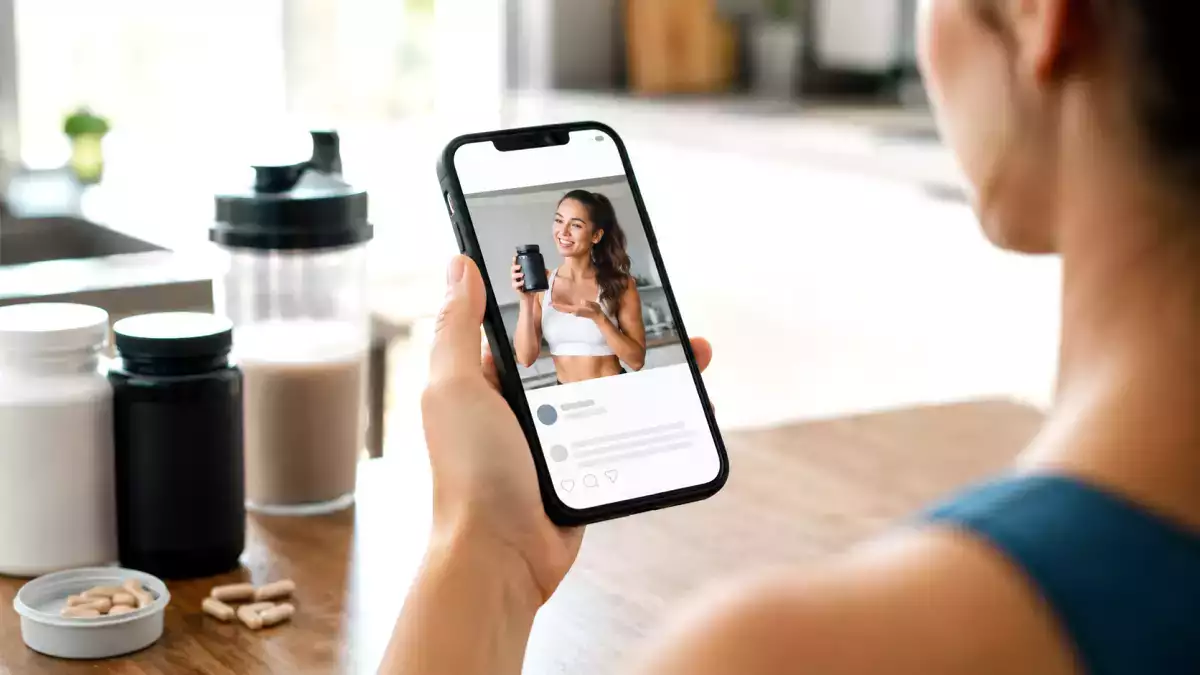
Just open Instagram or TikTok and you’ll come across “energy” powders, “stress” capsules, and products that promise to improve your sleep, skin, gut health, and fitness. The language is friendly, the video feels like personal advice, and the discount code arrives right on time. But this is precisely where information, personal experience, and advertising can become blurred.
Monitoring of influencer marketing for dietary supplements reveals an industry where the majority of content complies with the rules, while a significant portion raises concerns. Be careful, though: “problematic” does not automatically mean “illegal,” “dangerous,” or “fake.” The report distinguishes between clear violations, questionable content that warrants further investigation, and compliant advertising.
How was the monitoring of dietary supplements conducted?
The overall IAP-ALMED project monitored more than 400 influencers in the beauty and dietary supplement sectors on Instagram, TikTok, and YouTube during two distinct periods: March–April and June–July 2025. In total, approximately 220,000 posts were analyzed, of which over 13,000 were promotional.
The focus on dietary supplements is narrower: it covers 110 creators and is based on 49,368 posts. Using keywords and hashtags, the researchers selected 14,980 posts; they then excluded 11,684 because they were irrelevant and 1,408 because they were organic—that is, non-commercial in nature. The final reported subset thus consists of 1,888 promotional posts about dietary supplements.
Three categories, not one big mix
Each piece of content was classified into one of the three categories outlined in the report:
- Compliant: compliant advertising , with a recognizable commercial nature and messaging in line with the rules.
- Questionable: content that is questionable or partially compliant, for example because the advertising message is unclear or the health claim requires further verification.
- Violation: content classified by the analysis as clearly non-compliant.
The category “Violation” indicates a violation identified by researchers in relation to the Self-Regulatory Code, not necessarily an advertisement that has already been sanctioned by the Antitrust Authority or another regulatory body.
This distinction is crucial. Lumping together “Questionable” and “Violation” would make the headline more alarming but the data less accurate.
Nearly one in three ads has issues: what does that really mean?
The document indicates that 63% of the content is compliant, 16% is “Questionable,” and 21% constitutes a “Violation.” The chart also shows the absolute values: 1,019 compliant, 250 questionable, and 333 classified as violations.
However, there is a methodological clarification that should not be overlooked: these three numbers add up to 1,602, not 1,888, and the report’s text does not explain the difference. The statement “nearly one in three ads has issues” is derived from the ratio of the 583 problematic ads shown in the chart—333 violations plus 250 questionable ads—to the 1,888 ads reported as having been reviewed: approximately 31%.
The correct message is therefore this: nearly one in three advertisements falls into the “problematic” category, but only a portion of them has been classified as a clear violation. The 250 “Questionable” advertisements are not definitively established violations; they require further investigation regarding transparency or the validity of the claims made.
How can you tell if an influencer is promoting a product?
Promotional content must be immediately recognizable, not only after opening the description or examining the video with a magnifying glass.
The Guidelines Digital Chart IAP requires labels such as “ad,” “advertising,” “sponsored by,” or “adv” associated with the brand name. In posts, the label must appear as the first piece of information or within the first three hashtags. In videos, it must be included in the description and as an on-screen overlay in the opening scenes. In Stories, it must be clearly visible in all promotional content.
In the report, among the content classified as “Violation,” 60% primarily involves an issue with advertising transparency. Another 18% concerns unacceptable or unverifiable health claims, while 22% combines both issues.
When is an advertisement for a dietary supplement misleading?
A red flag goes up when a supplement is marketed as a universal quick fix: “solves,” “cures,” “prevents,” “burns fat,” or promises guaranteed and extremely rapid results.
Supplements are food products intended to complement the diet, not medications, and cannot claim to have therapeutic properties or the ability to prevent or cure diseases.
Among the non-compliant claims analyzed, the most common categories are vitamins and minerals, sleep and stress products, and fat burners or weight-loss products. These are sensitive areas because the line between permissible health claims and improper therapeutic promises can be very fine.
What should you check before buying a supplement online?
Before letting yourself be won over by the creator’s smile and the “just for today” pitch, it’s a good idea to check five simple things:
- look for clear and immediate advertising language;
- distinguish between a personal experience and scientific evidence;
- be wary of guaranteed results, miraculous timeframes, and therapeutic language;
- read the label, dosage, warnings, and company information;
- consult a doctor or pharmacist if you’re undergoing treatment, have a medical condition, are pregnant, or plan to use the product long-term.
Even the inclusion of a product in the National Registry of Dietary Supplements does not constitute explicit approval of its efficacy or compliance: the Ministry of Health specifies that the listing is based on a notification submitted under the operator’s responsibility.
Are the supplements advertised on social media safe?
You can’t answer with a simple yes or no just by looking at the post. Advertising compliance and product safety are two separate issues: a post may be correctly labeled as an ad but still make claims that need to be verified; conversely, a less-than-transparent ad does not, on its own, prove that the supplement is dangerous.
The real lesson from the report is very practical: there’s no need to demonize influencers and supplements, but rather to learn to recognize when they’re selling us something and what promises they’re making. Compliant advertising exists and is the norm. Precisely for this reason, demanding transparency isn’t nitpicking: it’s the simplest way to make informed choices; even before considering a discount code.
 Daniele Mainieri
Comments