Why do some chestnuts float? Soaking them before cooking isn't just some old-fashioned superstition
Thursday 15 October 2026 21:00 - Francesco Rosso
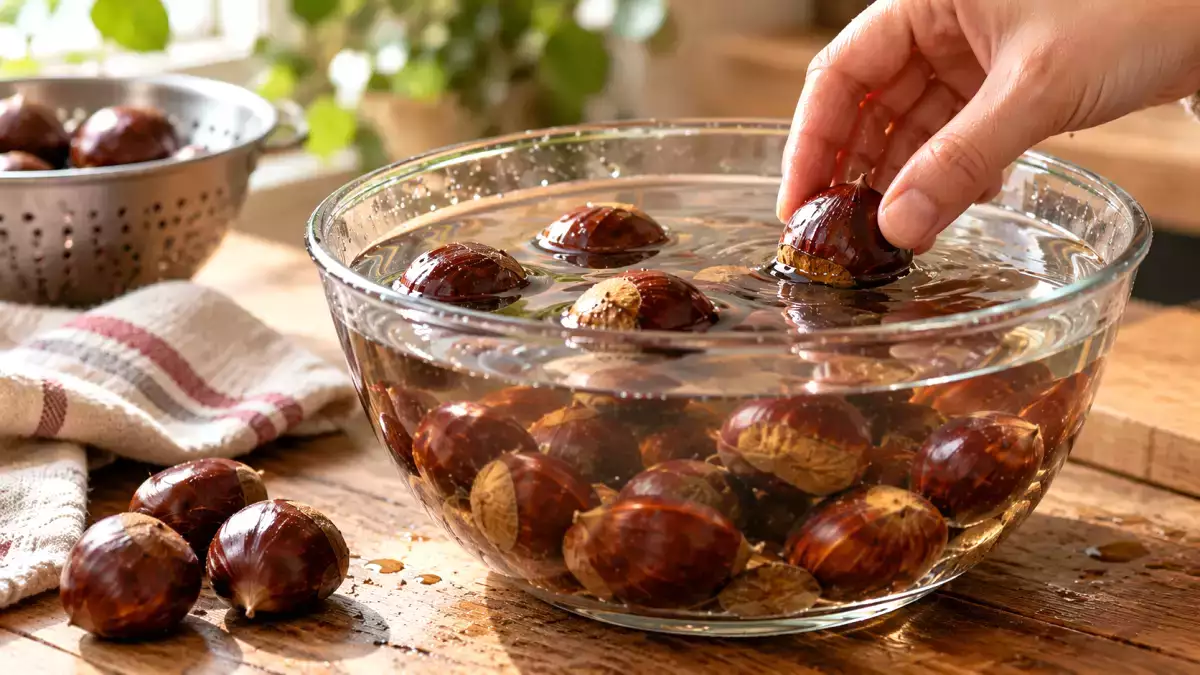
The question is always the same: why do some chestnuts float? It’s not autumn magic, but an indicator of their internal condition. Air pockets, dry flesh, holes left by insects, or damaged parts can make them lighter. The water test, however, isn’t foolproof: it should be used in conjunction with visual inspection, touch, and smell.
Is soaking chestnuts really necessary?
Yes, soaking chestnuts in water before cooking can be helpful, especially if you’ve harvested them yourself or bought them in bulk. Soaking won’t save a spoiled chestnut, but it does allow you to quickly sort them out.
The firmer, fresher chestnuts tend to stay at the bottom. Those that float to the surface right away may have air pockets, be dry, worm-eaten, or damaged. Soaking can also slightly soften the shell, making it easier to roast them in the oven, sauté them in a pan, or boil them in a pot.
Note: Whether a chestnut floats or sinks isn’t a sure thing. Some spoiled chestnuts may stay at the bottom, while a seemingly good one might float due to a small air bubble. This is an initial screening method, not the only check.
The firmer, fresher chestnuts tend to stay at the bottom. Those that float to the surface right away may have air pockets, be dry, worm-eaten, or damaged. Soaking can also slightly soften the shell, making it easier to roast them in the oven, sauté them in a pan, or boil them in a pot.
Note: Whether a chestnut floats or sinks isn’t a sure thing. Some spoiled chestnuts may stay at the bottom, while a seemingly good one might float due to a small air bubble. This is an initial screening method, not the only check.
Why do some chestnuts float?
A chestnut floats when it’s less dense than water. In culinary terms: it’s often not as full inside as it should be. It may have dried out too much, been hollowed out by a larva, or have an interior that’s already spoiled.
A fresh chestnut has firm, moist flesh. If it loses water, it shrinks and leaves room for air. And air, as we know, rises: that’s why the chestnut ends up acting like a little life preserver in the bowl.
Can you eat chestnuts that float?
It’s best not to take them lightly. If they float right away, have tiny holes, a shriveled shell, a strange smell, or signs of mold, they should be discarded. If one floats but looks perfect, you can crack it open to check the flesh; when in doubt, it’s best to throw it away.
A fresh chestnut has firm, moist flesh. If it loses water, it shrinks and leaves room for air. And air, as we know, rises: that’s why the chestnut ends up acting like a little life preserver in the bowl.
Can you eat chestnuts that float?
It’s best not to take them lightly. If they float right away, have tiny holes, a shriveled shell, a strange smell, or signs of mold, they should be discarded. If one floats but looks perfect, you can crack it open to check the flesh; when in doubt, it’s best to throw it away.
How long should you soak chestnuts?
For regular home cooking, you don’t need to set up a luxury spa. Generally, 30 minutes to 1 hour in cold water is enough to perform the float test and slightly soften the skin. If the chestnuts are very fresh, you can shorten the time; if they’re gathered in the woods or purchased in large quantities, take your time checking them.
The process of soaking in water, also known as “novena,” is a different matter: a traditional practice used to preserve chestnuts for longer. In that case, the soaking lasts several days, with water changes and thorough drying. This step isn’t necessary before roasting a batch of chestnuts.
Is it better to soak the chestnuts before or after scoring them?
For quality control, soak them whole, then dry them thoroughly and score them. If you score them first, water penetrates the flesh more easily and can slightly alter the texture.
The process of soaking in water, also known as “novena,” is a different matter: a traditional practice used to preserve chestnuts for longer. In that case, the soaking lasts several days, with water changes and thorough drying. This step isn’t necessary before roasting a batch of chestnuts.
Is it better to soak the chestnuts before or after scoring them?
For quality control, soak them whole, then dry them thoroughly and score them. If you score them first, water penetrates the flesh more easily and can slightly alter the texture.
How to tell if chestnuts are good before cooking them
Soaking them in water helps, but you still need to inspect them by hand. Before turning on the oven, frying pan, or pot, examine the chestnuts one by one: this is the best way to avoid bitter, dry, or infested chestnuts.
Here are the signs to look for:
How can you tell if chestnuts are good? Combine three tests: water, sight, and weight. A chestnut that sinks, is intact, heavy, and free of suspicious odors is a great choice.
Here are the signs to look for:
- Shiny, taut skin: this often indicates a fresher chestnut.
- Feels heavy in your hand: if it feels very light, it might be hollow.
- No small holes: tiny holes may indicate insects or larvae.
- Neutral smell: If you detect a sour, damp, or musty odor, discard it.
- Shell not shriveled: A very wrinkled shell indicates moisture loss.
How can you tell if chestnuts are good? Combine three tests: water, sight, and weight. A chestnut that sinks, is intact, heavy, and free of suspicious odors is a great choice.
Why do chestnuts pop in the oven or in a pan?
This is where the most important step comes in: scoring the chestnuts before cooking them. The cut isn’t just for decoration, nor is it merely to make peeling them easier. During cooking, the moisture inside turns into steam; if the steam has no way to escape, the chestnut may burst. And your oven won’t thank you for it.
Make an incision on the rounded or flat side, deep enough to cut through the shell and the thin skin, without splitting the chestnut in half. After soaking, dry them with a dish towel: chestnuts with wet surfaces cook less well, especially if you want the shell to open easily and the flesh to be soft but not overcooked.
Soaking helps with sorting; cutting helps ensure safe cooking. These are two different steps, both of which are useful.
Make an incision on the rounded or flat side, deep enough to cut through the shell and the thin skin, without splitting the chestnut in half. After soaking, dry them with a dish towel: chestnuts with wet surfaces cook less well, especially if you want the shell to open easily and the flesh to be soft but not overcooked.
Soaking helps with sorting; cutting helps ensure safe cooking. These are two different steps, both of which are useful.
Soaking chestnuts: mistakes to avoid
The first mistake is to assume that all the chestnuts at the bottom are automatically perfect. It doesn’t work that way: a visual inspection is still essential. The second mistake is to let them soak for too long for no reason, especially if they aren’t dried properly afterward. Excess moisture can cause unpleasant odors and shorten their shelf life.
Also, avoid cooking chestnuts that are moldy, have soft flesh, or have suspicious dark spots. Cutting off “just a tiny bit” isn’t a good idea when the chestnut shows clear signs of spoilage.
Should chestnuts be washed before cooking?
Yes, rinsing them helps remove dirt and impurities, especially if they’ve been harvested. Then soak them briefly, discard any that look questionable, dry them, score them, and cook them. It’s a small ritual, but one with a tangible benefit: chestnuts that are better inspected and more enjoyable to serve.
Also, avoid cooking chestnuts that are moldy, have soft flesh, or have suspicious dark spots. Cutting off “just a tiny bit” isn’t a good idea when the chestnut shows clear signs of spoilage.
Should chestnuts be washed before cooking?
Yes, rinsing them helps remove dirt and impurities, especially if they’ve been harvested. Then soak them briefly, discard any that look questionable, dry them, score them, and cook them. It’s a small ritual, but one with a tangible benefit: chestnuts that are better inspected and more enjoyable to serve.
So? Go ahead and take a bath, but use your best judgment.
Soaking chestnuts before cooking them isn’t always necessary, but it’s a sensible practice. It helps you identify the ones that float, discard any suspicious ones, and prepare them better for cooking.
The rule is simple: water to sort them, a slit to cook them, and common sense to avoid mistakes. If a chestnut floats and is punctured, dry, mushy, or has an off smell, throw it away. The best ones are plump, smell like the woods, and are ready to be roasted, boiled, or enjoyed as a snack while curled up on the couch under a blanket.
The rule is simple: water to sort them, a slit to cook them, and common sense to avoid mistakes. If a chestnut floats and is punctured, dry, mushy, or has an off smell, throw it away. The best ones are plump, smell like the woods, and are ready to be roasted, boiled, or enjoyed as a snack while curled up on the couch under a blanket.
 Francesco Rosso
An intern in search of new culinary horizons. A lover of wine and simple dishes, after several years as a journalist, I decided to set out to discover new ways of approaching cooking.
Comments