Why is there so much air in the potato chip bags? Are we being fooled?
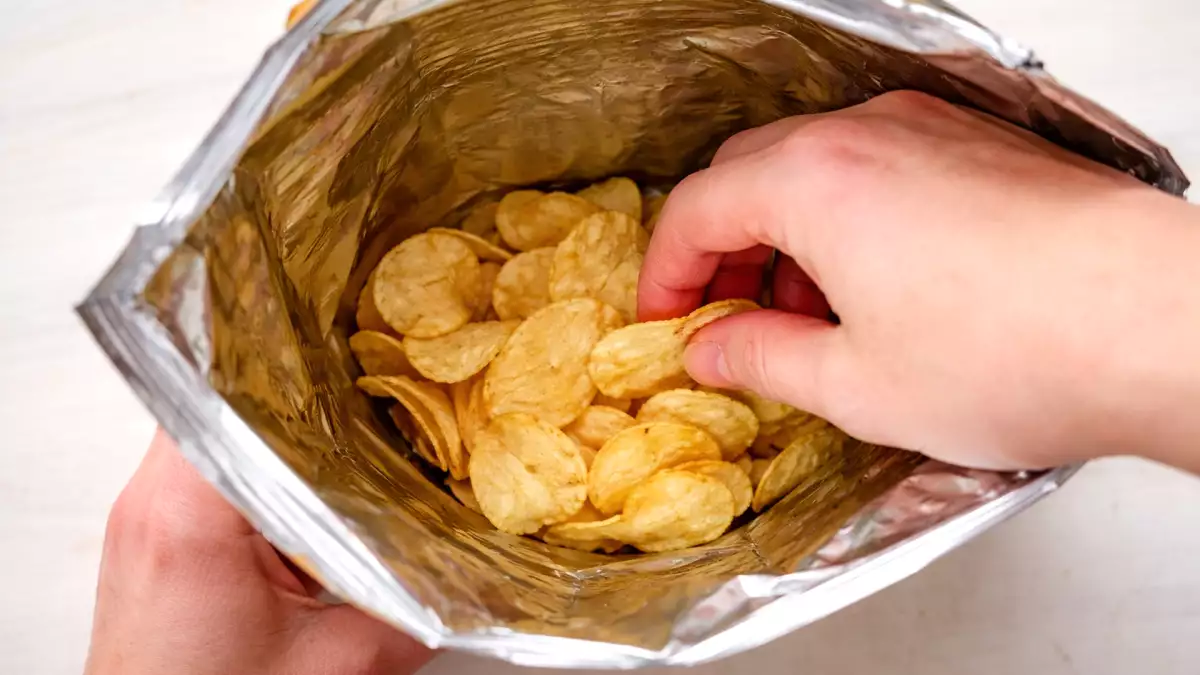
The scene is familiar: you open a bag of chips that looks generous, you stick your hand in... and suddenly, the feeling that you've paid for half a bag of.... NOTHING. That "emptiness" has a name in the packaging world: slack fill the space left between the capacity of the package and the actual volume of the product. And sometimes it's just what it sounds like: excess packaging. But in the case of potato chips, the story is often less conspiratorial and more physical, chemical and logistical.
The invisible enemy: oxygen (and humidity)
First, an important detail: that's not air, or it shouldn't be. In most crispy snacks, what inflates the bag is nitrogen, an inert gas that displaces oxygen. The reason is twofold: it protects the flavor and it protects the shape.
Potato chips are basically a perfect mix for spoilage: starch, fat and porous surface. When oxygen comes into play, fats oxidize and rancid flavors appear; when moisture enters, they lose crispiness. This is why modified atmosphere packaging is used: the oxygen inside is reduced and nitrogen is introduced to extend shelf life.
It's not just theory: there is specific research on how the headspace atmosphere (the gas inside the package) influences the oxidation of potato chips during storage.
Another reason: anti-crack "cushion".
In addition to preserving, the gas has a very mundane function: to prevent the package from arriving as dust. This "cushion" absorbs shocks during transport, storage and shelf life. To put it less poetically: without this volume of gas, many bags would be a bag of crumbs.
So much for the part that explains why there is "air" in the bag. But it doesn't answer the really vexing question: why does it look like so much?
So there is no deception?
It depends on what we call cheating.
1) What you buy, legally, is the weight (not the volume).
In most countries, the product is sold by net weight: the label declares how many grams are inside, even if the package is bulky. In the USA, for example, the Fair Packaging and Labeling Act requires net quantity declaration on many consumer products.
This does not eliminate visual deception, but it does explain why many brands defend themselves with the same argument: "we're telling you the weight".
2) Slack fill is illegal if it is "non-functional" (but proving it is another story).
In the U.S. there is an oft-cited rule: an opaque bag can be considered "deceptively full" if it contains non-functional slack fill. And the law defines slack fill as that difference between capacity and contents.
The key is "non-functional": if the empty space serves to protect the product, accommodate machinery, prevent breakage, etc., it can be considered functional. Potato chips, because of their fragility, tend to fit that argument quite well.
3) Still, there have been lawsuits (and that's where the "are they kidding us?" comes in).
In 2017, consumers sued Wise Foods alleging that some bags were mostly empty and misleading. The case was told as part of a wave of slack fill litigation: the anger was not about the nitrogen itself, but about the suspicion that more packaging was being used than necessary.
These lawsuits often revolve around a simple idea: a protective cushion is one thing; an illusion of size is another.
So how do I know if I am being sold "air"?
- Compare price per kilo (or per 100 g). This is the cleanest way to cut the visual trick, whether or not there is an intention to deceive.
- Don't trust the size of the bag: trust the grams.
- If a brand changes the packaging and keeps the design, check the weight: many consumer complaints are born there, in the silent change of quantity.
And a nuance that is often overlooked: even with the same weight, potatoes can occupy different volumes depending on the cut, the thickness and the number of breaks. Volume is deceptive because it is variable; weight, less so.
The boundary between conservation and marketing
The use of gas in potato chip bags allows the industry to solve three problems with a single gesture:
- Delaying rancidity by reducing oxygen.
- To prevent them from softening due to humidity.
- To ensure that they arrive whole (or, at least, recognizable as potatoes).
The awkward part is that this gesture also creates a questionable shopping experience: the package seems to promise more than what the hand finds.
Whether this "is deception" depends on the specific case. But there's an honest answer that usually works: they don't charge you for air if the weight is clear; they may be using air to sell a sense of size. And there, as in almost everything related to marketing, the boundary is not set by physics: it is set by perception.
 Patricia González
Comments