Why Wimbledon’s strawberries are the summer sensation everyone’s talking about, here’s why
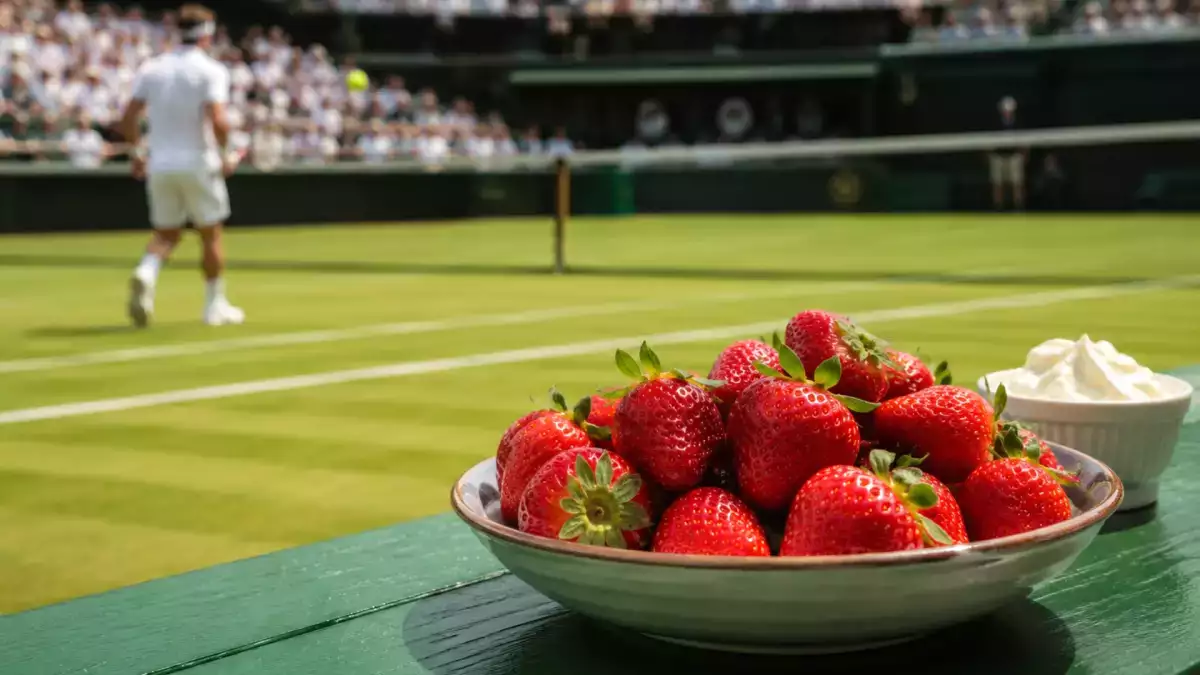
At Wimbledon, you can see champions sliding across the grass, serves clocking in at 200 all’ora, and volleys worthy of applause. But every year, as sure as the mandatory white attire, a much more tantalizing question resurfaces: why is everyone talking about strawberries and cream?
In 2026, tennis’s most elegant tournament (scheduled for June 29 through July 12) is making headlines for more than just rackets and scoreboards. Once again, it’s stealing the show: the bowl of strawberries and cream, Wimbledon’s sweet, summery, and slightly snobbish symbol. Only this time, between tradition and prices, the debate is served fresh.
Why do people eat strawberries and cream at Wimbledon?
Strawberries at Wimbledon aren’t some fad invented yesterday just for show. The tradition dates back to the tournament’s origins in 1877, when strawberries were already the quintessential fruit of the English summer. Red, fresh, and elegant without seeming pretentious: perfect for an event that has always made simplicity its hallmark.
Over time, however, strawberries and cream have become much more than just a dessert. They’re a ritual. Just like the perfectly manicured lawn, the silence before the serve, and the spectators who maintain a composed demeanor even when they’re screaming inside.
How much will strawberries and cream cost at Wimbledon 2026?
Here comes the part that raises more eyebrows than a controversial challenge.In 2026, a serving of strawberries and cream costs 2.85 pounds. In other words: it’s not exactly a forbidden luxury (especially at an international event) but it’s not the cheapest basket of produce at the local market either.
Here’s how to understand the price: by 2025, strawberries and cream had risen to 2.70 pounds, after remaining steady at 2.50 for years. In 2026, there’s another 15-penny increase, bringing the price to 2.85 pounds.
The real tabloid-worthy headline, however, comes when you add Pimm’s, the classic English summer cocktail that’s practically a liquid uniform at Wimbledon. In 2026, a glass costs 13.45 pounds. Strawberries plus Pimm’s therefore come to 16.30 pounds. And this is where many British newspapers turned the spotlight: the classic tournament snack crosses an important psychological threshold and becomes a symbol of the rising cost of events.
Are strawberries cheap or expensive? It depends on how you look at them
The question is inevitable: Are Wimbledon strawberries too expensive? The honest answer : it depends.
On the one hand, 2.85 pounds for a dessert served at one of the world’s most famous sporting events doesn’t seem outrageous. On the other hand, it’s still just a serving of strawberries and cream. And when the setting is this exclusive, even the smallest price becomes a topic of discussion.
The point is that at Wimbledon, you’re not just buying fruit. You’re buying a little piece of the atmosphere: the grass, the tennis, the tradition, the photo to send to friends, and that moment when you feel very British; even if back home you end up eating strawberries straight out of the container.
How many strawberries are eaten at Wimbledon?
Every year, Wimbledon sees some impressive numbers: about 140,000 servings of strawberries and cream during the tournament. A red, creamy mountain that shows just how much this dessert is part of the event’s identity.
Where do the strawberries at Wimbledon come from?
The strawberries served during the tournament traditionally come from Kent, from Hugh Lowe Farms, Wimbledon’s longtime supplier for decades. So we’re not talking about just any strawberries, but an agricultural product that has almost become part of the official scenery.
It’s curious: in a tournament full of technology, cameras, and global champions, one of the most recognizable things remains a dessert made with just two ingredients. Strawberries and cream. That’s it. British minimalism, but with a spoon.
What's new in 2026: the strawberry has become a star
In 2026, the Wimbledon strawberry made its way off the court. British supermarkets, restaurants, and bars capitalized on the trend with desserts, cocktails, and products inspired by “strawberries and cream.” Some were greeted with enthusiasm, others with that typical British ferocity reserved for things that are too sweet, too expensive, or too gimmicky.
And this is precisely where the story gets interesting: Wimbledon has turned a strawberry into a cultural phenomenon. It’s no longer just about what people eat during the tournament, but what that food represents. Tradition? Marketing? Nostalgia? Inflated prices? Probably a little bit of everything.
Wimbledon and strawberries: the dessert that divides opinions
Ultimately, strawberries and cream are the perfect symbol of Wimbledon: elegant, simple, beloved, and slightly controversial. Some see them as a romantic tradition to be preserved at all costs. Others think they’re just another expensive detail of an increasingly exclusive event.
The truth is that they work precisely because they divide opinion. They’re popular enough to be loved by everyone, yet iconic enough to spark conversation. And in 2026, with prices on the rise, Pimm’s getting pricier, and tabloids ready to count every penny, Wimbledon strawberries have done what great champions do: they’ve stayed center court. With cream, of course!
 Daniele Mainieri
Comments