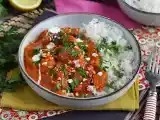
Chickpea curry, the super gourmet vegan recipe


In the list of comforting dishes, we gladly ask for a chickpea curry! Served with rice, this fragrant recipe will warm your stomach :-) You'll see how easy this recipe is with the steps explained below ↓
Ingredients
3
Preparation
Preparation5 min
Cook time30 min
 Pour the olive oil into a hot skillet. Add the chopped onions and garlic and cook, stirring occasionally.
 When the onion is translucent, add the spices: ginger, cumin, paprika, turmeric, curry and salt and pepper. Combine everything.
 Then add the tomato paste, coconut milk and chickpeas and mix. Leave to cook for 30 minutes over low heat, stirring occasionally.
 Serve with rice and sprinkle with chopped cilantro. Place a quarter of a lemon on top and voila!
Observations
How to substitute coconut milk?
You can replace the coconut milk with another vegetable cream or classic cream.
What to accompany a chickpea curry with?
You can eat the chickpea curry with rice, semolina, bulgur or quinoa for example.
Nutrition
for 1 serving / for 100 g
Calories: 344Kcal
- Carbo: 26.1g
- Total fat: 19.1g
- Saturated fat: 11.6g
- Proteins: 9.8g
- Fibers: 11.5g
- Sugar: 9.7g
- ProPoints: 9
- SmartPoints: 14
Nutritional information for 1 serving (250g)
Cookware
burner
Attributes
Suitable for freezing
Keep refrigerated
 PetitChef_Official
 You may like

Kadala (chickpeas) curry @ jisha's kitchen

Pakoda kurma/pakora korma( chickpea flour fritters in coconut curry).

Kerala parippu curry / kerala dal curry

Kadala curry/ black chana curry (serves 4)

Kerala spicy beef curry

Revithia giahni sti gastra (greek chickpea stew)

Curry chickpeas (garbanzo beans)
Vegan malai kofta: chickpea balls with tomato sauce

Fennel flavored chickpeas and bottle gourd curry-(gujarati dudhi-chana nu shaak)

Radish (daikon) leaves, cauliflower and tomato curry

Vareka uperi( raw banana and black eyed peas curry)

21-day vegan challenge (day 18) - sri lankan curry powder and chutney
Questions
Photos of members who cooked this recipe
 Juliette Hess
I’ve been creating culinary content at Petitchef for over 7 years.
I love traveling and discovering new dishes, trying out new culinary trends, and exploring new restaurants.
I’m a pasta fan in all its forms ❤ from udon noodles to tagliatelle, I love cooking it and even making it homemade!
Right now, I’m preparing, filming, and photographing your next recipe, and I hope you’ll love it!
I love traveling and discovering new dishes, trying out new culinary trends, and exploring new restaurants.
I’m a pasta fan in all its forms ❤ from udon noodles to tagliatelle, I love cooking it and even making it homemade!
Right now, I’m preparing, filming, and photographing your next recipe, and I hope you’ll love it!
Comments
Rate this recipe:
4.73/5, 10 votes 1 comment
sarah
Love it
(ノ◕ヮ◕)ノ*:・゚✧
i cooked this recipe
Rate this recipe