3 things to check on a grated Parmesan package: a simple checklist to avoid surprises when you buy
Thursday 27 August 2026 21:00 - Adèle Peyches
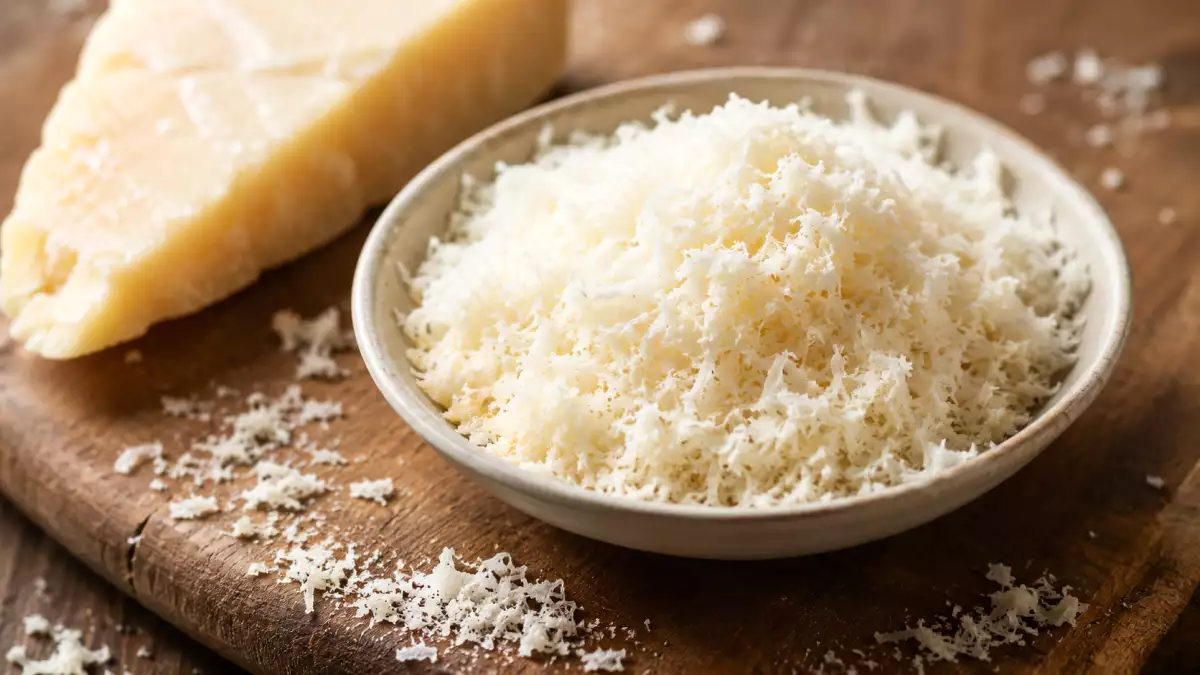
Grated Parmesan is tempting because it’s ready to use. You open the package, sprinkle it on pasta, a gratin, soup, or a salad, and the dish immediately tastes better. But there’s sometimes a real difference between genuine Parmigiano Reggiano PDO, a more generic grated cheese, and a blend with a less clear composition.
You don’t need to be a cheese expert to tell them apart. Just look for a few specific details on the packaging. The product name, the list of ingredients, and the PDO logo already provide a lot of information. Here’s how to read them without falling for a package that promises more than it delivers.
1. First, check the exact name of the cheese
The first thing to check is the name on the package. If you’re looking for real Italian Parmesan, the key label to look for is “Parmigiano Reggiano.” This designation refers to a cheese protected by a PDO, produced in a specific region of Italy and according to precise specifications.
If the package simply says “grated cheese, ” “for pasta,” “grated Italian cheese,” or something similarly vague, it’s not the same thing. That doesn’t mean the product is necessarily bad, but you shouldn’t buy it thinking you’re getting exactly the same cheese.
So the right thing to do is simple: before looking at the price, check the product name. That’s what really tells you what’s inside the package.
If the package simply says “grated cheese, ” “for pasta,” “grated Italian cheese,” or something similarly vague, it’s not the same thing. That doesn’t mean the product is necessarily bad, but you shouldn’t buy it thinking you’re getting exactly the same cheese.
So the right thing to do is simple: before looking at the price, check the product name. That’s what really tells you what’s inside the package.
2. Look for the AOP logo and the "Parmigiano Reggiano" label
The second important label is the PDO logo. For food products with Protected Designation of Origin status, the INAO notes that the PDO logo must accompany the registered name. On authentic Parmesan, you should therefore see the words “Parmigiano Reggiano” and the symbols associated with the designation.
On a whole wheel or a piece with rind, Parmigiano Reggiano can also be recognized by its dotted markings around the edge. On a bag of grated cheese, the wheel is obviously no longer visible, which is why the label is so important.
If you want a more distinctive flavor, a longer finish, and a clearly defined origin, choose a package that clearly displays “Parmigiano Reggiano PDO.” If this designation is not present, read the rest of the label even more carefully.
On a whole wheel or a piece with rind, Parmigiano Reggiano can also be recognized by its dotted markings around the edge. On a bag of grated cheese, the wheel is obviously no longer visible, which is why the label is so important.
If you want a more distinctive flavor, a longer finish, and a clearly defined origin, choose a package that clearly displays “Parmigiano Reggiano PDO.” If this designation is not present, read the rest of the label even more carefully.
3. Read the list of ingredients
A good habit is to check the ingredient list. Parmigiano Reggiano is a cheese with a very simple composition: milk, salt, and rennet. On a package of grated cheese, the list should be short and easy to understand.
If you see a long list of ingredients, cheese blends, powders, starches, or anti-caking agents, it’s no longer the same product. Some ingredients may be permitted depending on the product category, but they alter our perception of what simple grated Parmesan should be.
For quick cooking, a pre-grated packet can come in handy. But for a dish where cheese plays a key role—such as pasta, risotto, or soup—a chunk that you grate yourself often retains more flavor and texture.
If you see a long list of ingredients, cheese blends, powders, starches, or anti-caking agents, it’s no longer the same product. Some ingredients may be permitted depending on the product category, but they alter our perception of what simple grated Parmesan should be.
For quick cooking, a pre-grated packet can come in handy. But for a dish where cheese plays a key role—such as pasta, risotto, or soup—a chunk that you grate yourself often retains more flavor and texture.
What about the rinds in the grated Parmesan?
This is often the point that causes the most concern. We sometimes hear claims that certain packages contain mostly ground rind. Let’s be clear: the specifications for grated Parmigiano Reggiano set limits on the amount of rind. European regulations specify a limit of 18% by weight for rind in grated cheese.
In other words, the presence of some rind is not necessarily abnormal in a compliant grated product. However, a package that is too dry, very powdery, with little aroma, or a texture that lacks body can be disappointing in the kitchen.
The best approach, therefore, is not to panic, but to check the label. If the product clearly states “Parmigiano Reggiano PDO,” it must comply with its specifications. If the labeling is unclear, it’s best to compare it with another package or choose a block to grate yourself.
In other words, the presence of some rind is not necessarily abnormal in a compliant grated product. However, a package that is too dry, very powdery, with little aroma, or a texture that lacks body can be disappointing in the kitchen.
The best approach, therefore, is not to panic, but to check the label. If the product clearly states “Parmigiano Reggiano PDO,” it must comply with its specifications. If the labeling is unclear, it’s best to compare it with another package or choose a block to grate yourself.
Why prices can vary widely
Parmigiano Reggiano PDO requires time, a specific production area, and carefully monitored aging. It’s therefore normal for it to cost more than generic grated cheese. Price isn’t everything, but it can be a good indicator.
A very inexpensive packet of grated cheese may be convenient for topping a family-style dish, but you shouldn’t necessarily expect it to taste the same as freshly grated Parmesan. In a simple recipe where cheese is the main ingredient, the difference is immediately noticeable.
A good compromise is to use the ready-to-use grated cheese for everyday dishes and save a piece of Parmigiano Reggiano for recipes where the cheese really needs to add character.
A very inexpensive packet of grated cheese may be convenient for topping a family-style dish, but you shouldn’t necessarily expect it to taste the same as freshly grated Parmesan. In a simple recipe where cheese is the main ingredient, the difference is immediately noticeable.
A good compromise is to use the ready-to-use grated cheese for everyday dishes and save a piece of Parmigiano Reggiano for recipes where the cheese really needs to add character.
Pre-grated in a bag or a block to grate yourself: which should you choose?
The packet has one obvious advantage: it’s convenient. It’s easy to store, quick to measure out, and saves you from having to get out the grater for every meal. For a gratin, a quiche, or a baked dish, it works just fine.
The block of cheese, on the other hand, often retains its flavor longer. Once grated, the cheese loses some of its aroma more quickly and can dry out. If you’re making a very simple plate of pasta with just a little olive oil, pepper, and cheese, grating it at the last minute really makes a difference.
In practice, both can coexist in the kitchen. Use the packet to save time, and the whole piece for dishes where you really want to savor the flavor.
The block of cheese, on the other hand, often retains its flavor longer. Once grated, the cheese loses some of its aroma more quickly and can dry out. If you’re making a very simple plate of pasta with just a little olive oil, pepper, and cheese, grating it at the last minute really makes a difference.
In practice, both can coexist in the kitchen. Use the packet to save time, and the whole piece for dishes where you really want to savor the flavor.
Three things to look for at the supermarket
Before adding a package to your cart, check these three things:
The product name: Look for the exact name of the cheese, especially if you’re looking for Parmigiano Reggiano.
The PDO logo: It helps you identify a product whose origin and production are regulated.
The list of ingredients: the shorter and clearer it is, the better you’ll know what you’re buying.
These are small habits, but they can prevent a lot of disappointment. And if you’re torn between two products, choose the one with the most detailed label. In the kitchen, transparency often tastes better.
The product name: Look for the exact name of the cheese, especially if you’re looking for Parmigiano Reggiano.
The PDO logo: It helps you identify a product whose origin and production are regulated.
The list of ingredients: the shorter and clearer it is, the better you’ll know what you’re buying.
These are small habits, but they can prevent a lot of disappointment. And if you’re torn between two products, choose the one with the most detailed label. In the kitchen, transparency often tastes better.
 Adèle Peyches
Editorial manager who just can't wait for winter to enjoy fondue! Passionate about gastronomy and always on the lookout for new culinary gems, I first studied law before returning to my first love: the taste of good products and the joy of sharing around the table :)
Comments