7 mistakes we tend to make when cooking white asparagus
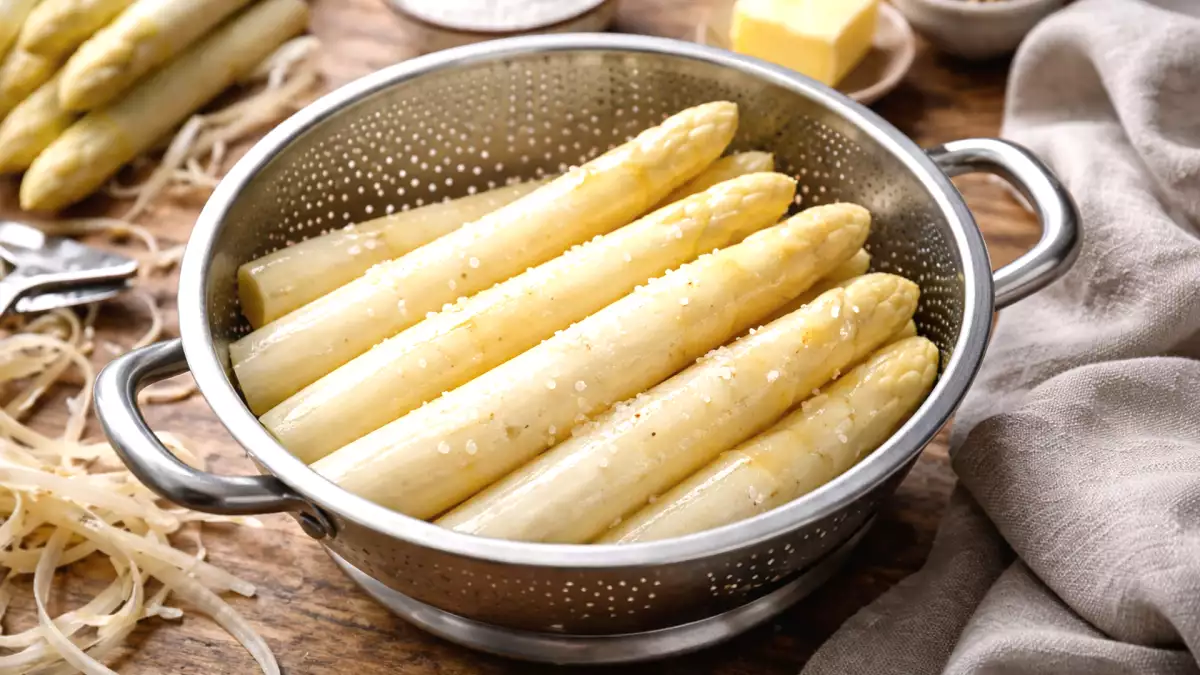
White asparagus has a very particular way of making your life difficult: it doesn’t burn, collapse or fall apart dramatically in the pan. It just quietly disappoints you. It reaches the plate looking beautiful… and when you take a bite, the flavor isn’t there. Or it’s watery. Or fibrous. And since it’s not exactly cheap, that hurts a little.
1. Picking the wrong bunch
Start at the store. Good white asparagus should be:
- Firm, not bendy
- Tips tightly closed
- Cut end moist and fresh, not dried out or brown
Try to choose spears that are similar in thickness so they cook at the same speed. A mixed bunch of very thin + very thick stalks is an invitation to uneven cooking.
2. Being shy with the peeler
The problem usually isn’t not peeling. It’s under-peeling. White asparagus does not get tender “with patience” if the skin is still there. If the skin stays, the fiber stays.
Do this instead:
- Trim the woody base: cut off the last couple of centimeters (the really hard part that never gets tender anyway).
- Peel from just under the tip all the way down the stalk.
- Rotate the spear as you peel so you remove the outer layer all around.
That outer layer is what makes it tough and stringy. If you skimp here, the asparagus might look perfectly cooked but still feel like chewing threads.
3. Mixing thicknesses and expecting them to cook the same
White asparagus is not fair. A thin spear and a thick one won’t reach the right doneness at the same time.
If you cook them all together:
- The thin ones overcook and turn mushy.
- The thick ones stay firm and fibrous inside.
Better:
- Group by size: thin with thin, thick with thick.
- Or at least pull the thin ones out earlier and let the thick ones go a bit longer.
It feels fussy the first time; after that it just feels logical.
4. Boiling them at a wild, rolling boil
5. Cooking them in plain, unsalted water
If the water has no flavor, the asparagus comes out with no flavor. White asparagus is naturally subtle; if you strip away what little it has, the sauce becomes the star and the vegetable just… exists underneath.
Do this instead:
- Salt the water generously.
- Add a small pinch of sugar to balance its natural slight bitterness.
- Add a little fat (traditionally a bit of butter) to round out the flavor. Not so it tastes like butter, but to give the asparagus more “body”.
You’re basically giving the spears a flavorful bath instead of washing them out.
6. Trusting the timer instead of the doneness
White asparagus lives in that annoying zone where one minute more or less changes everything.
- Too short: tough, stringy, “bad batch?” texture.
- Too long: watery, floppy, washed-out flavor.
Forget “X minutes and done” and test the thickest spear:
- Pierce the thickest part with the tip of a knife or a skewer.
- If it slides in with gentle resistance, you’re there.
- Pull them immediately. Remember, they keep cooking a bit from residual heat.
Use the clock as a guideline; use the knife as the judge.
7. Letting them sit in hot water / not drying them well
This is the silent killer of perfect asparagus. You nailed the timing… and then you leave the spears in the hot water “while you finish the rest”. In a couple of minutes they go from perfect to overdone.
Better options:
- If you’re serving warm:
- Gently lift them out, let them drain well and keep them warm on a plate or rack (not soaking).
- If you’re serving cold:
- Cool them quickly (cold water or ice bath), then
- Dry them carefully before dressing.
White asparagus does not need more water clinging to it; that only dulls flavor and makes dressings slide off.
Treat white asparagus as its own thing (not just green asparagus in “luxury mode”) and it will finally taste like what you paid for: delicate, tender and quietly special.
 Patricia González
Comments