How to store cheese properly? All the tips you need to preserve taste, texture and pleasure for longer.
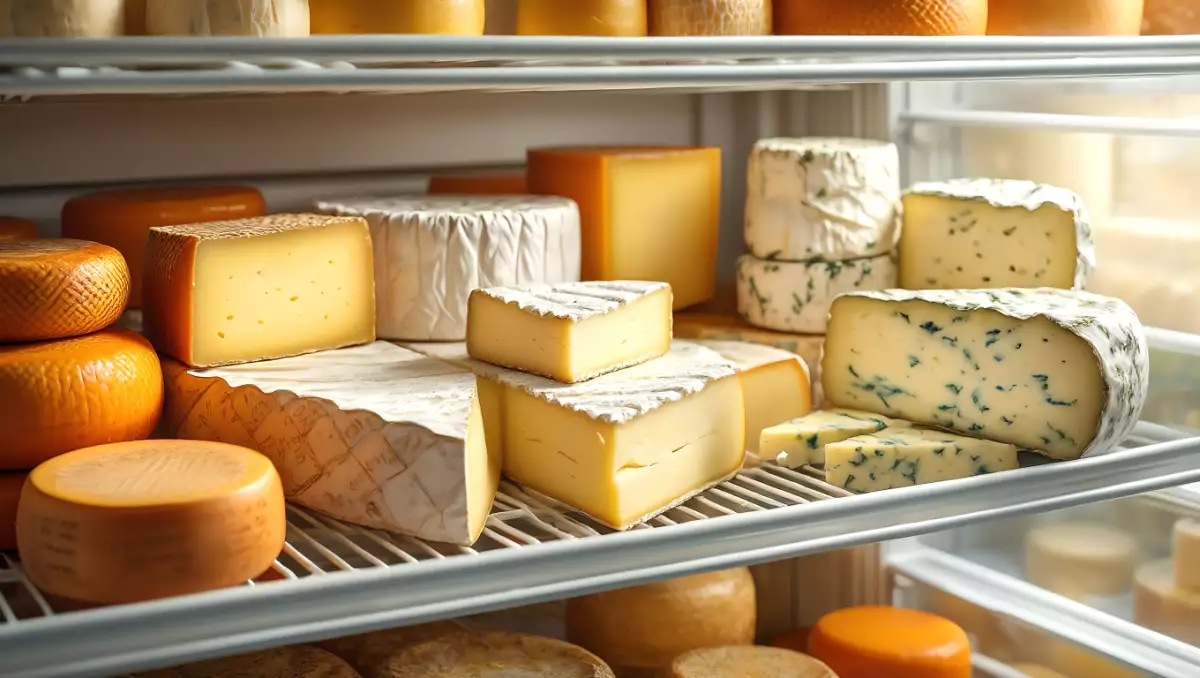
You've just returned from the cheese shop or the market with a fine selection of carefully chosen cheeses... and you're already looking forward to enjoying them at your leisure over the coming days. But the question soon arises: how do you store them so that they don't dry out, become too strong... or simply lose their flavour?
Contrary to popular belief, cheese is a living product. It continues to evolve even after you've bought it. And without a few precautions, it can quickly deteriorate. On the other hand, well-preserved cheese can reveal its full aromatic richness for several days, even weeks.
The good news is that a few simple gestures can make all the difference.
The first thing to do: let the cheese breathe
This is probably the most common mistake... and yet the easiest to avoid. Many people tend to wrap their cheese tightly in plastic film, thinking they're doing the right thing. In reality, this is exactly the wrong thing to do.
Cheese needs air. It must be able to "breathe" if it is to retain its aromas and texture. Enclosed in airtight packaging, it runs the risk of becoming excessively moist, developing unpleasant odors and even spoiling more quickly.
On the other hand, leaving it completely open to the air is not a solution either. It would dry out in just a few hours.
The right balance is to protect the cheese while allowing a minimum of aeration.
This is precisely why cheese-specific papers exist. Failing that, a simple piece of greaseproof paper will do just fine. It maintains a good level of humidity while allowing air to circulate.
Packaging: a detail that changes everything
Once you understand this principle, everything becomes simpler. Ideally, you should wrap your cheese in suitable paper, then place it in a box or cover it lightly, without compressing it.
This method preserves the cheese's taste qualities and prevents it from contaminating other foods in the fridge... or absorbing their odours.
A well-packaged cheese retains its aromas longer and remains pleasant to eat.
If you're in the habit of eating cheese on a regular basis, investing in special cheese paper can be well worth it. Then again, baking paper is an excellent alternative.
The right place in the fridge: a detail often overlooked
We rarely think about it, but not all refrigerator compartments are created equal. And when it comes to cheese, choice of location is essential.
The best place to store cheese is in the crisper. It may come as a surprise, but this is where the conditions are best: a stable temperature and slightly higher humidity than in the rest of the fridge.
It's this environment that allows cheese to keep without drying out too quickly.
Conversely, the coldest areas of the fridge risk freezing the aromas and altering the texture.
Not all cheeses keep the same way
This is an important point to bear in mind. You can't treat a Camembert like a Comté, and that's perfectly normal.
- Hard cheeses, like Comté or Parmesan, are more resistant. Their low water content means they keep longer, sometimes for several weeks without any problem.
- Soft cheeses, on the other hand, are more fragile. Their rich, moist texture makes them more sensitive to the environment. They therefore require a little more attention, and are generally consumed more quickly.
The wetter the cheese, the more delicate it is to store.
Blue cheeses are a special case. Their mold is an integral part of the product. So you don't need to worry about it, but simply adapt the way you store them. Slightly more airtight packaging, such as aluminum foil, can help preserve their balance.
What if mold appears?
It's a situation that happens more often than you might think... and it doesn't necessarily mean you have to throw everything away.
For hard cheeses, the solution is simple: just remove the affected part. The rest of the cheese is safe to eat.
For fresh or very creamy cheeses, however, caution is called for. Their texture encourages the spread of micro-organisms, and it's best to avoid taking any risks.
In all cases, rely on your common sense... and your sense of smell.
Little tricks that make all the difference
Over time, certain gestures become almost automatic.
For example, when cutting semi-hard cheese, you can lightly protect the cut part to prevent it from drying out. Similarly, if you're storing grated cheese, adding a small piece of bread to the container can help absorb excess moisture.
These are minor details, but they often extend the shelf life of the product without any particular effort.
Should I take the cheese out before eating it?
Absolutely. In fact, it's essential.
Cheese that's too cold loses much of its flavor. To get the most out of it, we recommend taking it out of the fridge 30 minutes to an hour before serving.
It's at room temperature that it really reveals all its flavors.
It's a simple gesture, but one that changes the whole experience.
Can cheese be kept out of the fridge?
In some cases, yes. Dry, well-aged cheeses can be stored for a few days at room temperature, provided it's not too hot.
But as a general rule, the refrigerator remains the safest solution, especially in hot weather.
And what about freezing?
It's a possible option, but not always ideal.
Some cheeses don't stand up well to freezing, especially the creamier ones. Their texture can become grainy once thawed. Hard cheeses, on the other hand, fare much better.
If you want to freeze cheese, opt for hard varieties... and remember to grate them in advance.
There you go!
Storing cheese properly isn't all that complicated. You just need to understand what it needs: a little air, the right humidity and the right temperature.
With the right gestures, you can preserve all its richness and avoid wastage.
And when you love cheese, it's a little effort that's well worth it.
 Adèle Peyches
Comments