Arancino or arancina: What’s the difference? Sicily’s two sides reveal themselves with the first bite
Monday 16 November 2026 21:00 - Francesco Rosso
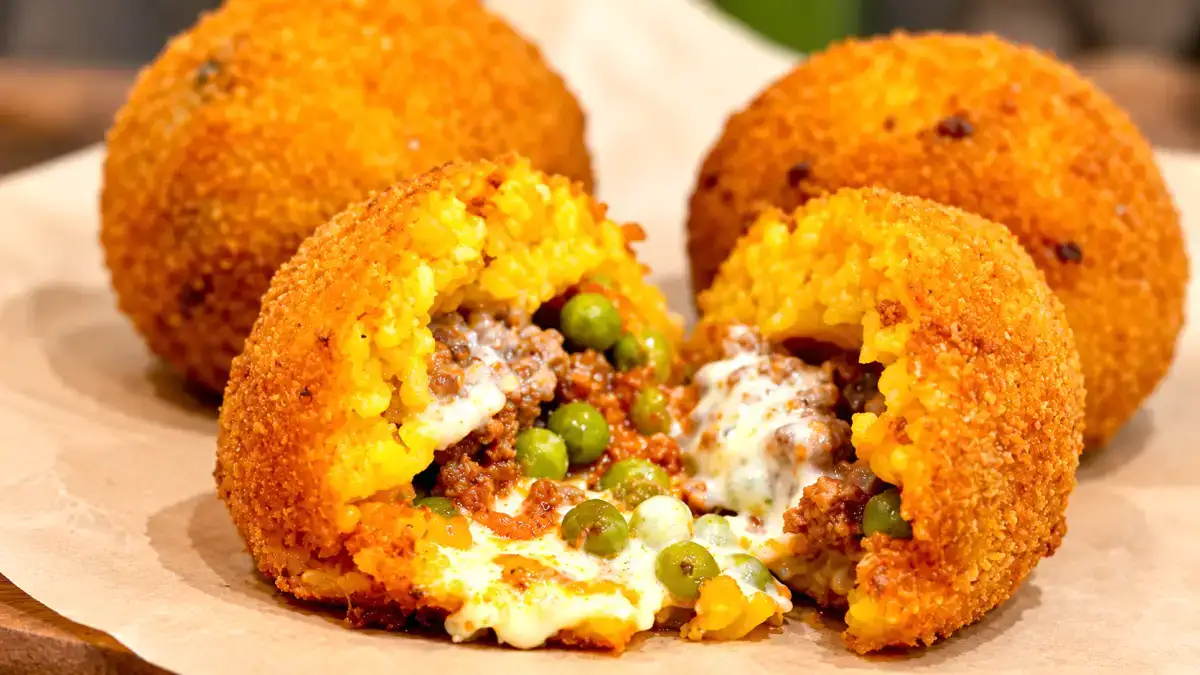
Just walk into a Sicilian rotisserie to realize that food is a serious matter here. In Palermo, you order an “arancina”; in Catania, an “arancino”; change one vowel, and someone might look at you with an amused smile.
But behind this rivalry—one best savored—there’s more than just a matter of grammar. There are different shapes, fillings, family memories, and two ways of telling the story of the same island.
Is it "arancino" or "arancina"? The answer isn't as obvious as you might think
Let’s start with the question that sparks debate: which is the correct name, “arancino” or “arancina”? According to the Accademia della Crusca, both forms are legitimate and reflect different regional usages. In western Sicily, especially in Palermo, the feminine form prevails; in the eastern part, particularly in Catania, the masculine form is more common. There are exceptions, however, especially in some areas around Syracuse and Ragusa.
The explanation has to do with the fruit: in Sicilian, the term aranciu, from which the diminutive arancinu.“Arancina,” on the other hand, follows the feminine form of the Italian word “arancia.” In short, there is no vowel to correct—there is a linguistic tradition to understand. And it would be a shame to reduce everything to a contest between dictionaries.
The explanation has to do with the fruit: in Sicilian, the term aranciu, from which the diminutive arancinu.“Arancina,” on the other hand, follows the feminine form of the Italian word “arancia.” In short, there is no vowel to correct—there is a linguistic tradition to understand. And it would be a shame to reduce everything to a contest between dictionaries.
What's the difference between an "arancino" and an "arancina"? The shape alone tells us a lot.
The first clue is often right in front of your eyes. The classic Palermo-style arancina, especially the meat-filled variety, is round in shape, resembling a small golden orange.The Catania-style arancino with ragù, on the other hand, is often conical, with a distinctively pointed tip.
And why is the arancino in Catania pointed? According to a widely beloved explanation, that shape evokes Mount Etna: the rice represents the mountain, and the hot filling represents the lava. It’s an irresistible image, but it should be taken as a popular interpretation, not as a proven historical origin.
Be careful, however, not to be too rigid: even in Palermo, there are elongated arancine, such as some versions made with butter, and in eastern Sicily, round ones are also common. Shape and city provide clues, not absolute certainties.
What's inside? Meat sauce, peas, and the mystery of the buttered arancina
The real experience begins when the crust breaks open. At the base are cooked, tightly packed rice, breading, and deep-frying; inside lies a world of fillings. Among the great classics are the meat ragù, often with tomatoes and peas, and the butter-based variant, typically stuffed with cooked ham, cheese, and a creamy component—often béchamel sauce.
But does the butter-based arancina contain only butter? No: the name refers to a traditional preparation, not a filling made from a single ingredient. Even the rice can vary: some people flavor it with saffron, others prefer different flavors, and still others pass down their own family recipes.
It’s easy to hear that people in Palermo eat one thing and those in Catania another, but that would be an oversimplification: ragù and creamy fillings are found throughout the island. The most interesting differences often emerge from one rotisserie to the next.
Who invented arancini and arancine? History holds a surprise
Its origin is often linked to the Arab presence in Sicily, which left a profound mark on the island’s culinary traditions. Rice, spices, and dishes meant to be eaten with the hands make this connection plausible. However, to claim that today’s arancino existed in exactly the same form a thousand years ago would be to go beyond the available evidence.
In fact, there’s a curious detail:the Accademia della Crusca notes that one of the earliest written references, in Giuseppe Biundi’s 1857 Sicilian-Italian dictionary, describes the arancinu as a sweet rice dish shaped like a small orange. No meat sauce took center stage!
It’s a tasty reminder: traditions aren’t always born perfect and unchanging. They evolve with the ingredients available, the cities, and the people who prepare them.
Why do people in Palermo eat arancine on December 13?
In Palermo, arancine even have their own special day: December 13, the feast of Saint Lucy. Traditionally, on this occasion, people avoid bread and pasta and instead enjoy dishes such as arancine and cuccìa, which are made from wheat.
Folklore tells of the providential arrival of a ship loaded with wheat during a famine: the starving people are said to have boiled the grains without waiting to grind them. The story is part of devotional tradition, not a definitive account of how arancine were invented. But it explains well why, in this city, food has the power to become collective memory. On that day, standing in front of the rotisserie counter, choosing a flavor is almost a ritual.
Folklore tells of the providential arrival of a ship loaded with wheat during a famine: the starving people are said to have boiled the grains without waiting to grind them. The story is part of devotional tradition, not a definitive account of how arancine were invented. But it explains well why, in this city, food has the power to become collective memory. On that day, standing in front of the rotisserie counter, choosing a flavor is almost a ritual.
How can you tell if an arancino or an arancina is made right?
Whether they’re round or pointed, certain details matter more than the name. When tasting a good example of Sicilian street food, it’s worth paying attention to four things:
That’s why quality doesn’t depend on a perfect point or a flawless sphere. What matters is the harmony between the crispy exterior and the soft interior—even better if the piece is freshly made.
- The crust: golden, dry, and crispy, without feeling overly greasy.
- The rice: firm enough to hold its shape, but not hard or dry when bitten into.
- The filling: flavorful and evenly distributed, so you don’t have to search for it until the very last bite.
- The balance: the breading, rice, and filling should all be noticeable, without overpowering one another.
That’s why quality doesn’t depend on a perfect point or a flawless sphere. What matters is the harmony between the crispy exterior and the soft interior—even better if the piece is freshly made.
From the rotisserie counter to modern interpretations: a tradition that evolves
Alongside the classic flavors, you’ll now find variations featuring pistachios, eggplant alla Norma, mushrooms, local cheeses, and even sweet versions. Not all of them are traditional, of course: they’re a sign of a street food culture capable of reinventing itself without losing its character.
In Palermo, the feminine form conveys a sense of belonging; in Catania, the masculine form carries the same emotional weight. Elsewhere, the distinction becomes more nuanced. That’s precisely the beauty of it: asking for an “arancino” or an “arancina” can spark a conversation about the neighborhood, the grandmother who used to make it, and your favorite rotisserie.
In Palermo, the feminine form conveys a sense of belonging; in Catania, the masculine form carries the same emotional weight. Elsewhere, the distinction becomes more nuanced. That’s precisely the beauty of it: asking for an “arancino” or an “arancina” can spark a conversation about the neighborhood, the grandmother who used to make it, and your favorite rotisserie.
Arancino or arancina: Who Wins in the End?
If you were looking for a definitive answer, you might be disappointed. The difference between an “arancino” and an “arancina” isn’t a contest with just one winner—it’s a little journey between Palermo and Catania, through the intertwining of language, shapes, and customs. The best advice? Try both, preferably right where they’re made. And remember the name used by the person serving them to you—it’s already part of the flavor.
 Francesco Rosso
A journalist in search of new horizons. As a lover of wine and simple dishes, I’ve decided to set out to discover new ways of approaching cuisine.
Comments