Did you receive some homemade pickles? 5 simple checks to do before serving them
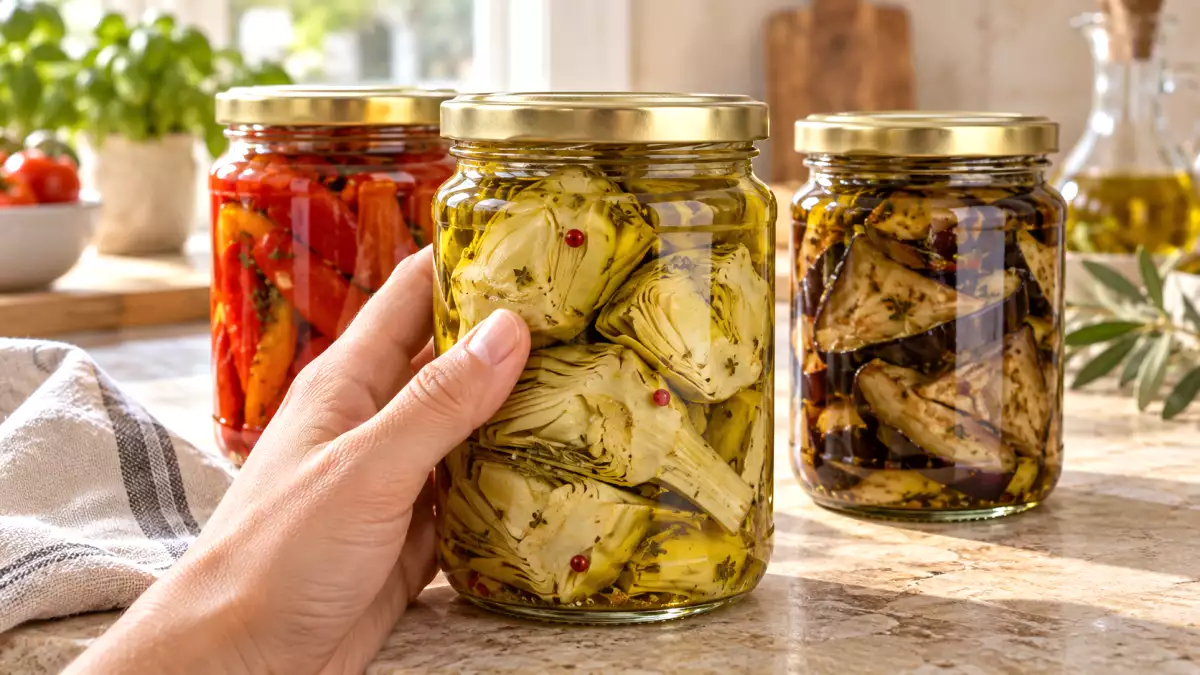
However, before opening them with enthusiasm, it’s a good idea to do a little “kitchen detective” check. Not to spoil the magic, but to ensure you can enjoy them without worry. Homemade preserves in oil are delicate preparations: the oil preserves flavor and texture, but it also creates an oxygen-free environment where, if prepared incorrectly, serious risks such as botulism can develop.
Here are the 5 things you absolutely must check when you receive homemade preserves in oil as a gift.
1. Check the cap, the empty container, and the jar right away
A safe jar should look like it’s been sealed properly. If you notice unusual bubbles, leaks, foam, cloudy liquid, or internal pressure, don’t taste it “just to see what it’s like.” With preserves, tasting is not a safety test.
How can you tell if homemade oil-preserved food has gone bad?
A swollen lid, loss of vacuum, unpleasant odor, mold, visible fermentation, or an altered appearance are warning signs that should be taken seriously. If in doubt, do not consume the contents of the jar.
2. Ask how the vegetables were prepared
This is where the most important question comes in—one you should naturally ask the person who gave you the jar: “What process did you use?” It’s not a lack of trust; it’s food safety. Vegetables intended for oil-preserving shouldn’t simply be washed, dried, and submerged in oil. Proper preparation involves specific steps, particularly the use of an acidic solution, often made with water and vinegar.
The point isn’t just “how good the recipe is,” but how it was made safe. Mushrooms, eggplant, artichokes, bell peppers, and turnip greens are beloved ingredients, but they require special attention when preserved at home.
A quick checklist to keep in mind:
- Have the vegetables been blanched or treated in water and vinegar?
- Have the jars been washed and sanitized properly?
- Was proper pasteurization performed after filling?
- Does the person know the date of preparation?
- Has the jar been stored in a cool place, away from light?
If the answers are vague (such as “I just did it by eye, as usual”) it’s best to err on the side of caution.
3. Check the date, storage conditions, and origin
Also ask where it was stored: a cool cellar, a pantry away from sunlight, or a warm kitchen near the stove? Homemade preserves are sensitive to light, heat, and temperature fluctuations.
How long do homemade preserves in oil last?
Shelf life depends on the preparation method, the type of food, acidification, sealing, and storage conditions. For this very reason, it’s best not to think solely in terms of months, but rather in terms of traceability: who made it, when, using what method, and where it was stored.
A good gourmet gift should include at least the following information: main ingredient, production date, recommended best-by date (if applicable), and storage instructions after opening.
4. Smell and observe, but don't rely solely on your senses
Be careful, though: botulism doesn’t always change the food’s smell, color, or taste. And that’s precisely the least intuitive part. Many people think that “if it smells good, then it’s safe,” but with homemade preserves, that’s not how it works.
Can you tell if there’s botulism in oil-packed foods?
No, not necessarily. That’s why safety can’t be based solely on the appearance of the finished product. It’s much more important to know whether the preserve was prepared following proper procedures—especially regarding acidification, hygiene, heat treatment, and storage.
5. After opening, refrigerate and use quickly
The refrigerator won’t fix a preparation mistake, but it helps you better manage a product that’s already been opened. If you notice changes in the following days (such as a different smell, mold, or fermentation) don’t try to salvage the “good” part: the jar must be thrown away .
Can you eat homemade pickles that were given to you as a gift?
Yes, if you have clear information about how they were prepared and if the jar shows no signs of damage. The point isn’t to demonize homemade preserves, but to treat them with the respect they deserve. Delicious, yes. Taken lightly, no.
When is it best to say no, even if it hurts?
There are times when the wisest choice is not to eat the food: when the container is unlabeled, old, stored improperly, has been open for a while, or was prepared using an unclear method. It may be disappointing, especially if it comes from a loved one, but you can thank them warmly without putting your health at risk.
Avoid eating it if:
- the lid is swollen or the jar isn’t airtight;
- the jar is leaking oil or has foam;
- there is mold or an unusual odor;
- you don’t know when it was prepared;
- you don’t know if the vegetables were acidified;
- it has been left in a warm place for a long time;
- it has been left out of the refrigerator after opening.
When you receive a homemade preserve, have a chat with the person who made it. Often, behind a jar lies a wonderful story of family, a vegetable garden, and patience. If that story is accompanied by clear information about preparation, date, and storage, the gift becomes even more precious.
In short: A gift is nice, but a check is better
There’s no need to worry; just be curious, careful, and a bit hands-on. After all, a good preserve should make you crave crusty bread and a good chat, not last-minute doubts.
 Daniele Mainieri
Comments