Does your cutting board smell? Here's how to disinfect it naturally
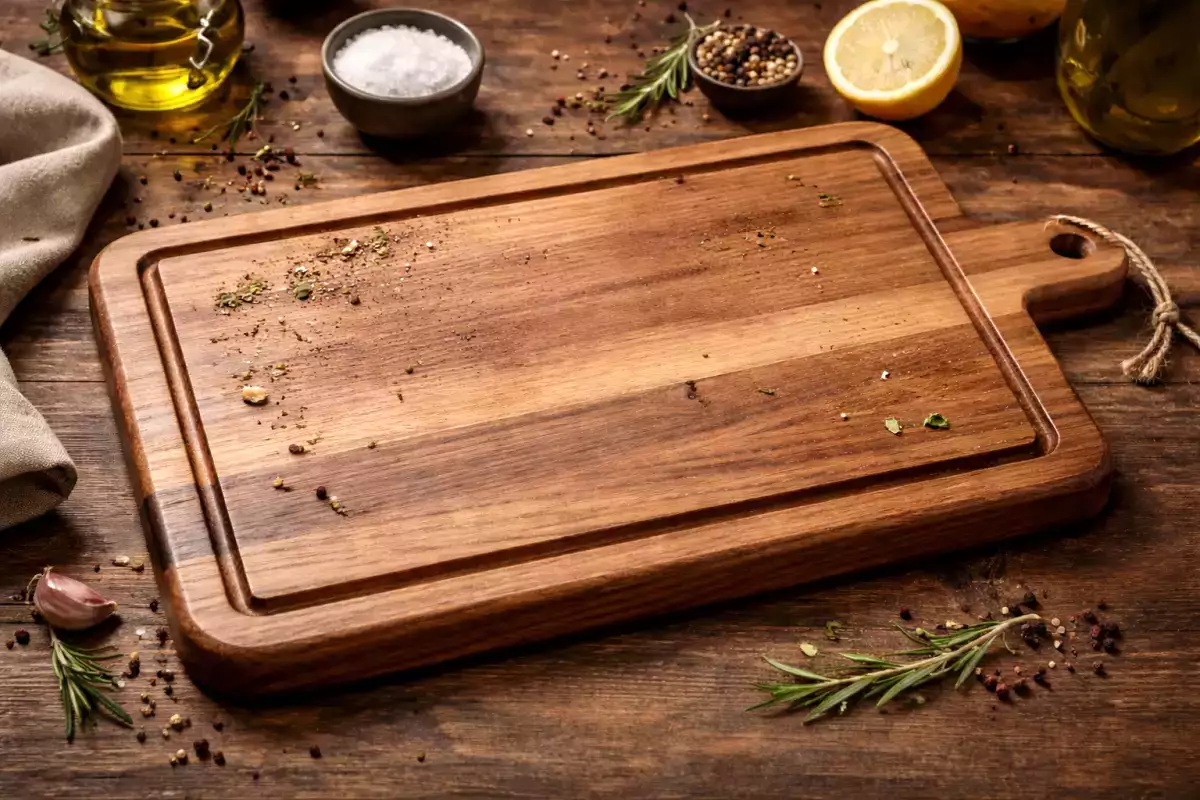
You don’t always think about it, but the cutting board is one of the most used items in the kitchen. Meat, fish, onion, garlic, herbs… it comes into contact with everything. And over time, a lingering odor can start to appear.
Why do cutting boards hold on to odors?
The main reason is the material. Wooden cutting boards are porous. They absorb moisture and trap food residues in tiny cracks. Even plastic boards can develop knife marks over time, and those scratches can harbor bacteria and odors.
In other words, a poorly maintained cutting board can become a real breeding ground for bacteria.
The natural trick: lemon and coarse salt
The simplest method relies on two ingredients you probably already have at home: a lemon and coarse salt.
Why does it work?
- Salt acts as a gentle abrasive that helps remove stuck-on residue.
- Lemon contains citric acid, known for its antibacterial and deodorizing properties.
How to do it
The process is very simple:
- Sprinkle coarse salt over the cutting board.
- Cut a lemon in half.
- Rub the surface with the lemon half, focusing on the most stained or smelly areas.
- Let it sit for 5 to 10 minutes.
- Rinse with hot water and dry immediately with a clean towel.
The combination of lemon and salt helps neutralize odors and clean deeply without damaging the material.
Why drying the board is essential
A board that stays damp encourages bacterial growth. According to water safety organizations, stagnant moisture is one of the key factors that allows microbes to multiply in domestic environments.
After cleaning, it’s important to:
- Dry the board thoroughly
- Store it upright so air can circulate around it
This simple habit helps extend the life of the board and prevents bad smells from returning.
What about white vinegar?
White vinegar is another effective natural option. Because of its acidity (acetic acid), it helps dissolve organic residue and reduce the presence of bacteria.
To use it:
- Spray white vinegar on the board
- Let it sit for a few minutes
- Rinse and dry
However, on some wooden boards, frequent use may slightly affect the surface. It’s best to alternate between methods.
Wood or plastic: which one is more hygienic?
This question comes up often. Studies published in the Journal of Food Protection suggest that wood actually has natural antibacterial properties, as long as it is properly cleaned and dried.
Plastic boards, on the other hand, can go in the dishwasher, but deep scratches may become difficult-to-clean areas where bacteria can settle. In both cases, regular maintenance matters more than the material itself.
Mistakes to avoid
- Soaking a wooden cutting board in water
- Putting wooden boards in the dishwasher
- Storing a board while it’s still wet
- Using very abrasive cleaning products
How often should you disinfect it?
A quick wash with hot water and dish soap after each use is essential. A deeper cleaning with lemon or vinegar can be done:
- About once a week, or
- After cutting raw meat or fish
Regular cleaning helps prevent stubborn odors from settling in.
If your cutting board smells bad, don’t throw it away just yet
In many cases, a simple mix of lemon and coarse salt is enough to disinfect it and remove odors. Natural, inexpensive and quick, this method helps keep your cutting board clean and sanitary without using harsh chemicals.
A small habit but an important one for a cleaner, safer kitchen.
 Adèle Peyches
Comments