Does your stovetop heat up around the pot? This detail could be causing you to waste energy
Saturday 24 October 2026 21:00 - Adèle Peyches
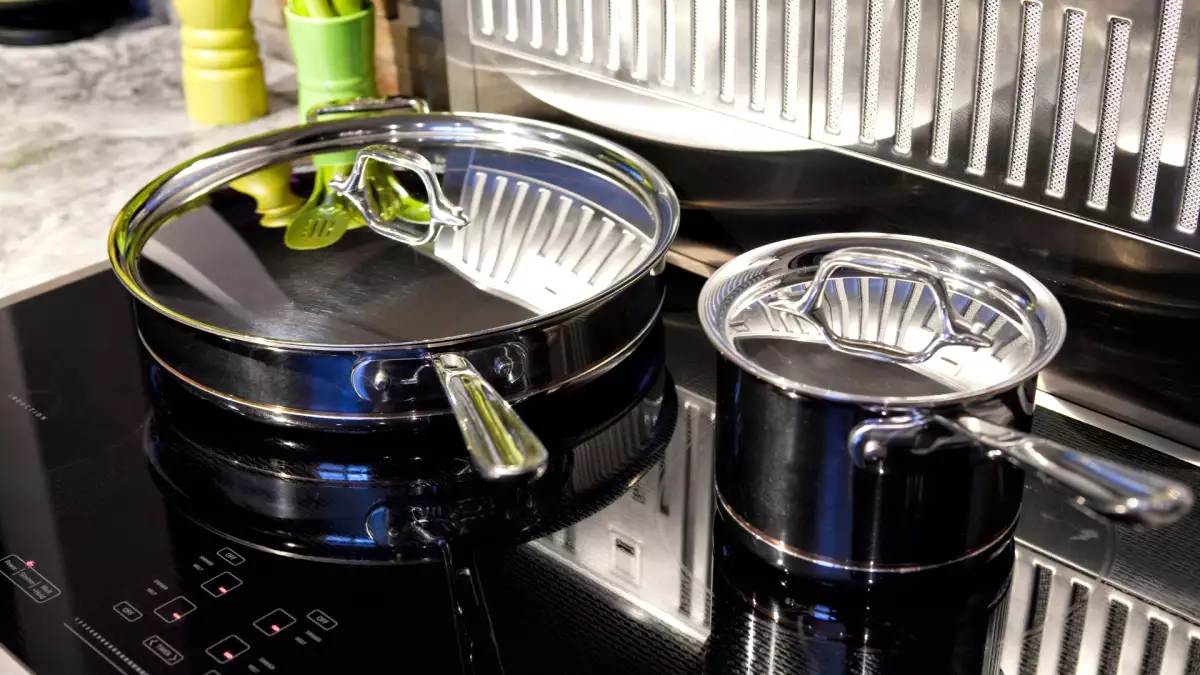
Except that in the kitchen, the size of the pot matters almost as much as the heat setting you choose. And when the burner and the pot aren’t a good match, some of that energy might end up heating something other than your dinner.
That doesn’t mean you need to break out the measuring tape every time you make an omelet. There are three main configurations that are easy to spot.
First scenario: The pot is significantly smaller than the cooking zone
This is the easiest situation to spot on a standard electric or glass-ceramic cooktop: the bottom of the pot covers the center, but the heating zone remains visible all around it.
However, this part of the cooktop continues to heat up. Some of the heat reaches the pot, but some is lost to the surroundings.
ADEME specifically recommends using pots and pans that are the right size for the cooktop zones. In practice, if your small pot fits comfortably within the circle without covering it, try using a smaller zone instead.
Second case: the background covers almost the entire area
This is the ideal setup. The diameter of the bottom of the pot should roughly match that of the cooking zone, without leaving a large portion of the heating element exposed.
This ensures that the heat is directed more effectively toward the pot. On a glass-ceramic or radiant electric cooktop, this makes particular sense since the heating element radiates heat across its entire surface.
The two diameters don’t need to match down to the millimeter. The main idea is to avoid large discrepancies.
What if the pot is much bigger than the stovetop?
The opposite isn't ideal either. With a very wide pot on a small burner, the center heats up more than the edges. Cooking may become slower or less even.
The best practice, therefore, is to match each pot or pan to the cooking zone that is closest to its base. If your cooktop has expandable or concentric zones, use them to adjust the heated surface.
The best practice, therefore, is to match each pot or pan to the cooking zone that is closest to its base. If your cooktop has expandable or concentric zones, use them to adjust the heated surface.
On an induction cooktop, it's a little different
With induction, you don’t see a red heating element around the pan. The cooktop creates a magnetic field that directly heats the compatible bottom of the cookware.
So the heat loss isn’t exactly the same. But the size of the base is still important: a pot or pan that’s too small may not be detected properly or may not make a good connection with the designated cooking zone.
If your cooktop has a flexible cooking zone, it’s especially handy for large skillets, casseroles, and long pans.
What about gas? Look at the flames
On a gas stove, the indicator is even more obvious. The flames should heat the bottom of the pot, not rise up the sides.
If they extend well beyond the bottom, you’re mainly heating the sides, the handles, and the air in the kitchen. Turn down the heat or choose a smaller burner.
Conversely, a huge pot on the smallest burner will simply take much longer to heat up.
If they extend well beyond the bottom, you’re mainly heating the sides, the handles, and the air in the kitchen. Turn down the heat or choose a smaller burner.
Conversely, a huge pot on the smallest burner will simply take much longer to heat up.
The second step is even simpler: remove the lid
Did you pick the right pan? Great. Now check to see if the pot lid isn’t still at the bottom of the drawer ;-)
ADEME reports that covering a pot or pan can reduce the energy needed to boil water or cook a dish by about 25%.
The reason is simple: some of the heat and steam stays inside the pot or pan instead of escaping immediately into the kitchen.
ADEME reports that covering a pot or pan can reduce the energy needed to boil water or cook a dish by about 25%.
The reason is simple: some of the heat and steam stays inside the pot or pan instead of escaping immediately into the kitchen.
Whether it's pasta, vegetables, or potatoes, it's easy to make
This tip is especially useful for dishes where you’re waiting for a certain amount of water to heat up: pasta, rice, potatoes, vegetables, eggs…
Put the lid on while the water is coming to a boil, then turn down the heat as soon as it reaches a boil.
And on an electric or glass-ceramic cooktop that stays hot after being turned off, you can also turn off the heat a little before the end of certain cooking processes and take advantage of the residual heat.
The three images to keep in mind when standing in front of the plaque
Configuration 1: A small saucepan in the middle of a large red circle, with a wide visible heating zone around it. Avoid this.
Configuration 2: The bottom of the saucepan covers almost the entire zone. This is the correct configuration.
Configuration 3: A very large skillet on a very small zone. The heat may not be distributed evenly.
No need for a complicated formula: just check whether the burner heats up mainly under the cookware… or around it.
These are small savings, but they add up with every meal
Switching to a different cooking zone obviously won’t cut your electricity bill in half. But it’s a simple step that costs nothing and can be done every day.
ADEME recommends using pots and pans that fit the size of the burners and using a lid to minimize heat loss during cooking.
So you might as well avoid letting heat escape around a pot that’s too small. And if you add the lid, you’ve probably done the most important part… without even changing the menu ;-)
 Adèle Peyches
Editorial manager who just can't wait for winter to enjoy fondue! Passionate about gastronomy and always on the lookout for new culinary gems, I first studied law before returning to my first love: the taste of good products and the joy of sharing around the table :)
Comments