Fine salt vs fleur de sel vs pink salt vs iodized salt: Which one should you use for home cooking?
Tuesday 1 September 2026 21:00 - Adèle Peyches
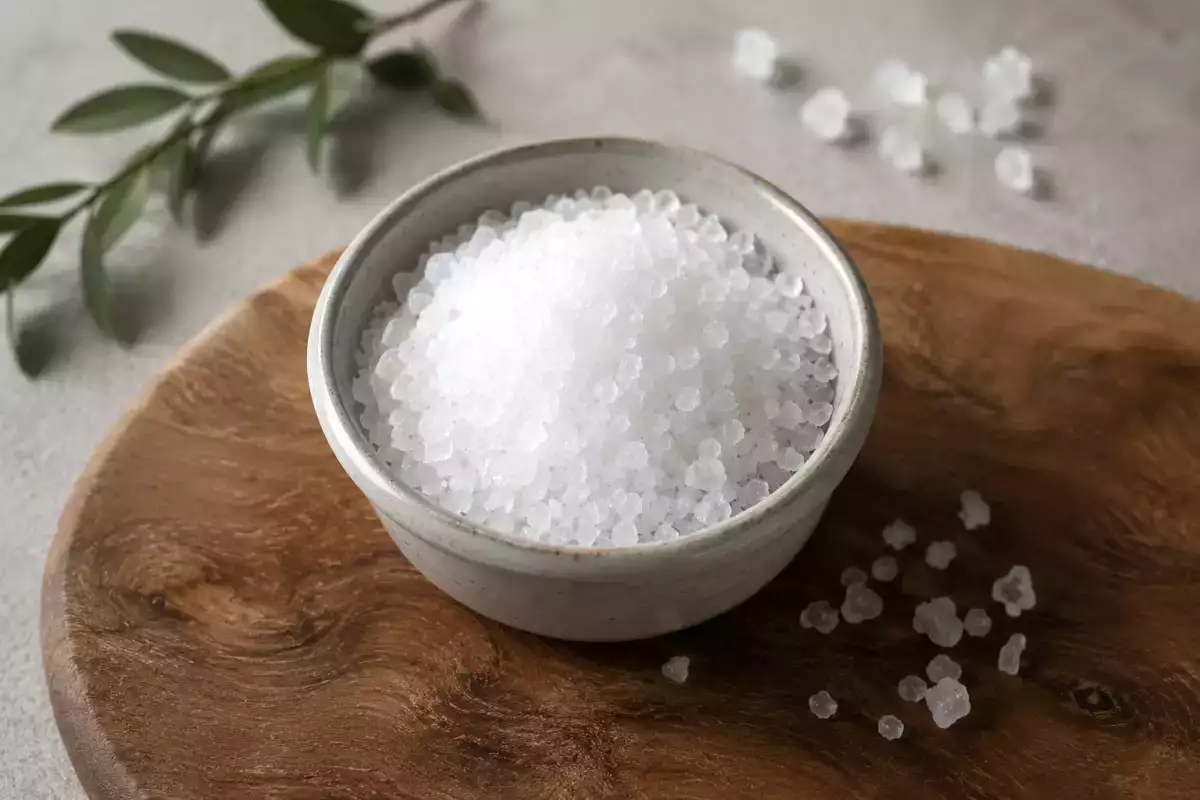
The answer depends mostly on what you’re looking for. Whether you're seasoning cooking water, finishing a salad, adding a little crunch to a tomato, or keeping an everyday salt at home, you don’t always choose the same product.
But when it comes to health, it’s important to keep one simple fact in mind: a salt that’s prettier, rarer, or more expensive is still, above all, just salt. It doesn’t make your food any saltier, and its subtle differences in color or texture shouldn’t make you forget the bottom line: we often consume too much of it without even realizing it!
The real difference starts with how you use it
Before comparing different types of salt, you need to ask yourself one simple question: what will it be used for?
The salt you put in a large pot of water to cook pasta doesn’t need to be high-quality. It will dissolve completely without adding any particular texture. In this case, fine salt or plain coarse salt is more than enough.
Conversely, when you add a few grains at the last moment to a slice of tomato, an egg, grilled fish, or focaccia, texture matters more. That’s where fleur de sel comes into its own: its crystals melt gently, have a slight crunch, and provide a more delicate sensation on the palate.
The right approach, therefore, isn’t to search for “the best salt” in absolute terms, but to choose the salt best suited to the task at hand: dissolving, cooking, finishing, adding a crunch, or seasoning with precision.
The salt you put in a large pot of water to cook pasta doesn’t need to be high-quality. It will dissolve completely without adding any particular texture. In this case, fine salt or plain coarse salt is more than enough.
Conversely, when you add a few grains at the last moment to a slice of tomato, an egg, grilled fish, or focaccia, texture matters more. That’s where fleur de sel comes into its own: its crystals melt gently, have a slight crunch, and provide a more delicate sensation on the palate.
The right approach, therefore, isn’t to search for “the best salt” in absolute terms, but to choose the salt best suited to the task at hand: dissolving, cooking, finishing, adding a crunch, or seasoning with precision.
Table salt: convenient, but easy to use too much of
Fine salt is the type most commonly used in everyday cooking. It’s easy to measure out, mixes well into dough, sauces, salad dressings, or stuffing, and dissolves quickly.
Its advantage is also its pitfall: because it’s very uniform and very fine, you can add it quickly without really noticing. A pinch may seem like a small amount, but several pinches throughout the day can really add up.
It’s still very useful for dishes where the salt needs to be evenly distributed: quiche, bread dough, omelets, soup, sauce, and mashed potatoes. It’s also ideal for boiling water.
The key thing to watch out for is your hand. With fine salt, it’s best to start with a small amount, taste it, and then adjust. And at the table, the best practice remains the same: taste before adding more salt.
Its advantage is also its pitfall: because it’s very uniform and very fine, you can add it quickly without really noticing. A pinch may seem like a small amount, but several pinches throughout the day can really add up.
It’s still very useful for dishes where the salt needs to be evenly distributed: quiche, bread dough, omelets, soup, sauce, and mashed potatoes. It’s also ideal for boiling water.
The key thing to watch out for is your hand. With fine salt, it’s best to start with a small amount, taste it, and then adjust. And at the table, the best practice remains the same: taste before adding more salt.
Coarse salt: perfect for cooking water and certain recipes
Coarse salt is often used to salt the water for pasta, potatoes, vegetables, or seafood. Since it dissolves in water, its texture doesn’t remain in the final dish, unless it’s used in a salt crust or as a very light finishing touch.
It’s also handy for certain recipes: cooking in a salt crust, draining very juicy vegetables, or preparing pickles or brines, depending on the recipe. But when seasoning a salad or cold sauce directly, it can be less pleasant if it doesn’t dissolve completely.
Again, price isn’t necessarily the main factor. For a pot of water, there’s no need to use a very delicate salt: it will dissolve, and its texture will disappear. Save the more subtle salts for moments when you’ll really be able to taste them.
It’s also handy for certain recipes: cooking in a salt crust, draining very juicy vegetables, or preparing pickles or brines, depending on the recipe. But when seasoning a salad or cold sauce directly, it can be less pleasant if it doesn’t dissolve completely.
Again, price isn’t necessarily the main factor. For a pot of water, there’s no need to use a very delicate salt: it will dissolve, and its texture will disappear. Save the more subtle salts for moments when you’ll really be able to taste them.
Fleur de sel: great for flavor, not for adding more salt
Fleur de sel is often prized for its texture. Its crystals are lighter and more irregular, and they add a very pleasant crunch when added at the last minute.
It’s perfect on simple foods: ripe tomatoes, buttered radishes, soft-boiled eggs, grilled vegetables, fish, caramel, and chocolate. It gives a more “refined” impression because it’s added as a finishing touch, right when the palate perceives it immediately.
But beware of the common misconception: just because it’s more expensive or artisanal, fleur de sel isn’t a license to add more salt. It’s still salt. Its value lies primarily in culinary terms: texture, enjoyment, finishing touch, and contrast.
The best way to use it? Use less, but at the right moment. A few crystals added at the very last moment can add more depth than a large amount of salt mixed in too early.
It’s perfect on simple foods: ripe tomatoes, buttered radishes, soft-boiled eggs, grilled vegetables, fish, caramel, and chocolate. It gives a more “refined” impression because it’s added as a finishing touch, right when the palate perceives it immediately.
But beware of the common misconception: just because it’s more expensive or artisanal, fleur de sel isn’t a license to add more salt. It’s still salt. Its value lies primarily in culinary terms: texture, enjoyment, finishing touch, and contrast.
The best way to use it? Use less, but at the right moment. A few crystals added at the very last moment can add more depth than a large amount of salt mixed in too early.
Pink salt: pretty, but not a nutritional miracle
Pink salt catches the eye. Its color gives the impression that it’s a more natural, more mineral-rich, and sometimes even healthier product. However, let’s keep it simple: even though it contains trace amounts of minerals, it’s still composed almost entirely of sodium chloride, just like other salts.
These trace minerals do not turn pink salt into a health food. To meet your mineral needs, it’s best to rely on a varied diet: vegetables, fruits, legumes, whole grains, nuts, dairy products, or suitable alternatives depending on your personal habits.
Pink salt can therefore be chosen for its appearance, taste, or presentation at the table. But it should not be considered a solution for “seasoning better” or for consuming more salt without consequences.
In short: it may be pleasant, but it is not an excuse to use more salt.
These trace minerals do not turn pink salt into a health food. To meet your mineral needs, it’s best to rely on a varied diet: vegetables, fruits, legumes, whole grains, nuts, dairy products, or suitable alternatives depending on your personal habits.
Pink salt can therefore be chosen for its appearance, taste, or presentation at the table. But it should not be considered a solution for “seasoning better” or for consuming more salt without consequences.
In short: it may be pleasant, but it is not an excuse to use more salt.
Iodized salt: Useful information to look for on the label
When it comes to salt in our daily lives, one detail really deserves our attention: the “iodized salt” label.
The National Nutrition and Health Program recommends that adults consume no more than 5 g of salt per day and choose iodized salt whenever it is labeled as such. Iodine plays a key role in maintaining proper thyroid function.
This doesn’t mean you should add more salt just because it’s iodized. It simply means that, if you use salt at home, choosing iodized salt can be a helpful guideline for everyday use.
In practice, you can keep a simple iodized salt on hand for everyday cooking and reserve fleur de sel or a more distinctive salt for finishing touches. This is often the most logical compromise: practical, reasonable, and easy to follow.
The National Nutrition and Health Program recommends that adults consume no more than 5 g of salt per day and choose iodized salt whenever it is labeled as such. Iodine plays a key role in maintaining proper thyroid function.
This doesn’t mean you should add more salt just because it’s iodized. It simply means that, if you use salt at home, choosing iodized salt can be a helpful guideline for everyday use.
In practice, you can keep a simple iodized salt on hand for everyday cooking and reserve fleur de sel or a more distinctive salt for finishing touches. This is often the most logical compromise: practical, reasonable, and easy to follow.
Hidden salt often accounts for more than the salt added at the table
When we think of salt, we often picture a salt shaker. However, a large portion of the salt we consume already comes from food: bread, cheese, deli meats, prepared meals, crackers, soups, sauces, broths, pizzas, sandwiches, and snack foods.
This is what’s known as “hidden salt.” And it’s often this hidden salt that drives up your daily intake, even if you feel like you’re using very little salt at the table.
So the right approach isn’t just to switch to a different type of salt, but also to look at the meal as a whole. If you’re already serving cold cuts, cheese, olives, bread, and a store-bought sauce, the dish may already be quite salty even before you add a pinch.
To reduce salt without sacrificing flavor, consider using fresh herbs, spices, lemon, vinegar, garlic, onion, pepper, smoked paprika, cumin, or other seasonings. They add depth without adding sodium.
This is what’s known as “hidden salt.” And it’s often this hidden salt that drives up your daily intake, even if you feel like you’re using very little salt at the table.
So the right approach isn’t just to switch to a different type of salt, but also to look at the meal as a whole. If you’re already serving cold cuts, cheese, olives, bread, and a store-bought sauce, the dish may already be quite salty even before you add a pinch.
To reduce salt without sacrificing flavor, consider using fresh herbs, spices, lemon, vinegar, garlic, onion, pepper, smoked paprika, cumin, or other seasonings. They add depth without adding sodium.
How to choose salt for cooking?
To put it simply, you can think of it as three jars instead of ten.
Fine iodized salt for everyday cooking: sauces, pasta, quiche fillings, soups, omelets, mashed potatoes, and salad dressings. It dissolves quickly and is easy to measure out.
Coarse salt for boiling water, cooking in a crust, and certain preparations that require drawing out moisture or salting a large quantity of water.
Fleur de sel or finishing salt for ready-to-serve dishes: grilled vegetables, tomato salads, eggs, fish, open-faced sandwiches, and chocolate or caramel desserts. Here, the salt serves almost as a final seasoning, to be used in small amounts.
Pink salt, on the other hand, may have its place if you like its color or appearance, but it isn’t essential. If you have some, use it as table salt or a finishing salt, without assuming it offers any additional health benefits.
Fine iodized salt for everyday cooking: sauces, pasta, quiche fillings, soups, omelets, mashed potatoes, and salad dressings. It dissolves quickly and is easy to measure out.
Coarse salt for boiling water, cooking in a crust, and certain preparations that require drawing out moisture or salting a large quantity of water.
Fleur de sel or finishing salt for ready-to-serve dishes: grilled vegetables, tomato salads, eggs, fish, open-faced sandwiches, and chocolate or caramel desserts. Here, the salt serves almost as a final seasoning, to be used in small amounts.
Pink salt, on the other hand, may have its place if you like its color or appearance, but it isn’t essential. If you have some, use it as table salt or a finishing salt, without assuming it offers any additional health benefits.
The right approach: less salt, but used more wisely
Real change doesn’t necessarily mean replacing all your salt. It’s more about using it better.
Add salt gradually. Taste it before adding more. Avoid automatically salting the water, the sauce, and then the plate without checking first. And when a dish lacks depth, first ask yourself if it really needs more salt… or perhaps more acidity, herbs, fat, crunch, or spices.
A tomato salad may seem bland if it lacks basil, olive oil, or vinegar. Grilled vegetables can gain flavor with lemon, garlic, or seasoned yogurt. Fish can be enhanced with herbs and a squeeze of lemon before adding salt.
In summary: fine salt, coarse salt, fleur de sel, and pink salt don’t all serve exactly the same purpose in cooking. But none of them allows you to use more salt while thinking you’re doing something better for your health. The most important thing is to choose the right salt for the right purpose, read the label when looking for iodized salt, and use it sparingly.
Add salt gradually. Taste it before adding more. Avoid automatically salting the water, the sauce, and then the plate without checking first. And when a dish lacks depth, first ask yourself if it really needs more salt… or perhaps more acidity, herbs, fat, crunch, or spices.
A tomato salad may seem bland if it lacks basil, olive oil, or vinegar. Grilled vegetables can gain flavor with lemon, garlic, or seasoned yogurt. Fish can be enhanced with herbs and a squeeze of lemon before adding salt.
In summary: fine salt, coarse salt, fleur de sel, and pink salt don’t all serve exactly the same purpose in cooking. But none of them allows you to use more salt while thinking you’re doing something better for your health. The most important thing is to choose the right salt for the right purpose, read the label when looking for iodized salt, and use it sparingly.
 Adèle Peyches
Editorial manager who just can't wait for winter to enjoy fondue! Passionate about gastronomy and always on the lookout for new culinary gems, I first studied law before returning to my first love: the taste of good products and the joy of sharing around the table :)
Comments