From Milan to Vienna to Ljubljana: three different cutlets, which one should you choose for dinner tonight?
Sunday 25 October 2026 21:00 - Francesco Rosso
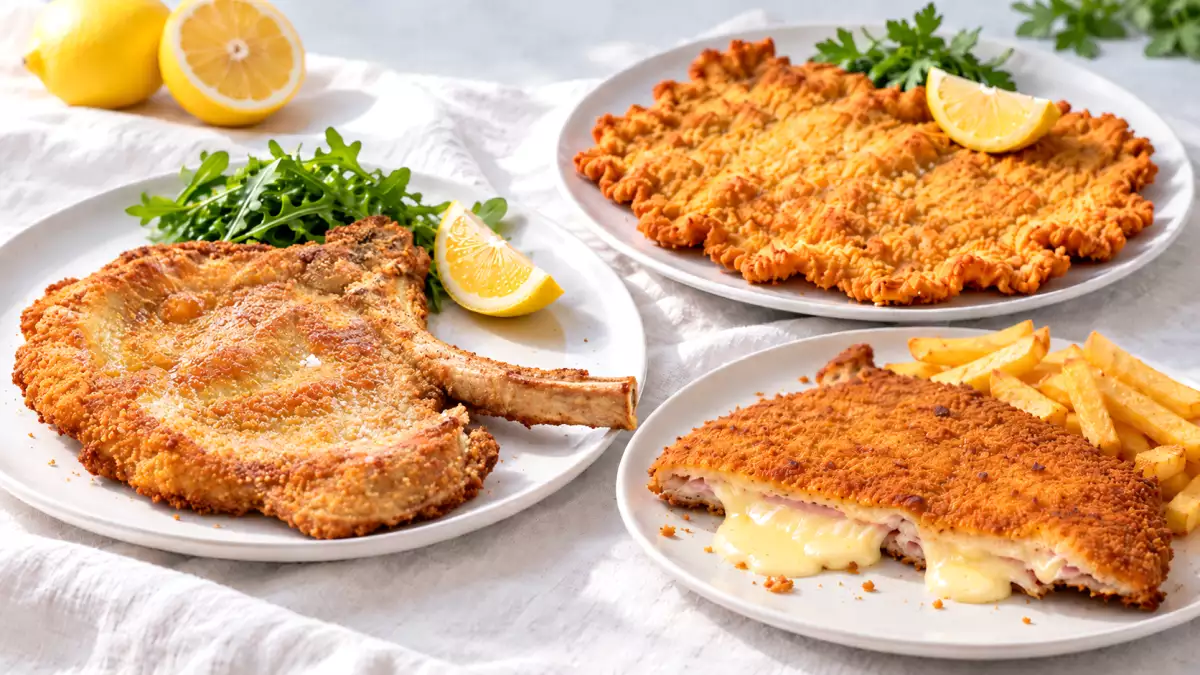
The Milanese exudes Lombard tradition, the Viennese focuses on a subtle and precise crispness, and the Lubianska plays the card of a stringy center. The real question is simple: which one should you choose when your craving for breaded meat gets serious?
Three cutlets, three crispy flavors
The first thing to know is that these three specialties share the breading, but they tell very different stories. The cotoletta isn’t just a slice of meat coated in breadcrumbs: it’s a small manifesto of home-style cooking, of trattorias, taverns, and leisurely lunches.
Visually, they may seem like close relatives, but from the first bite, they take different paths. The Milanese is substantial and juicy; the Viennese is lighter on the palate; the Lubianska is warm, rich, and closer to the concept of a main course.
- The Milanese cutlet is meatier, traditionally made with veal, often on the bone, and cooked in clarified butter.
- The Wiener Schnitzel is thin, wide, boneless, with a light, dry, and airy breading.
- The Lubianska is the most generous: a slice stuffed with ham and cheese, then breaded and fried.
Visually, they may seem like close relatives, but from the first bite, they take different paths. The Milanese is substantial and juicy; the Viennese is lighter on the palate; the Lubianska is warm, rich, and closer to the concept of a main course.
Milanese and Wiener Schnitzel: Europe's most golden rivalry
What’s the difference between a Milanese cutlet and a Wiener Schnitzel? It’s the question that comes up every time breaded meat is mentioned. The story is fascinating because it pits two culinary capitals (Milan and Vienna) against each other, each convinced it has a special version to defend.
The Milanese cutlet is associated with Lombard tradition and veal cutlets browned in butter. The Wiener Schnitzel, on the other hand, has become one of the most recognizable symbols of Austrian cuisine. The most famous legend tells of a cultural exchange between Milan and Vienna, but rather than a contest over which came first, what matters today is understanding what really sets the two apart on the plate.
The traditional Milanese cutlet is thicker, often on the bone, and strives for a balance between a crispy crust and tender meat. The Viennese cutlet is pounded thin, dipped in flour, egg, and breadcrumbs, then fried so that the breading remains slightly raised above the meat.
La Milanese: bone, butter, and trattoria tradition
Does an authentic Milanese cutlet have a bone? In the most classic version, yes. We’re not talking about just any old cutlet, but a veal chop, with the bone giving the dish its shape, presence, and distinctive character. It’s the kind of dish that brings to mind Sundays in Milan, tables set without too much fuss and a cuisine that’s hearty, straightforward, and very Italian.
The bone isn’t just for show. It helps identify the cut, reinforces the idea of a more substantial cutlet, and complements meat that needs to remain tender on the inside. Traditional cooking in clarified butter is another key point: it withstands the heat better, imparts a rich aroma, and gives that deep golden brown color that sets the Milanese cutlet apart from many imitations.
There’s also a version called “elephant’s ear,” which is wider and thinner, very popular in trattorias, and easy to serve. It’s flavorful, visually striking, and crispy, but different from the classic cutlet. Those seeking the most authentic Milanese cutlet should focus on high-quality meat, a dry breading, and careful cooking; without masking the veal’s natural flavor.
The Viennese: thin, light, and perfect for lemon
What kind of meat is used for Wiener Schnitzel? The traditional answer is veal. When people in Austria talk about Wiener Schnitzel in the most classic sense, that’s exactly what they mean. If pork, chicken, or turkey are used, you’re often entering the realm of “Viennese-style” versions; which are delicious and widespread but have a different identity.
The most recognizable feature of the Viennese-style dish is its thickness. The meat is pounded very thin, and the breading should be light, crispy, and not heavy. It shouldn’t cling like a solid armor, but remain almost wavy and light, with a golden surface that crumbles easily under the fork.
Here, the lemon isn’t just a decorative touch added out of habit. It serves to add freshness, cleanse the palate, and balance the fried flavor. Served with parsley potatoes, potato salad, or a simple side dish, the Wiener Schnitzel becomes an elegant yet approachable main course, perfect for those who love crispiness without overly thick meat.
La Lubianska: when a cutlet hides a melt-in-your-mouth center
What is lubianska? It’s the richest and most cheerful version of the trio. Also known as Ljubljanski zrezek, it draws on Slovenian and Central European cuisine: a thin slice of meat (often pork or veal) stuffed with ham and cheese, carefully sealed, breaded, and fried until it has a golden crust and a tender interior.
The comparison with cordon bleu comes naturally, but the Ljubljana-style cutlet has more of a tavern-style character: a generous portion, a bold flavor, and a filling that makes the dish complete. It’s the right choice when you want not just a crispy cutlet, but also a creamy and flavorful center.
Compared to the Milanese and Viennese cutlets, it’s less simple, more substantial, and better suited for a hearty dinner.
What to choose for dinner? A simple guide
The choice between Milanese, Viennese, and Lubianska depends less on the dish’s national origin and more on what you expect from the first bite. Do you want a classic cutlet, a thin breading, or a stringy filling? Here’s a practical guide, useful both at a restaurant and at home:
- Choose the Milanese if you love veal, butter, a thick cut, and a cutlet with the character of a true Italian classic.
- Choose the Viennese-style if you prefer a thin, crispy, and drier cutlet, ideal with lemon and potatoes.
- Choose the Lubianska if you want a richer cutlet, with ham, cheese, and a decidedly indulgent twist.
- Choose a chicken or turkey version if you’re looking for a more everyday option that’s easy to serve during the week.
The first bite decides everything
In the end, choosing the absolute best would be a fun game, but not quite fair. The Milanese cutlet embodies Italian tradition: bone, butter, and juicy meat. The Wiener Schnitzel evokes Vienna with its thin, precise breading and the scent of lemon. The Lubianska adds the delight of a filling and transforms the cutlet into a richer, more convivial dish.
So the right question isn’t which one is superior. It’s: what kind of cutlet do you feel like eating today? If you’re looking for a great classic, the Milanese remains a safe bet. If you want elegant crispiness, go for the Viennese. If, on the other hand, the evening calls for something warm, stringy, and very flavorful, the Lubianska knows exactly what to serve.
So the right question isn’t which one is superior. It’s: what kind of cutlet do you feel like eating today? If you’re looking for a great classic, the Milanese remains a safe bet. If you want elegant crispiness, go for the Viennese. If, on the other hand, the evening calls for something warm, stringy, and very flavorful, the Lubianska knows exactly what to serve.
 Francesco Rosso
A journalist in search of new horizons. As a lover of wine and simple dishes, I’ve decided to set out to discover new ways of approaching cuisine.
Comments