Green beans: The everyday habit nearly all of us do that could be quietly wasting your time
Friday 4 September 2026 21:00 - Adèle Peyches
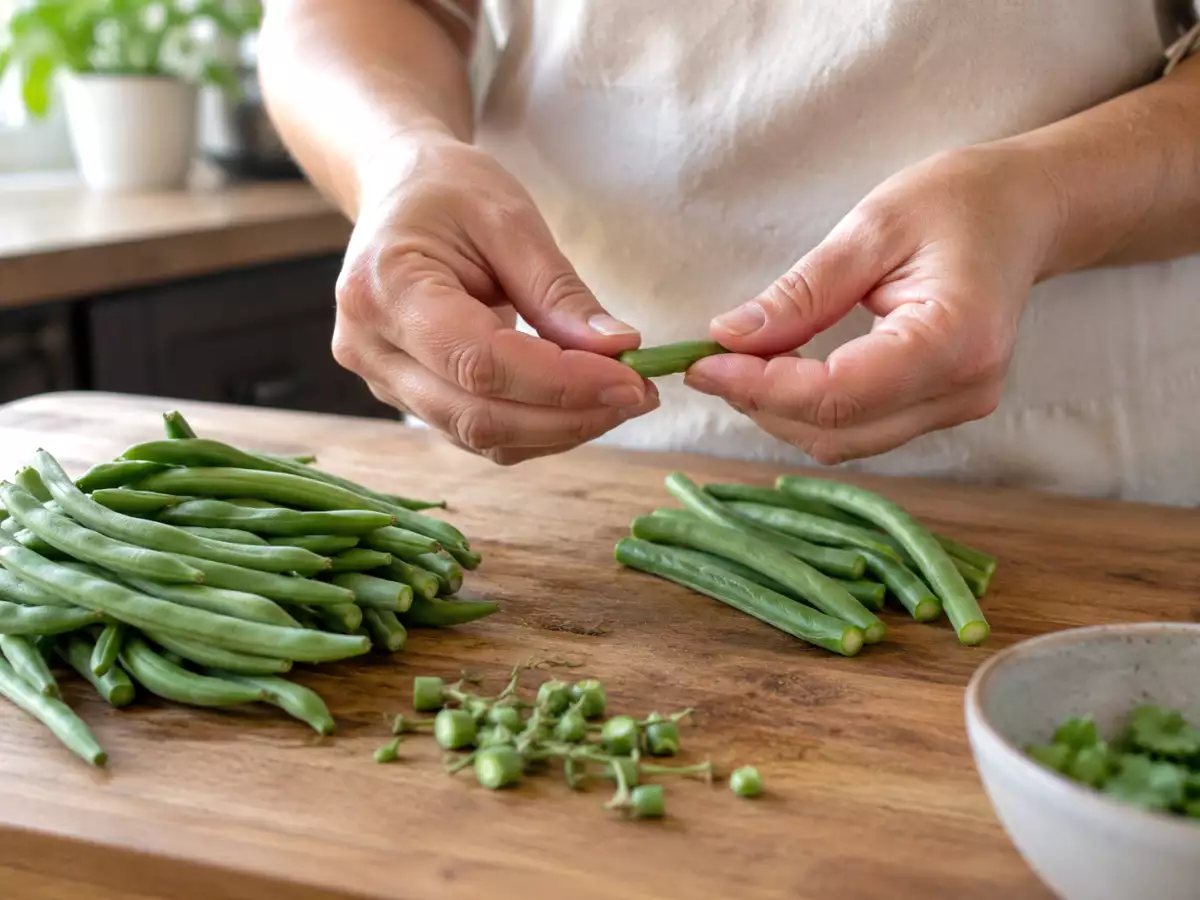
On social media, this tip comes up regularly: only the end with the stem—the one that attached the green bean to the plant—really needs to be removed. The other end is edible—often tender—and shouldn’t be a problem after cooking. That could save you several minutes when preparing a large bowl of fresh green beans.
So, is this a good idea or a bit too optimistic of a shortcut? The answer is more nuanced, as is often the case in the kitchen. Yes, you can save time by cutting only one end. But no, that doesn’t mean you should keep all the tips without checking them first. Dry, damaged, tough, or stringy tips always deserve a quick trim with a knife.
What we're really cutting off when we remove the tail
When preparing fresh green beans, the most important step is to remove the stem end. This is the smaller, firmer end—the part by which the bean was attached to the plant. It can be tough, less pleasant to bite into, and doesn’t add much to the dish.
The other end, which is often thinner, doesn’t always need to be trimmed. On young, fresh, bright green stringless beans, it becomes tender when cooked and is perfectly edible. This is where you can save time, especially when preparing 500 g or 1 kg for a large gathering.
But be careful not to take the easy way out: if this tip is dry, browned, soft, broken, or if the bean looks old and stringy, remove it as well. So the right approach isn’t “never cut off the other end,” but rather: cut off only what’s really in the way.
The other end, which is often thinner, doesn’t always need to be trimmed. On young, fresh, bright green stringless beans, it becomes tender when cooked and is perfectly edible. This is where you can save time, especially when preparing 500 g or 1 kg for a large gathering.
But be careful not to take the easy way out: if this tip is dry, browned, soft, broken, or if the bean looks old and stringy, remove it as well. So the right approach isn’t “never cut off the other end,” but rather: cut off only what’s really in the way.
The 1-kg time trial: where can you save time?
To conduct this test properly at home, take 1 kg of fresh green beans (2lbs), divide them into two 500-gram batches, and then prepare them in two different ways. First batch: Cut off both ends. Second batch: Remove only the stem, then remove the other end only if it’s damaged or stringy.
The expected result makes sense: the time saved comes mainly from the fewer steps involved. Cutting both ends requires turning or repositioning each bean. Removing just one end lets you work faster, especially if the beans are lined up in handfuls.
To publish an accurate time, it’s best to precisely note the time taken to prepare your kilogram of green beans. What’s most interesting isn’t just the total time, but also the ease of the process: fewer steps, less waste, and a smoother preparation.
The expected result makes sense: the time saved comes mainly from the fewer steps involved. Cutting both ends requires turning or repositioning each bean. Removing just one end lets you work faster, especially if the beans are lined up in handfuls.
To publish an accurate time, it’s best to precisely note the time taken to prepare your kilogram of green beans. What’s most interesting isn’t just the total time, but also the ease of the process: fewer steps, less waste, and a smoother preparation.
Texture after baking: can you tell the difference?
With very fresh, thin, or extra-thin green beans, the difference in texture is often subtle. Once cooked, the small tip without a stem becomes tender and isn’t really a problem. In a salad, a stir-fry, or a side dish with butter, it usually goes unnoticed.
On the other hand, with larger, riper, or slightly past-their-prime green beans, the tip may be less pleasant. This is where your eyes and sense of touch come into play. If the tip seems dry, hard, or fibrous, cut it off. If a string comes loose when you snap off the end, remove the string or prepare the beans more carefully.
In short: the rule depends largely on the quality of the beans. Fresh, firm, and crisp beans handle quicker preparation very well. Older beans require more careful sorting.
On the other hand, with larger, riper, or slightly past-their-prime green beans, the tip may be less pleasant. This is where your eyes and sense of touch come into play. If the tip seems dry, hard, or fibrous, cut it off. If a string comes loose when you snap off the end, remove the string or prepare the beans more carefully.
In short: the rule depends largely on the quality of the beans. Fresh, firm, and crisp beans handle quicker preparation very well. Older beans require more careful sorting.
Introduction: should you keep the second end when you're the receiving team?
In terms of presentation, cutting off both ends obviously yields a neater result. The beans all look the same, especially if you serve them in bundles, on a neatly arranged plate, or with a very elegant garnish.
For an everyday meal, a family salad, or a quick stir-fry, leaving the thin tips on doesn’t make much difference. You save time, reduce waste, and no one is likely to inspect each bean under a magnifying glass. Well, usually.
The right compromise is simple: for a fancy dish, you can trim both ends. For a weeknight dinner, just remove the stem and any damaged parts. Cooking doesn’t always have to be symmetrical to be good.
For an everyday meal, a family salad, or a quick stir-fry, leaving the thin tips on doesn’t make much difference. You save time, reduce waste, and no one is likely to inspect each bean under a magnifying glass. Well, usually.
The right compromise is simple: for a fancy dish, you can trim both ends. For a weeknight dinner, just remove the stem and any damaged parts. Cooking doesn’t always have to be symmetrical to be good.
And what about the sons in all this?
The real issue, more than the small tip, is sometimes the string in the green bean. Some heirloom varieties or beans that are slightly overripe may have a string running down the side. You can feel it when you taste it, and it can make the bite less pleasant.
When you snap off the stem, pull gently: if a string comes with it, remove it. If nothing resists and the bean snaps cleanly, there’s no need to look for a problem that doesn’t exist. Modern green beans, especially thin and very fresh ones, are often much less stringy than they used to be.
So it’s less about cutting off both ends and more about sorting them wisely. Remove the tough, dry, and stringy parts. Keep what’s tender and tasty.
When you snap off the stem, pull gently: if a string comes with it, remove it. If nothing resists and the bean snaps cleanly, there’s no need to look for a problem that doesn’t exist. Modern green beans, especially thin and very fresh ones, are often much less stringy than they used to be.
So it’s less about cutting off both ends and more about sorting them wisely. Remove the tough, dry, and stringy parts. Keep what’s tender and tasty.
Cooking: how to keep vegetables green and crisp
Once the beans are prepared, cooking them is just as important as trimming the ends. To preserve their beautiful green color and pleasant texture, plunge them into a large pot of boiling salted water, then quickly cool them in ice water if you want to stop the cooking process.
This method helps preserve their crunch and vibrant color, especially if the beans are to be used in a salad or reheated later in a skillet. Overcooked beans will be mushy, whether they’ve been cut on one end or both. In other words, overcooking can ruin the dish far more than leaving a small tip at the end.
For a heartier version, pan-frying also works very well, especially if the beans have already been blanched or precooked.
This method helps preserve their crunch and vibrant color, especially if the beans are to be used in a salad or reheated later in a skillet. Overcooked beans will be mushy, whether they’ve been cut on one end or both. In other words, overcooking can ruin the dish far more than leaving a small tip at the end.
For a heartier version, pan-frying also works very well, especially if the beans have already been blanched or precooked.
So, shall we cut off a bit or two?
The most honest answer is this: always remove the stem, and decide what to do with the other end based on the condition of the green bean. If the tip is fresh, thin, and tender, you can leave it on. If it’s dry, damaged, tough, or stringy, cut it off.
For 1 kg of green beans, this hybrid method is probably the best approach: it saves time without making the preparation seem sloppy. You maintain quality, minimize unnecessary steps, and avoid the “I just cut everything out of habit” approach.
For 1 kg of green beans, this hybrid method is probably the best approach: it saves time without making the preparation seem sloppy. You maintain quality, minimize unnecessary steps, and avoid the “I just cut everything out of habit” approach.
 Adèle Peyches
Editorial manager who just can't wait for winter to enjoy fondue! Passionate about gastronomy and always on the lookout for new culinary gems, I first studied law before returning to my first love: the taste of good products and the joy of sharing around the table :)
Comments