Has your chocolate turned white? Here's what those white spots mean
Wednesday 25 November 2026 21:00 - Adèle Peyches
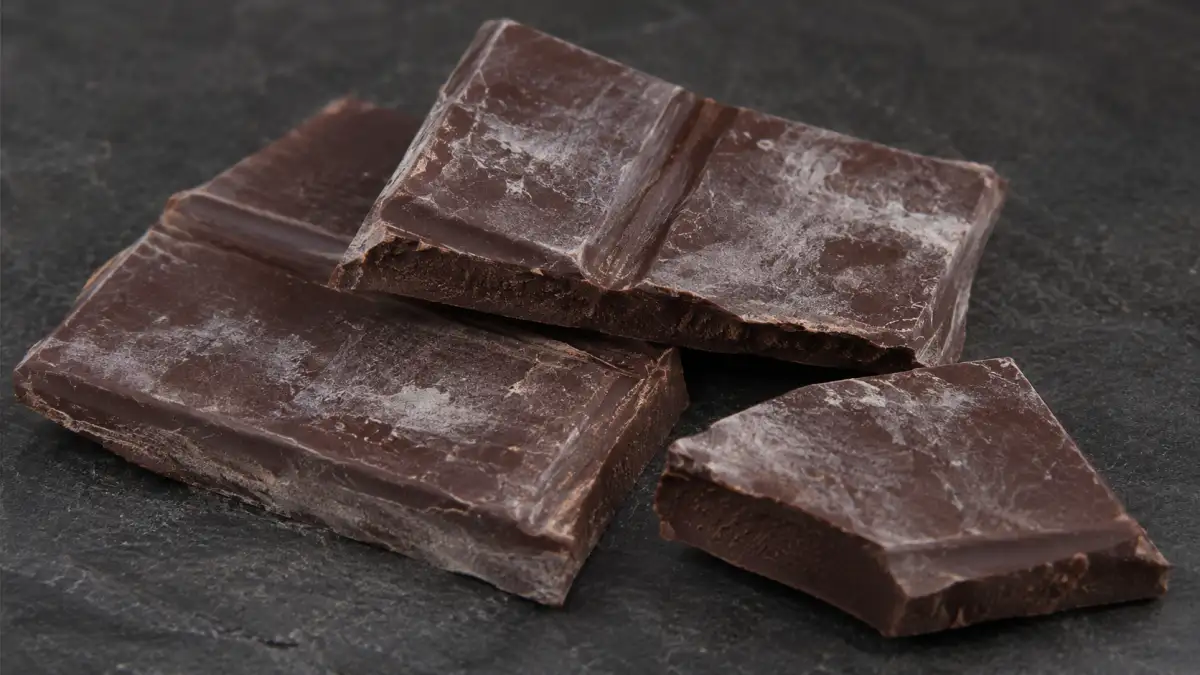
Good news: white marks on chocolate are often just chocolate bloom, a change caused by fat or moisture rather than spoilage. The bar may look less appetizing or feel slightly grainy, but that doesn't automatically make it unsafe. The trick is knowing what you're looking at, checking how the chocolate was stored and deciding whether it's better for snacking or baking. Here's what those mysterious marks really mean.
1. What are those white marks on chocolate?
Chocolate gets its familiar shine and snap partly from the way cocoa butter forms crystals. If those crystals change, or moisture affects the sugar on the surface, the bar can develop pale streaks or a dusty-looking coating. This is called chocolate bloom.
It often happens when chocolate is stored in a place with changing temperatures, such as a cupboard beside the oven, or moved from a cold refrigerator into a warm kitchen.
There are two main types: fat bloom and sugar bloom. They can look similar, but they happen for different reasons. Neither is the same as mold, although appearance alone can't guarantee that food is safe.
2. Fat bloom happens when cocoa butter moves
See smooth, pale gray streaks or a cloudy, marbled film? You may be looking at fat bloom. When chocolate warms and cools unevenly, cocoa butter can migrate and form crystals on the surface, changing its glossy finish.
Imagine leaving a chocolate bar in a warm car and then carrying it into an air-conditioned house. Even if the bar keeps its shape, those temperature changes can affect its texture and appearance.
Fat-bloomed chocolate may feel less smooth and lose some of its satisfying snap. But fat bloom alone doesn't mean the chocolate has spoiled. Check the packaging, storage history and any unusual signs before deciding to eat it.
3. Sugar bloom is a different problem
Sugar bloom is linked to moisture. If condensation forms on cold chocolate, a little surface sugar can dissolve. As the moisture dries, that sugar recrystallizes, leaving a rough or powdery-looking coating.
This is why putting chocolate in the refrigerator and immediately unwrapping it in a humid kitchen can backfire. Cold chocolate meets warm air, droplets form, and the smooth surface changes.
Unlike fat bloom, sugar bloom often feels noticeably gritty. You don't need to identify the exact type to make a sensible decision, though. Both are reasons to improve storage, not automatically reasons to throw away an otherwise sound bar.
4. Is chocolate with white spots safe to eat?
Plain chocolate with ordinary bloom is generally still edible if it has been stored correctly and shows no other signs of deterioration. The texture may change, but pale streaks themselves aren't proof of mold.
However, don't assume every white patch is bloom. If you notice fuzzy growth, unusual moisture, a strange smell or damaged packaging, discard the chocolate. Don't taste questionable food to test it.
Be especially careful with chocolates filled with fresh cream or other perishable ingredients. Their storage requirements can be very different from a plain bar. Follow the packaging's storage instructions and use-by information rather than relying only on appearance.
5. Why does bloomed chocolate taste different?
Chocolate is as much about texture as flavor. A good bar feels smooth as it melts, and a well-tempered piece breaks with a clean snap. Bloom can interfere with both. Fat bloom may change the melt and snap, while sugar bloom can make the surface gritty.
That doesn't necessarily mean the chocolate is more bitter, less sweet or unsafe. It simply may not deliver the experience you expected when you opened it.
If you're serving a beautiful chocolate assortment at Christmas, you might prefer an unaffected bar. But when the flavor is still pleasant and the chocolate is safe, those less-than-perfect pieces can be put to excellent use in baking.
6. Give bloomed chocolate a second life in baking
Have a slightly cloudy bar that still smells normal and has been stored safely? Chop it into brownie batter, melt it for a chocolate cake or stir it into hot milk for a rich drink. Once melted and incorporated into a recipe, the original surface marks are usually no longer an issue.
For ganache, use a reliable recipe and follow its proportions of chocolate to cream. Heat gently and stir until smooth. If you want shiny chocolate decorations or a crisp coating for cookies, proper tempering may be needed to restore a glossy finish.
Don't try to rescue chocolate showing signs of genuine spoilage. Baking isn't a reason to use questionable ingredients.
7. Store chocolate where the temperature stays steady
The best everyday storage spot is usually cool, dry and away from strong odors. Keep wrapped chocolate in a cupboard away from the stove, sunny windows and radiators. A consistently cool pantry is often better than a refrigerator that causes repeated temperature changes.
If your kitchen is hot and refrigeration is necessary, protect the chocolate in a sealed package or container. When you're ready to use it, let the sealed package warm gradually before opening. That helps reduce condensation on the chocolate.
Filled chocolates may require refrigeration regardless of your preferences. Always follow their specific storage instructions. The goal is stable conditions that suit the product.
8. Check these things before throwing a bar away
Before discarding chocolate with white streaks, ask three questions. Was it stored properly? Does it smell normal? Is the surface simply streaky, or is there suspicious growth or moisture? A plain bar with familiar bloom may still be enjoyable, especially when melted into dessert.
If you're unsure about its safety, throw it away rather than taking a chance. If it's merely lost its shine, save it for baking and buy a fresh bar when appearance matters.
Next time, skip the shelf above the oven and choose a steadier storage spot. A little attention to temperature and humidity can keep chocolate looking lovely and help reduce food waste. No need to waste a good bar just because it isn't perfectly glossy!

Editorial Manager of Petitchef’s French edition, Adèle is passionate about food and gastronomy. A former culinary tour guide in Bordeaux, she explores food traditions worldwide, seasonal ingredients and shares her discoveries through recipes and practical advice.
Comments