How much watermelon is a healthy daily serving? Simple tips to choose the right balanced portion
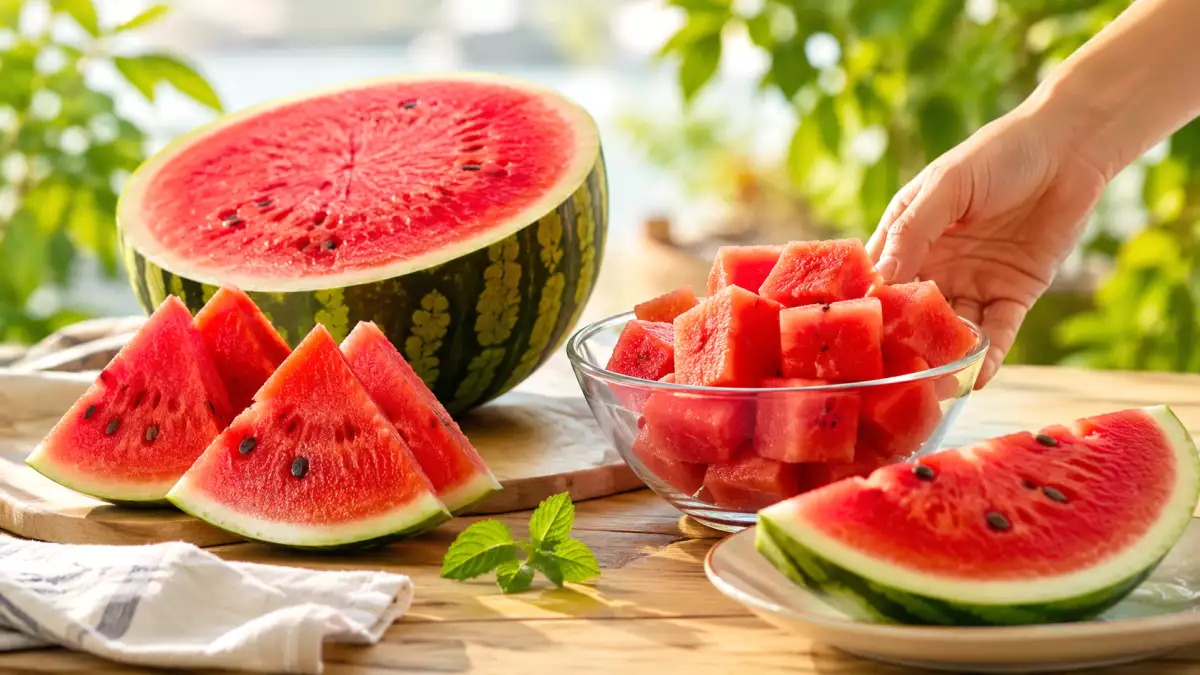
Fresh, sweet, and full of water, watermelon is one of the most beloved fruits of summer. The problem is that one slice leads to another, and before you know it, you may end up eating a decidedly large amount.
But how much watermelon can you eat each day without upsetting your digestion or consuming too much sugar?
For a healthy adult, a standard serving is about 150 grams (5 oz). As part of a balanced diet, you can consume up to 300 grams (10 oz) of watermelon a day, especially if it replaces other fruits or a higher-calorie snack.
However, there’s no one-size-fits-all “perfect” amount. You need to consider your diet, physical activity, and, above all, how well your digestive system handles it.
How much watermelon should you eat each day?
For a healthy adult :
- 150 grams (5 oz) of watermelon per day is considered a standard serving size.
- In some cases, this can go up to 300 grams (10 oz), especially if the watermelon replaces another serving of fruit or a higher-calorie snack.
However, there is no one-size-fits-all amount. The most appropriate portion depends on the rest of your diet, physical activity, and how well your digestive system handles it. Eating more occasionally isn’t necessarily a problem, but very large amounts can cause bloating or digestive discomfort in more sensitive individuals.
The best approach is to vary your fruit intake throughout the week, alternating watermelon with peaches, apricots, cantaloupe, and other seasonal fruits.
How many calories are in watermelon?
Watermelon contains about 16 calories per 100 grams (3.5 oz). A 150-gram (5 oz) serving therefore provides about 24 calories.
The same serving contains about 143 grams of water, 5.6 grams of available carbohydrates, and 5.6 grams of soluble sugars. Fiber, on the other hand, is quite low: about 0.3 grams per serving.
It is therefore a low-calorie fruit that is very high in water content. However, this does not mean you can eat it “without limits”: a large bowl can contain several servings, even when it seems like just a light snack.
Does watermelon make you gain weight?
Watermelon alone does not cause weight gain. Weight gain depends on your overall dietary balance, not on a single fruit.
A serving of watermelon eaten as a snack can easily fit into even a low-calorie diet. It’s a different story if you eat a very large amount after a full meal, simply because in that case you’re adding extra calories and sugar.
Can you eat watermelon every day?
During the summer, you can eat watermelon every day, as long as you maintain a varied diet.
Watermelon consists mainly of water and small amounts of vitamins and minerals, but it provides very little protein, fat, or fiber. For this reason, it shouldn’t be the only fruit you eat every day and cannot be considered a complete food.
Alternating it with other fruits allows you to get a variety of nutrients and fiber. In short, watermelon can be a staple of summer, but it shouldn’t be the only fruit you eat.
Can watermelon replace a meal?
Eating only watermelon for lunch or dinner does not constitute a balanced meal. The fruit contains a lot of water and sugar, but only minimal amounts of protein, fat, and fiber.
It may provide a temporary feeling of fullness, but hunger could return quickly.
It’s best to eat it as fruit after a meal or as a snack. To make the snack more complete, you can pair it with plain yogurt or a small amount of dried fruit, always keeping your nutritional needs in mind.
Why does watermelon make your stomach bloated?
Watermelon doesn’t cause bloating in everyone, but it can cause digestive discomfort in some people, especially when eaten in large quantities.
Monash University lists watermelon among fruits with a high content of excess fructose, one of the fermentable carbohydrates known as FODMAPs. These substances can contribute to bloating and other symptoms, especially in people with irritable bowel syndrome or particular digestive sensitivities.
Those who experience bloating after eating watermelon may try reducing the amount, eating it slowly, and avoiding pairing it with large portions of other fruits.
However, a low-FODMAP diet should not be started on one’s own: if symptoms occur frequently, it is best to consult a healthcare professional.
Is it bad for you to eat watermelon in the evening?
There’s no specific time of day when watermelon suddenly becomes higher in calories. Eating it in the evening doesn’t make you gain more weight than eating it during the day.
A very large serving right before bed, however, might be uncomfortable for those who suffer from bloating or tend to wake up often to urinate. After all, watermelon is composed almost entirely of water.
Those who digest it well can eat it even after dinner. Those who feel a sense of heaviness, on the other hand, may prefer to eat it in the afternoon.
Can people with diabetes eat watermelon?
Diabetes doesn’t automatically mean you can’t eat watermelon. However, the fruit contains carbohydrates, which must be factored into your personal meal plan.
The American Diabetes Association notes that fruit contains carbohydrates and recommends a guideline serving size of between three-quarters of a cup and one cup for many fresh melons. However, portion sizes should be adjusted according to each individual’s treatment plan and needs.
Those who need to monitor their blood sugar should therefore avoid eating large bowls of watermelon without paying attention to portion size. If you have diabetes, the most appropriate amount should be discussed with your doctor or dietitian.
One last tip for enjoying it the right way
Ultimately, watermelon can be enjoyed without worry as part of a balanced diet, without making portion size a strict rule. The right amount varies from person to person, but the rule is simple: listen to your body’s tolerance, avoid overeating, and alternate it with other seasonal fruits. That way, watermelon remains a fresh and light treat, not a food you have to weigh with anxiety.
Here’s a practical tip: serve watermelon in a bowl or on a plate, rather than continuing to cut slices directly from the fruit. This makes it easier to keep track of how much you’ve eaten, before all that’s left of the watermelon is a memory.
 Leandra Masha
Comments