Moka, espresso, or drip: the right coffee isn't always the same, it depends on your day
Monday 26 October 2026 21:00 - Francesco Rosso
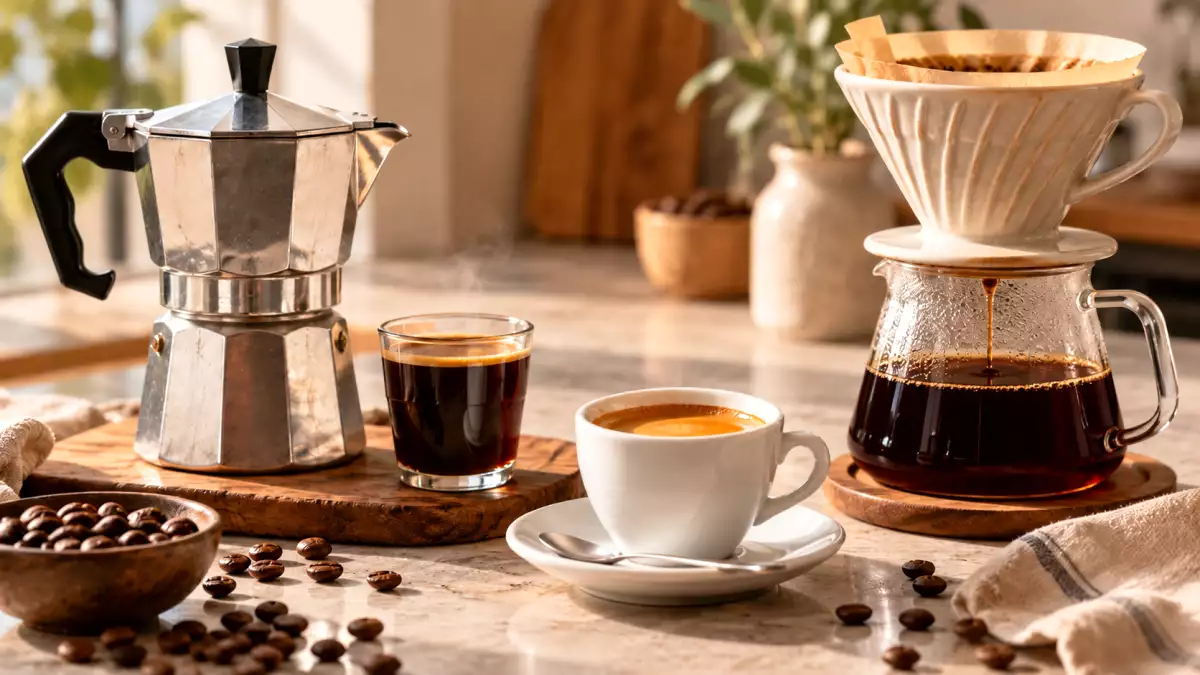
The moka pot evokes Italian home cooking, espresso brings to mind cafés and quick breaks, and filter coffee suggests longer sips and clean, crisp aromas. There is such a thing as the best coffee, but it varies depending on the moment, the blend, and even your mood.
Three coffees, three personalities to discover
Before choosing the best method for making coffee, it’s important to understand one simple thing: a moka pot, an espresso machine, and a drip coffee maker don’t produce the same coffee. They use water, grind size, brewing time, and pressure differently, so the result in the cup varies significantly.
The real question isn’t just which coffee tastes best, but which coffee you want to drink right now: a bold one, a café-style one, or one to sip leisurely.
- A moka pot produces a full-bodied, intense coffee with a toasty flavor and a rich mouthfeel.
- Espresso is concentrated, creamy, and quick, with concentrated aromas.
- Filter coffee is smoother, clearer, and more aromatic, ideal for bringing out floral, fruity, or spicy notes.
The real question isn’t just which coffee tastes best, but which coffee you want to drink right now: a bold one, a café-style one, or one to sip leisurely.
The moka pot: an Italian ritual that smells like home
The sound of the moka pot is probably the most recognizable sound in Italian kitchens. It originated in the 1930s, when the Moka Express brought a practical way to make strong coffee at home without having to go to a café. The name refers to Mokha, a Yemeni city associated with the coffee trade, while its octagonal shape has become a small household icon.
How do you make good coffee with a moka pot? The key is not to treat it like just any pot. You need a medium grind; the coffee should be leveled off without packing it down; and the heat should remain gentle. When the coffee rises, it’s best not to wait for a gurgle that’s too vigorous: it can lead to bitter notes.
The moka pot is perfect if you love a strong, hot, comforting coffee with a well-rounded, toasty flavor profile. It’s great for breakfast, after lunch, or whenever you want a break that really feels like home.
Espresso: small but with a huge personality
Espresso was born from the idea of brewing coffee more quickly, using a machine capable of forcing hot water through ground coffee. The first espresso machine was patented in Turin by Angelo Moriondo in 1884; the method then evolved into the ritual of the Italian bar.
In the cup, espresso is short, intense, and aromatic. It has a hazelnut-colored crema, a concentrated body, and a balance that depends on the grind, dose, temperature, pressure, and the barista’s skill. It doesn’t forgive many mistakes: just a few seconds more or less can change the flavor.
Moka or espresso: which is stronger? Espresso seems stronger because it’s highly concentrated in just a few milliliters. The moka, however, can be more abundant and long-lasting. Caffeine content depends on the blend, the amount used, and the extraction time.
The filter: slow-brewed coffee deserves more respect
Filter coffee is often misunderstood in Italy: many people imagine it to be watered down, overly weak, and lacking in character. In reality, when prepared properly, it’s one of the best ways to truly appreciate coffee. The modern breakthrough came in 1908, when Melitta Bentz invented the paper filter, making the beverage cleaner and free of grounds.
With the filter, water passes through the ground coffee more slowly than with espresso. The result is a full-bodied, light-colored, and fragrant cup, where acidity, natural sweetness, and aromatic nuances come through more clearly. It’s ideal for specialty coffees, lighter roasts, and single-origin beans.
Does filter coffee have less caffeine? Not necessarily. Since it’s served in larger quantities, it can contain more total caffeine than an espresso, even though it feels less intense on the palate.
What is the best way to make coffee?
The best way to make coffee depends on the result you want to achieve. If you love a bold flavor and Italian tradition, choose the moka pot. If you’re looking for intensity, crema, and the café ritual, espresso remains unbeatable. If, on the other hand, you want to discover the hidden aromas of the coffee bean, the drip method is the most interesting option.
For a quick break,espresso is practical and straightforward. For breakfast with cookies, milk, or a slice of cake, the moka pot has that familiar touch that instantly sets the tone for the day. For a leisurely Sunday or a more adventurous taste, drip coffee lets you notice nuances of fruit, chocolate, honey, or citrus.
The best choice is not to choose just one: use a moka pot when you want character, espresso when you want energy, and drip coffee when you want to savor the coffee.
Mistakes that can ruin even a good bean
Even the best coffee can be disappointing if it’s prepared poorly. The first mistake is using old coffee or coffee that’s been left open for too long: the aroma escapes, and it doesn’t come back. It’s best to store it in a tightly sealed container, away from light, heat, and moisture.
Another crucial factor is the grind. If the grind is too fine in a moka pot, the coffee can taste bitter; if it’s too coarse in an espresso machine, it can result in a watery cup; and if it’s wrong for a filter, it can produce a flat or harsh beverage. Water matters too: if it’s too hard or has strong odors, the taste suffers.
Finally, don’t rush. Simple details are all it takes to make a world of difference: a clean moka pot, a properly adjusted espresso machine, a rinsed filter, water at the right temperature, and a cup ready to capture the aroma.
The right coffee for every break
So, moka, espresso, or drip coffee? The most honest answer is: it depends on how you want to enjoy your coffee break. Moka is the coffee of routine, the one that keeps you company. Espresso is the quick, intense, almost theatrical cup. Filter coffee is the most contemplative method, perfect when you want to discover new nuances without rushing.
The beauty of it is that none of the three has to rule out the others. They’re three different ways of saying the same thing: I need a good cup of coffee.
The beauty of it is that none of the three has to rule out the others. They’re three different ways of saying the same thing: I need a good cup of coffee.
 Francesco Rosso
A journalist in search of new horizons. As a lover of wine and simple dishes, I’ve decided to set out to discover new ways of approaching cuisine.
Comments