Mortar and pestle or blender? The old-fashioned method that really changes the flavor of recipes
Friday 16 October 2026 21:00 - Francesco Rosso
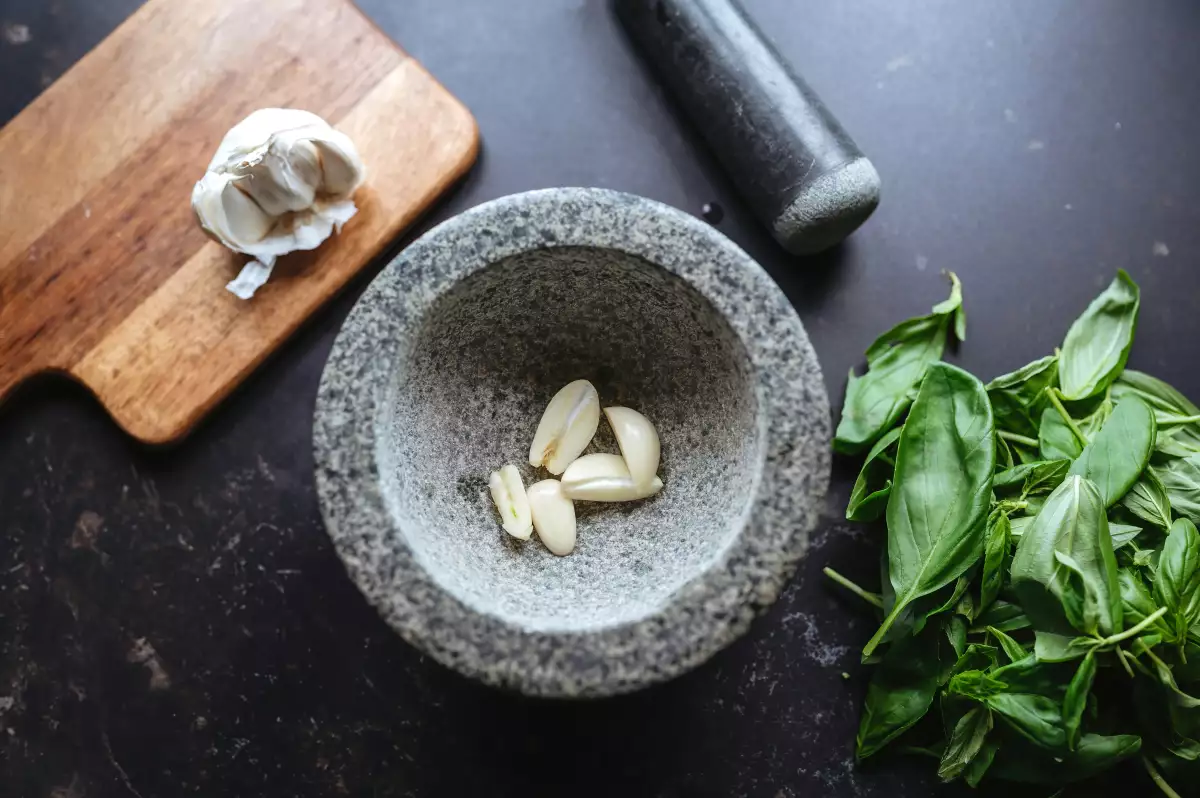
The mortar crushes, grinds, and incorporates the ingredients a little at a time. The blender chops, incorporates air, and operates at high speed. Both have their uses, but they aren’t always interchangeable. In certain recipes, the old method isn’t just nostalgia—it’s a matter of technique.
A mortar and a blender don't do the same job
The main difference lies in the technique. With a mortar, you’re not just breaking everything down into smaller pieces—you’re pressing the ingredients against the sides, gradually breaking down the fibers, and releasing oils, juices, and aromas with more control.
A blender, on the other hand, uses fast-spinning blades. It’s very convenient, especially when you’re short on time or need to prepare a large quantity, but it produces a cleaner, more uniform cut. This can alter the texture, color, and aroma, especially with delicate ingredients like basil, parsley, garlic, fresh spices, and dried fruit.
Which is better, a mortar and pestle or a blender? It depends on the recipe. If you want a smooth, quick, and uniform paste, the blender is unbeatable. If you want a more aromatic, irregular, and flavorful seasoning, the mortar and pestle has the edge.
A blender, on the other hand, uses fast-spinning blades. It’s very convenient, especially when you’re short on time or need to prepare a large quantity, but it produces a cleaner, more uniform cut. This can alter the texture, color, and aroma, especially with delicate ingredients like basil, parsley, garlic, fresh spices, and dried fruit.
Which is better, a mortar and pestle or a blender? It depends on the recipe. If you want a smooth, quick, and uniform paste, the blender is unbeatable. If you want a more aromatic, irregular, and flavorful seasoning, the mortar and pestle has the edge.
Why the mortar brings out the flavors
The mortar’s greatest strength is its slowness. It may seem like a flaw, but it is often its greatest asset. The pressure from the pestle gradually releases the aromas and allows the ingredients to blend without being damaged by blades.
This is especially noticeable in dishes made with aromatic herbs. Basil, for example, is rich in delicate aromas and can be affected by heat, air, and overly vigorous processing. With the mortar, the leaves are crushed and torn bit by bit, while oil, salt, garlic, pine nuts, and cheese bind together to create a less monotonous texture.
Why does pesto turn dark? This is often due to oxidation, heat, damp leaves, or over-processing. A mortar doesn’t make pesto last forever, but it helps treat the basil more gently.
This is especially noticeable in dishes made with aromatic herbs. Basil, for example, is rich in delicate aromas and can be affected by heat, air, and overly vigorous processing. With the mortar, the leaves are crushed and torn bit by bit, while oil, salt, garlic, pine nuts, and cheese bind together to create a less monotonous texture.
Why does pesto turn dark? This is often due to oxidation, heat, damp leaves, or over-processing. A mortar doesn’t make pesto last forever, but it helps treat the basil more gently.
When a blender is convenient but the results vary
The blender has one major advantage: it saves time. In just a few seconds, it transforms chickpeas, cooked vegetables, yogurt, dried fruit, or sauces into a smooth, uniform paste. For hummus, pureed soups, smoothies, mayonnaise, and very smooth creams, it’s often the most practical choice.
The problem arises when we use it for everything, without making distinctions. The blades can slightly heat the ingredients, incorporate air, and make the texture too uniform. In a herb sauce, this can result in a less vibrant color and a less fresh aroma. In a nut-based pesto, it can mean going from a pleasant cream to an oily mixture.
How can you use a blender without ruining the pesto? Process in short bursts, use cold and dry ingredients, don’t overprocess, and add the oil gradually.
The problem arises when we use it for everything, without making distinctions. The blades can slightly heat the ingredients, incorporate air, and make the texture too uniform. In a herb sauce, this can result in a less vibrant color and a less fresh aroma. In a nut-based pesto, it can mean going from a pleasant cream to an oily mixture.
How can you use a blender without ruining the pesto? Process in short bursts, use cold and dry ingredients, don’t overprocess, and add the oil gradually.
When Is It Best to Choose Mortar?
A mortar isn’t just for show on the kitchen counter. It’s the right tool when a recipe thrives on aroma, subtle contrasts, and texture. You don’t have to use it all the time, but there are times when it truly transforms the character of a dish.
Use it especially when you want to:
What is the mortar used for in the kitchen? To give ingredients a slower, more delicate transformation—especially when aroma matters as much as creaminess.
Use it especially when you want to:
- Make a more aromatic pesto: basil, garlic, pine nuts, and cheese blend together gradually.
- Crush whole spices: coriander, pepper, cumin, and seeds release more intense aromas.
- Processing delicate herbs: parsley, mint, and basil suffer less from controlled pressure.
- Create rustic sauces: not everything has to be perfectly smooth.
- Adjust the texture: you can stop while the mixture is still vibrant and not too uniform.
What is the mortar used for in the kitchen? To give ingredients a slower, more delicate transformation—especially when aroma matters as much as creaminess.
When, on the other hand, the blender wins hands down
The old-fashioned method has its charm and merit, but the blender isn’t the enemy. There are dishes where the best result is precisely the smoothest, quickest, and most consistent one. Think of a velvety soup, a cream of legumes, a sauce to accompany vegetables, or a base for an aperitif: in these cases, the power of the blades is a valuable aid.
The blender is also perfect when working with very fibrous ingredients or large quantities. If you need to make a sauce for a large group, using just a mortar and pestle can turn a simple recipe into a mini-workout.
The smartest choice isn’t to pick one tool for life. It’s understanding what kind of texture you want to achieve: rustic and aromatic, or smooth and uniform.
The blender is also perfect when working with very fibrous ingredients or large quantities. If you need to make a sauce for a large group, using just a mortar and pestle can turn a simple recipe into a mini-workout.
The smartest choice isn’t to pick one tool for life. It’s understanding what kind of texture you want to achieve: rustic and aromatic, or smooth and uniform.
Pesto, Sauces, and Spices: Mistakes to Avoid
One of the most common mistakes is thinking that simply changing tools will automatically lead to a better result. That’s not the case. Even a mortar can ruin a sauce if used with too much force or for too long. And even a blender can produce excellent results if used carefully.
In homemade pesto, for example, the leaves must be dry, the basil shouldn’t be overworked, and the oil should be added slowly. With spices, on the other hand, it’s best to pound them a little at a time: if you overfill the mortar, they’ll scatter everywhere and the aroma will be disjointed.
Is it better to pound or blend garlic? If you want a more integrated flavor in a sauce, the mortar makes it creamy and less separated. If, on the other hand, you need a quick and smooth base, the blender works well, but don’t overdo it.
In homemade pesto, for example, the leaves must be dry, the basil shouldn’t be overworked, and the oil should be added slowly. With spices, on the other hand, it’s best to pound them a little at a time: if you overfill the mortar, they’ll scatter everywhere and the aroma will be disjointed.
Is it better to pound or blend garlic? If you want a more integrated flavor in a sauce, the mortar makes it creamy and less separated. If, on the other hand, you need a quick and smooth base, the blender works well, but don’t overdo it.
Recipes: Choosing the Right Tool
The best way to understand the difference is to try it out. Some recipes vary greatly depending on the tool used, while others let you choose between convenience and texture. When it comes to pestos and sauces, the advice is simple: pay attention to temperature, time, and the amount of air incorporated.
The Real Advantage of the Old Method
A mortar and pestle isn’t necessarily better than a blender. It’s better when a recipe calls for aroma, patience, and a texture that isn’t perfectly smooth. A blender remains indispensable when you want speed, large quantities, and smooth, uniform textures.
Italian cuisine has known this for a long time: some ingredients aren’t just chopped—they need to be worked together. The pestle forces you to watch, smell, and stop at just the right moment. And in certain recipes, this makes the difference between a decent sauce and one that truly tastes like what you put into it.
So yes, the new method is practical. But when basil, spices, herbs, and dried fruit come into play, the old method still speaks volumes: less haste, more flavor.
Italian cuisine has known this for a long time: some ingredients aren’t just chopped—they need to be worked together. The pestle forces you to watch, smell, and stop at just the right moment. And in certain recipes, this makes the difference between a decent sauce and one that truly tastes like what you put into it.
So yes, the new method is practical. But when basil, spices, herbs, and dried fruit come into play, the old method still speaks volumes: less haste, more flavor.
 Francesco Rosso
An intern in search of new culinary horizons. A lover of wine and simple dishes, after several years as a journalist, I decided to set out to discover new ways of approaching cooking.
Comments