Need a cozy fall Sunday dinner? this pumpkin lasagna brings the comfort
Friday 16 October 2026 15:30 - Daniele Mainieri
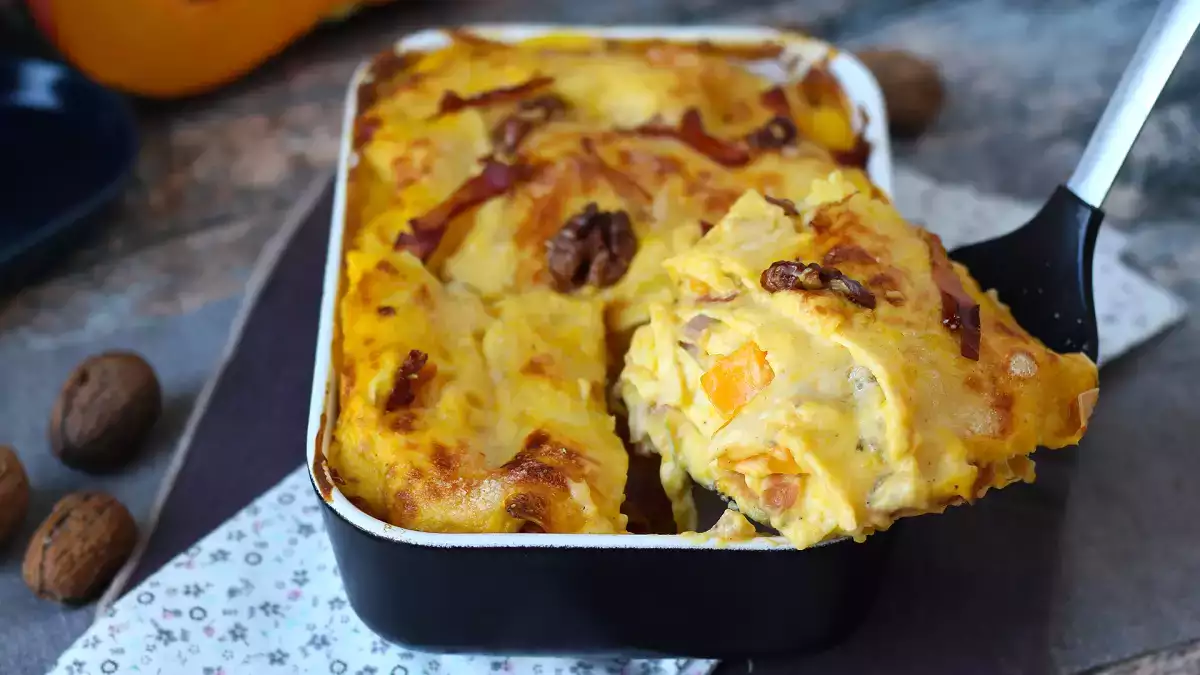
For an American audience, think of it as a cozy baked pasta casserole with Italian soul: rich enough to feel like a main event, but balanced by the natural sweetness of pumpkin and the toasted bite of nuts. It is generous, make-ahead friendly and exactly the kind of oven dish that belongs on the table when the weather starts asking for something warm.
Why this lasagna feels instantly autumnal
The ingredient that sets the tone is pumpkin. Once cooked and blended, it becomes smooth, mellow and naturally sweet, bringing color and softness to every layer. In a white lasagna, pumpkin does not just add flavor; it helps create the creamy texture that makes the dish feel comforting without needing a heavy red sauce.
Then comes speck, the smoky, savory cured meat that keeps the pumpkin from tasting too sweet. It adds depth in the same way bacon or prosciutto can sharpen a creamy dish, but with a distinctly Alpine-Italian character. Finally, walnuts bring crunch, nuttiness and a rustic finish that makes each bite more interesting.
Then comes speck, the smoky, savory cured meat that keeps the pumpkin from tasting too sweet. It adds depth in the same way bacon or prosciutto can sharpen a creamy dish, but with a distinctly Alpine-Italian character. Finally, walnuts bring crunch, nuttiness and a rustic finish that makes each bite more interesting.
Creamy inside, but not heavy
The secret to this lasagna is balance. A great fall pasta bake should feel creamy and generous, not dense or overwhelming. Pumpkin purée brings natural body, béchamel gives structure, and Parmigiano Reggiano adds saltiness and helps the top brown beautifully.
The key is to let the pumpkin stay in the spotlight. The béchamel should support it, not drown it. Spread the filling evenly between the pasta sheets so every slice has the same mix of softness, savoriness and warmth. That also helps the lasagna cut cleanly after a short rest.
The key is to let the pumpkin stay in the spotlight. The béchamel should support it, not drown it. Spread the filling evenly between the pasta sheets so every slice has the same mix of softness, savoriness and warmth. That also helps the lasagna cut cleanly after a short rest.
The golden top is part of the appeal
A baked lasagna needs contrast. The inside should be soft and creamy, while the top should offer that golden, lightly crisp edge everyone secretly wants from the corner piece. A final layer of Parmigiano and scattered walnuts helps create that finish.
Do not cover the dish for the entire bake if you want color and texture. Let the top gratinate toward the end, watching carefully so the nuts toast rather than burn. That little crunch makes the lasagna feel more festive and gives the dish its signature fall personality.
Do not cover the dish for the entire bake if you want color and texture. Let the top gratinate toward the end, watching carefully so the nuts toast rather than burn. That little crunch makes the lasagna feel more festive and gives the dish its signature fall personality.
Why pumpkin, speck and walnuts work so well together
This trio works because each ingredient does a different job. Pumpkin brings sweetness and silkiness. Speck adds smoke, salt and a savory backbone. Walnuts bring toasted richness and a crisp bite. Together, they create a dish that feels familiar but not predictable.
For American cooks, the flavor logic is easy to understand: it is the same sweet-salty-comforting balance that makes squash with bacon, maple with nuts or roasted vegetables with cheese so appealing. Here, that idea becomes a layered baked pasta with a very Italian sense of occasion.
For American cooks, the flavor logic is easy to understand: it is the same sweet-salty-comforting balance that makes squash with bacon, maple with nuts or roasted vegetables with cheese so appealing. Here, that idea becomes a layered baked pasta with a very Italian sense of occasion.
How to serve it without overloading the meal
Because this lasagna is already rich, the rest of the meal can stay simple. Serve it with a crisp green salad, bitter lettuces, roasted vegetables, shaved fennel, or a citrusy side that cuts through the creaminess. You do not need a heavy starter or an elaborate spread.
For a dinner party, bring the baking dish to the table and let it rest for a few minutes before slicing. That pause matters: it helps the layers settle, keeps the filling from sliding, and makes each portion look more polished.
For a dinner party, bring the baking dish to the table and let it rest for a few minutes before slicing. That pause matters: it helps the layers settle, keeps the filling from sliding, and makes each portion look more polished.
Can you make it ahead?
Yes, and that is one of the reasons this dish is so useful. You can assemble the lasagna ahead, cover it and refrigerate it until you are ready to bake. This gives the layers time to settle and makes dinner feel easier when guests arrive or when Sunday gets busy.
If you make it ahead, keep the top slightly protected so it does not dry out. Add a little extra cheese or a few fresh walnut pieces before the final bake if needed. To reheat leftovers, use a moderate oven and cover loosely at first so the center warms through before the top crisps again.
If you make it ahead, keep the top slightly protected so it does not dry out. Add a little extra cheese or a few fresh walnut pieces before the final bake if needed. To reheat leftovers, use a moderate oven and cover loosely at first so the center warms through before the top crisps again.
The recipe to try
For a creamy fall lasagna with pumpkin, smoky speck, Parmigiano Reggiano and crunchy walnuts, try this baked pasta centerpiece:
Creamy and crunchy pumpkin, speck, and walnut lasagna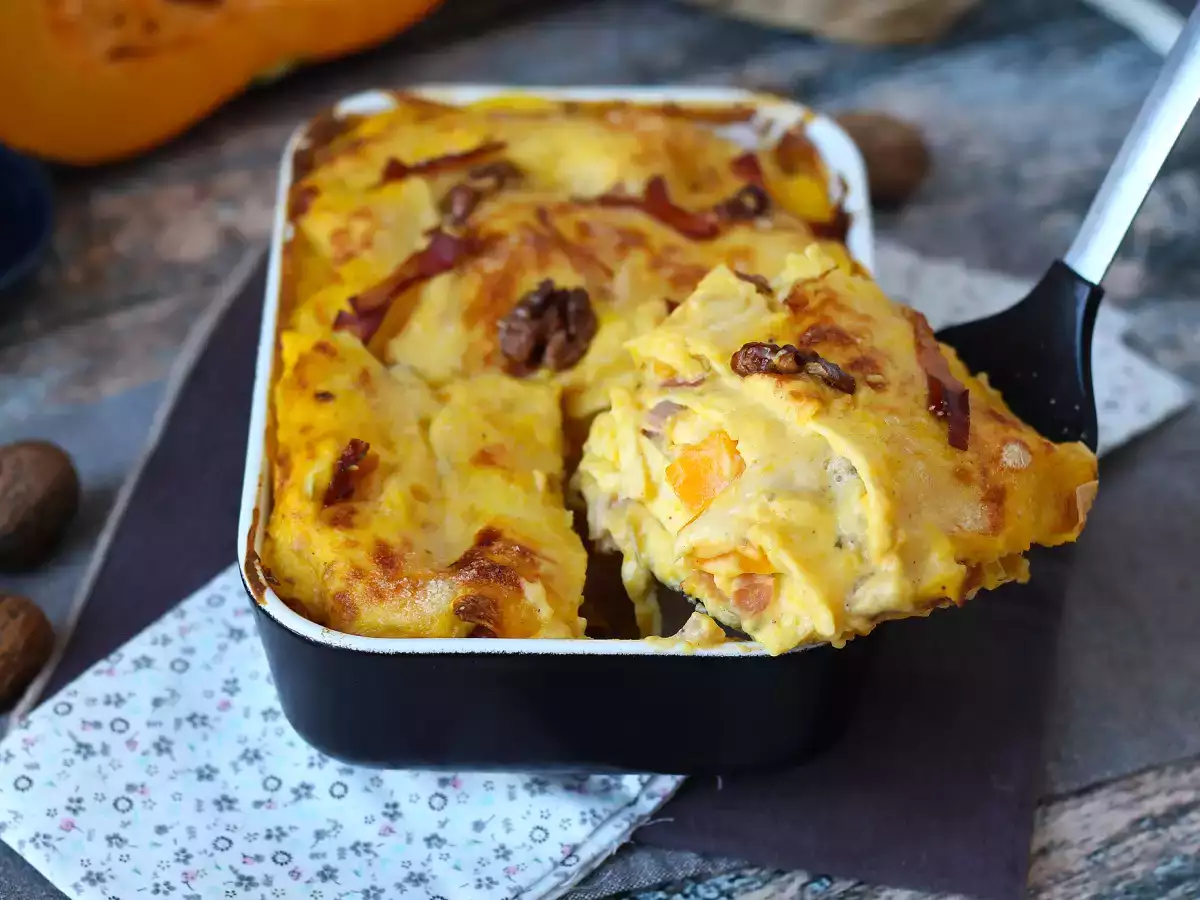
Pumpkin, speck, and walnut lasagna is a creamy, flavor-packed first course with plenty of contrasting textures, perfect for the cooler months and for occasions when you’re in the mood for something especially indulgent. The sweetness of pumpkin...
 Daniele Mainieri
Every day, I dive into the world of food and wine with curiosity, always looking for new flavours, recipes and inspiring discoveries to share. From traditional family dishes to the latest food trends, including pairings that make all the difference. I’ve been working in food & wine communication for over 10 years and I’m currently the Editorial Manager for the Italian edition of Petitchef.
Comments