Never buy a bland watermelon again: quick, practical ways to tell if it’s sweet without cutting
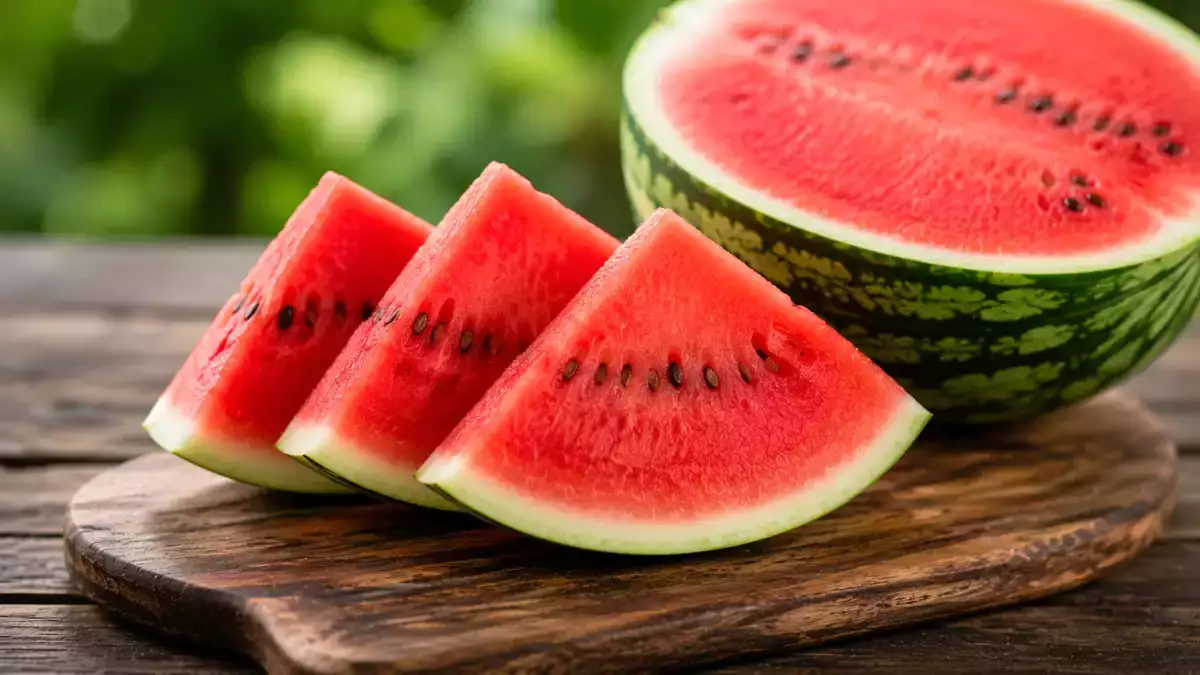
Summer and watermelon are a true love story. Refreshing, juicy, naturally sweet, and made up of more than 90% water, it is one of those fruits we can’t get enough of when temperatures rise.
But there is one problem: you can’t see what is inside before buying it. Unlike a peach or a cantaloupe, which you can smell or gently press, watermelon keeps its secret hidden under that thick green rind.
The result? Choosing one can sometimes feel like a guessing game. You hope for bright red, crisp, sweet flesh… and sometimes end up with a bland, grainy, or overly watery fruit.
Luckily, a few clues can help you spot a good watermelon before you even cut it open ;)
Look for the famous yellow spot
This is probably one of the most reliable tricks.
When a watermelon grows in the field, it rests directly on the ground. The part touching the soil develops what is called a field spot.
Ideally, this spot should be creamy yellow to deep yellow.
Why does it matter? Because a well-marked yellow spot usually means the fruit had enough time to ripen naturally in the sun before being harvested.
On the other hand, a very pale or almost white spot can suggest that the watermelon was picked a little too early, with less developed flavor.
Weight is your best ally
Pick up a few watermelons of similar size and compare them.
The best one will often be the heaviest.
A heavy watermelon usually contains more water, which is often a sign of juicier, more pleasant flesh.
It is a simple but very effective clue when you are hesitating between several fruits.
The denser it feels for its size, the better your chances of getting a sweet, juicy surprise when you cut it open.
Pay attention to its shape
A watermelon with a regular shape is usually a good sign.
A nicely round or evenly oval watermelon generally indicates more even growth.
Fruits with large bumps, obvious dents, or irregular shapes may have grown less consistently.
That does not automatically mean they are bad, but your chances of getting an even texture are often a little lower.
The sound test still works
You have probably seen someone tapping a watermelon at the grocery store without really knowing why.
But this technique actually has some logic behind it.
Give the watermelon a few gentle taps with your fingers or palm.
A ripe watermelon usually produces a deep, dull, slightly hollow sound.
On the other hand, a very metallic or high-pitched sound can suggest that the fruit is not fully ripe.
This test takes a little practice, but many growers and produce sellers still use it.
Check the rind
A good watermelon usually has firm, matte skin.
Contrary to what you might think, a very shiny rind is not necessarily a good sign. Ripe watermelons often have a slightly duller appearance.
The stripes should be clear and well contrasted, depending on the variety.
Also check that there are no cracks, soft spots, or damaged areas, which could indicate bruising or the beginning of spoilage.
Should you look at the stem?
If the watermelon is sold with part of its stem still attached, it can give you a little extra information.
A dry, brownish stem usually suggests that the fruit had time to finish ripening before harvest.
A very green stem, on the other hand, can sometimes point to an earlier harvest.
That said, this clue is less reliable than the yellow spot or the weight.
Once you buy it, how should you store it?
A whole watermelon can be kept for several days at room temperature in a cool spot away from direct sunlight.
Once it is cut, it is best to store it in the refrigerator in an airtight container or tightly covered with plastic wrap to preserve freshness and prevent it from absorbing fridge odors.
To enjoy its flavor fully, you can take it out of the fridge a few minutes before serving.
Why is watermelon the star of summer?
If watermelon is so popular, it is not only because of its taste.
Thanks to its high water content, it helps keep summer meals refreshing during hot weather. It also contains vitamin C, beta-carotene, and lycopene, the antioxidant pigment responsible for its beautiful red color.
Served plain, added to a summer salad, blended into a refreshing drink, or paired with feta for a sweet-and-salty version, watermelon works in so many recipes.
So next time you pass the watermelon display at the grocery store, take a few seconds to check the yellow spot, compare the weight, and give the fruit a gentle tap.
Those simple gestures may help you bring home the juiciest, sweetest watermelon in the store :)
 Adèle Peyches
Comments