Parmesan rinds aren't trash: learn how to convert that leftover wedge into a punchy pesto in minutes
Saturday 22 August 2026 17:00 - Juliette Hess
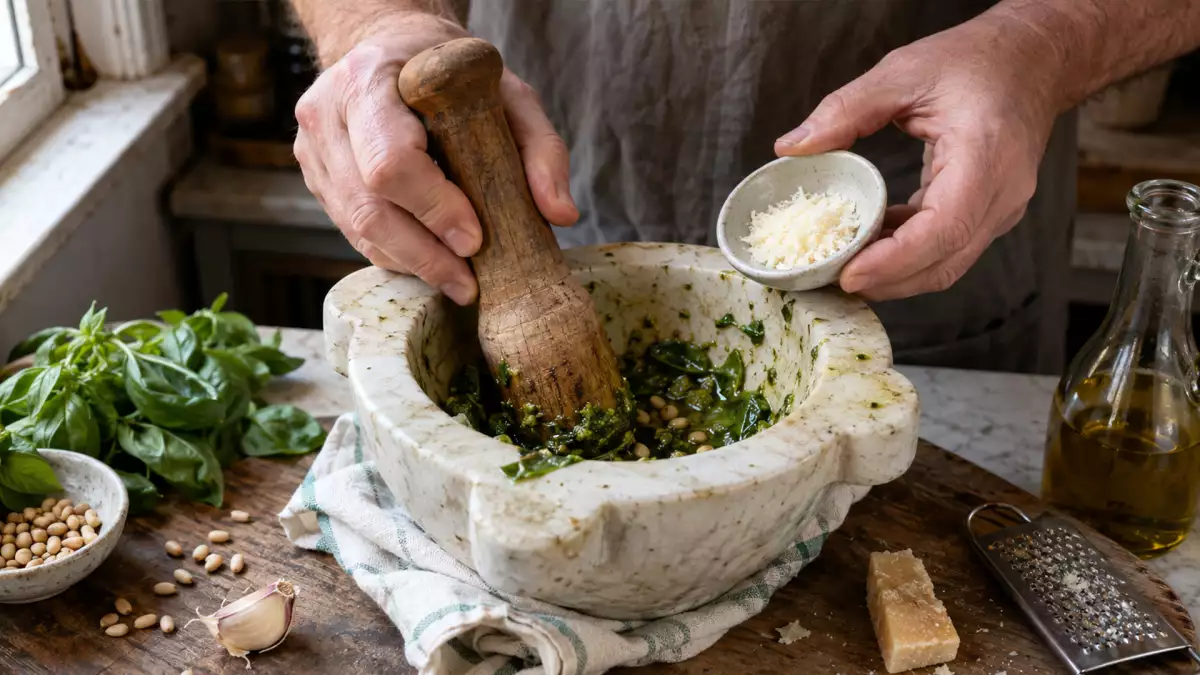
The message is wonderfully simple: do not throw away Parmesan rind. Grate it finely, treat it with respect, and it can bring deep, savoury, umami-rich power to pesto. It is salty, intense and slightly nutty, which means you do not need very much to make a sauce taste bigger and more interesting.
This is the kind of cooking that feels clever without being complicated. You save food waste, stretch an expensive ingredient, and end up with a sauce that can wake up pasta, roasted vegetables, grilled bread, soups, beans, eggs and even sandwiches. In other words: the rind was never the end of the cheese story.
Why Parmesan rind is worth saving
Parmesan rind may look tough, but it is packed with flavour. The Guardian notes that the rind has just as much, if not more, flavour than the cheese inside the wheel. Traditionally, cooks have dropped Parmesan rinds into soups, stocks, stews and risottos to add depth, but grating the rind opens up a new use: turning it into pesto.
The rind brings savoury intensity, which is exactly what pesto loves. Basil gives freshness, pine nuts add richness, garlic brings bite, olive oil creates silkiness, and the grated rind adds a deep cheesy backbone. The result is not a shy sauce. It is robust, aromatic and full of personality.
The rind brings savoury intensity, which is exactly what pesto loves. Basil gives freshness, pine nuts add richness, garlic brings bite, olive oil creates silkiness, and the grated rind adds a deep cheesy backbone. The result is not a shy sauce. It is robust, aromatic and full of personality.
The key trick: grate it very finely
The rind is firm, so do not try to chop it roughly and hope for the best. The best approach is to use a Microplane or fine grater. Fine grating turns the tough rind into small, usable flakes that can blend into the pesto instead of leaving awkward hard pieces behind.
Before grating, make sure the rind is clean. If it has wax, paper or an inedible coating, remove that first. A genuine Parmigiano Reggiano or Parmesan-style hard cheese rind is usually edible once properly cleaned, but packaging and labels are not part of the recipe, however rustic you are feeling.
Because the rind is powerful, start small. The Guardian recipe uses grated Parmesan rind and warns that its flavour is strong, so add it to taste. You may need less than you think.
Before grating, make sure the rind is clean. If it has wax, paper or an inedible coating, remove that first. A genuine Parmigiano Reggiano or Parmesan-style hard cheese rind is usually edible once properly cleaned, but packaging and labels are not part of the recipe, however rustic you are feeling.
Because the rind is powerful, start small. The Guardian recipe uses grated Parmesan rind and warns that its flavour is strong, so add it to taste. You may need less than you think.
A classic pesto base still matters
Even with a zero-waste twist, pesto needs balance. The classic formula is still your friend: basil, nuts, garlic, cheese, olive oil and salt. The Parmesan rind does not replace every other decision; it simply makes the cheesy element deeper and more intense.
If you want a familiar starting point, a classic green pesto is the perfect reference. It shows how basil, nuts, garlic and olive oil work together before you add the rind twist. Once you understand the basic structure, adding grated Parmesan rind becomes an easy upgrade rather than a risky experiment.
If you want a familiar starting point, a classic green pesto is the perfect reference. It shows how basil, nuts, garlic and olive oil work together before you add the rind twist. Once you understand the basic structure, adding grated Parmesan rind becomes an easy upgrade rather than a risky experiment.
Homemade green pesto - pesto alla genovese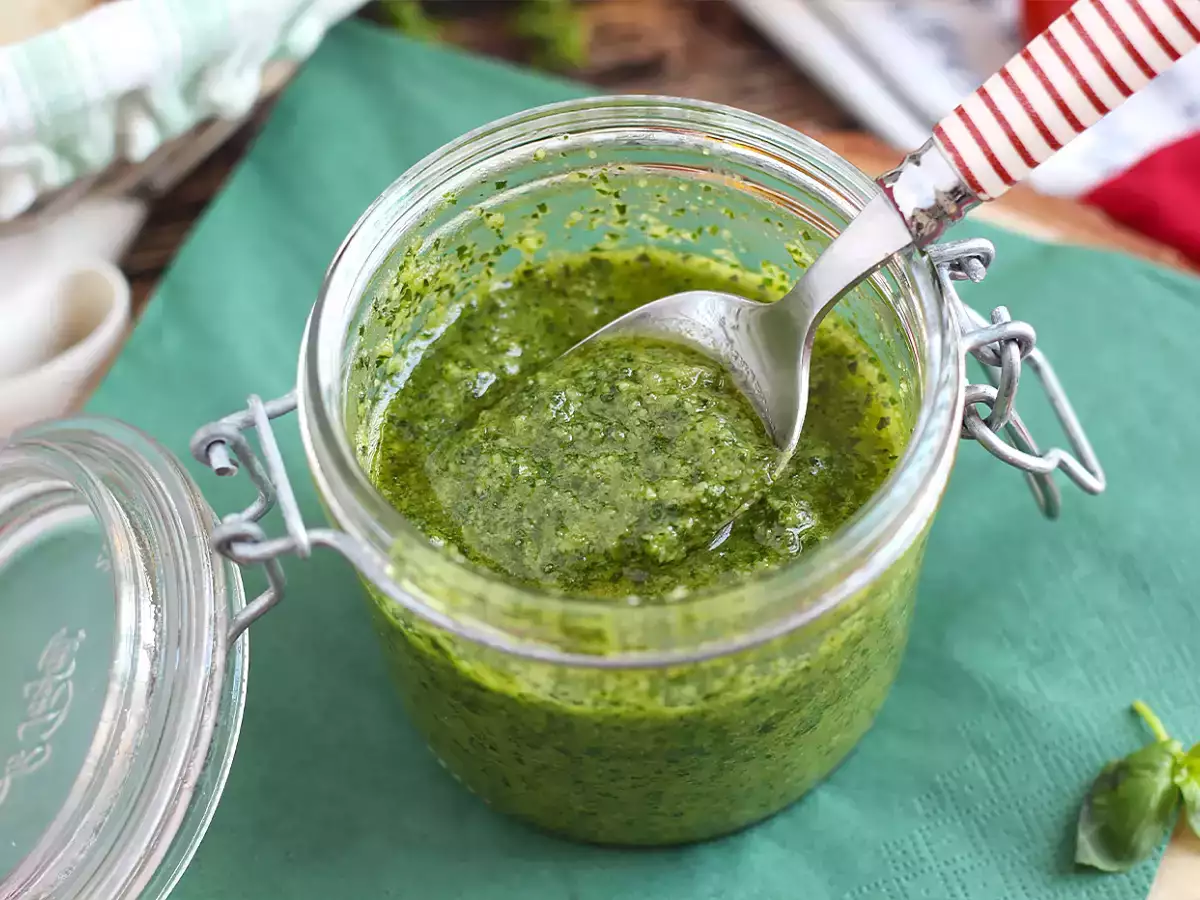
Stop everything—we're bringing you the BEST sauce in the world for your pasta (no exaggeration): green pesto! No matter how many other flavors we try, we always come running back to a good homemade pesto. And believe us, this recipe is really super...
Mortar or blender? Both work, but texture changes
Pesto can be made in a blender, food processor or mortar and pestle. A blender is fast and convenient, especially on a busy weeknight. But a mortar and pestle gives a more rustic texture and can release powerful aromas from the basil and garlic as they are crushed rather than sliced.
The Guardian points out that crushing and bruising can release more flavour compounds and volatile oils than a sharp blade. In everyday kitchen terms: the mortar version may taste more vivid, while the blender version wins on speed.
If using a blender, pulse rather than blitzing endlessly. Too much blending can warm the basil and dull the colour. If using a mortar, add ingredients gradually and enjoy the tiny arm workout. It counts as cooking and exercise.
The Guardian points out that crushing and bruising can release more flavour compounds and volatile oils than a sharp blade. In everyday kitchen terms: the mortar version may taste more vivid, while the blender version wins on speed.
If using a blender, pulse rather than blitzing endlessly. Too much blending can warm the basil and dull the colour. If using a mortar, add ingredients gradually and enjoy the tiny arm workout. It counts as cooking and exercise.
How to keep it bright green
Basil can darken quickly if it is bruised too harshly or left sitting around too long. To keep pesto vibrant, work quickly, use fresh basil and avoid overheating it in a blender. Add the olive oil gradually so the sauce loosens without becoming greasy.
A pinch of coarse salt helps grind garlic and basil in a mortar, while good extra-virgin olive oil brings fruitiness and smoothness. Pine nuts can be toasted first for extra depth, then cooled before mixing. Warm nuts can make basil sulk, and nobody wants sulking basil.
The target texture is loose, glossy and spoonable, not a stiff green paste and not an oil slick.
A pinch of coarse salt helps grind garlic and basil in a mortar, while good extra-virgin olive oil brings fruitiness and smoothness. Pine nuts can be toasted first for extra depth, then cooled before mixing. Warm nuts can make basil sulk, and nobody wants sulking basil.
The target texture is loose, glossy and spoonable, not a stiff green paste and not an oil slick.
What to eat with Parmesan rind pesto
This pesto is bold, so pair it with foods that can handle it. Wholegrain pasta, roasted vegetables, grilled courgettes, barbecued aubergine, beans, potatoes, toast and roast chicken all work beautifully. It is also excellent stirred into soup just before serving or spread thinly inside a sandwich for instant savoury drama.
For pasta, do not just dump pesto onto drained noodles and hope. Loosen the pesto with a spoonful of hot pasta water, then toss until it coats the pasta. The starch helps make the sauce creamy and clingy. Finish with lemon zest or black pepper if you want brightness.
Think of it as a zero-waste flavour bomb: a little goes a long way.
For pasta, do not just dump pesto onto drained noodles and hope. Loosen the pesto with a spoonful of hot pasta water, then toss until it coats the pasta. The starch helps make the sauce creamy and clingy. Finish with lemon zest or black pepper if you want brightness.
Think of it as a zero-waste flavour bomb: a little goes a long way.
How to store Parmesan rinds before pesto day
If you are not ready to make pesto immediately, save the rind. Wrap it well and keep it in the fridge for short-term use, or freeze it for later. Many cooks keep a small freezer bag of Parmesan rinds ready for soups, stocks, risottos and now pesto emergencies.
Label the bag if you are the kind of person who forgets what frozen beige objects are. Future you will be grateful. When you have enough rind, grate it finely while cold or slightly thawed, depending on what your grater prefers. The important part is that the rind should smell good and cheesy, not stale or unpleasant.
Label the bag if you are the kind of person who forgets what frozen beige objects are. Future you will be grateful. When you have enough rind, grate it finely while cold or slightly thawed, depending on what your grater prefers. The important part is that the rind should smell good and cheesy, not stale or unpleasant.
A few flavour warnings
Parmesan rind pesto can be saltier and more intense than regular pesto, so season carefully. Add the rind gradually, taste, then add more only if needed. The same goes for garlic: a small clove can be enough, especially if the sauce is served raw.
Also remember that traditional Parmesan is not always vegetarian because it is commonly made with animal rennet. If that matters for your household or guests, choose a vegetarian hard cheese alternative and use its rind only if it is edible and suitable. The zero-waste spirit still works: use what you have, but know what it is.
Also remember that traditional Parmesan is not always vegetarian because it is commonly made with animal rennet. If that matters for your household or guests, choose a vegetarian hard cheese alternative and use its rind only if it is edible and suitable. The zero-waste spirit still works: use what you have, but know what it is.
The takeaway
Parmesan rind is not kitchen waste. It is stored-up savoury flavour. Grated finely and used in pesto, it turns basil, garlic, pine nuts and olive oil into a deeper, more robust sauce that makes the most of every bit of the cheese.
The best method is simple: save the rind, clean it, grate it finely, add it gradually and taste as you go. Keep the pesto bright with fresh basil and good oil, then use it on pasta, vegetables, toast, soups or anything that needs a little cheesy confidence.
So next time you reach the end of a Parmesan wedge, do not throw the rind away. Give it a second life as pesto. It is thrifty, delicious and just smug enough to make you feel like the cleverest cook in the kitchen.
The best method is simple: save the rind, clean it, grate it finely, add it gradually and taste as you go. Keep the pesto bright with fresh basil and good oil, then use it on pasta, vegetables, toast, soups or anything that needs a little cheesy confidence.
So next time you reach the end of a Parmesan wedge, do not throw the rind away. Give it a second life as pesto. It is thrifty, delicious and just smug enough to make you feel like the cleverest cook in the kitchen.
 Juliette Hess
I have been creating culinary content for Petitchef since 2017.
I love travelling and discovering new dishes, trying out new food trends and exploring new restaurants.
I’m a huge fan of pasta and noodles in all their forms ❤ from udon noodles to tagliatelle, I love cooking them and even making them from scratch!
I’m currently preparing, filming and photographing your next recipe, and I hope you’ll enjoy it!
I love travelling and discovering new dishes, trying out new food trends and exploring new restaurants.
I’m a huge fan of pasta and noodles in all their forms ❤ from udon noodles to tagliatelle, I love cooking them and even making them from scratch!
I’m currently preparing, filming and photographing your next recipe, and I hope you’ll enjoy it!
Comments