Parsley, basil, cilantro: Why do your herbs wilt so quickly?
Friday 13 November 2026 21:00 - Adèle Peyches
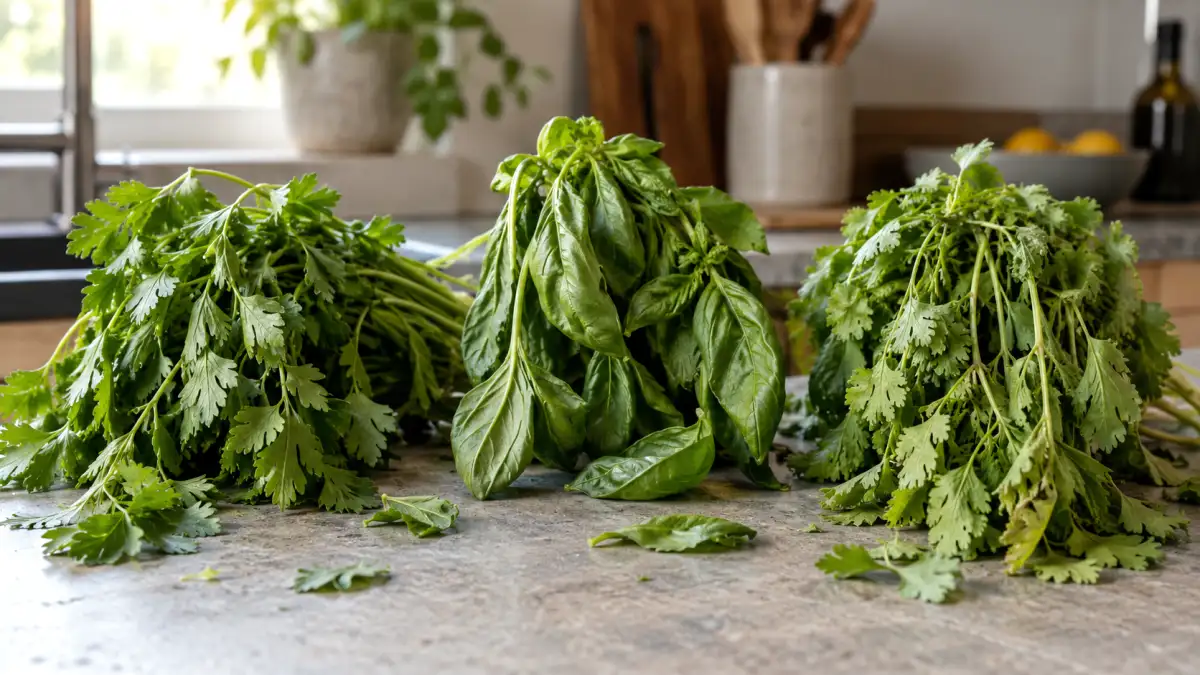
However, not all herbs are stored the same way. And that’s often where things get complicated: what works for cilantro might not work nearly as well for basil. Here’s how to do it right, without resorting to a bunch of containers and questionable tricks.
The first thing to do: check the condition of the bouquet
A bouquet that’s already very wilted won’t regain its freshness through any “miracle” method. When shopping, choose herbs with brightly colored leaves , free of slimy spots or unusual odors. The stems should still be somewhat flexible.
Avoid leaving them in a warm bag for long periods, especially after grocery shopping. As soon as you get home, remove any rubber bands that are tied too tightly and any leaves that are clearly damaged. Plants continue to breathe after being harvested; accumulated moisture and repeated handling accelerate their deterioration.
Don’t automatically wash a large bouquet several days before using it if you don’t have a way to dry it properly. Water trapped between the leaves can cause them to spoil. However, always wash herbs that require it before consuming them, following the instructions on the packaging.
Parsley and cilantro: like a little bouquet of flowers?
For parsley and cilantro, one method is to trim the bottoms of the stems slightly and place them in a clean container with a small amount of water. The leaves should remain above the water level, and the bunch should be stored under appropriate conditions, usually in the refrigerator.
Change the water regularly, clean the container, and remove any stems that are starting to deteriorate. Light protection against drying out can help, as long as you don’t trap the leaves in excessive condensation.
This method does not guarantee a specific lifespan: a very fresh bouquet may last longer than one that’s already starting to wilt. So pay attention to the smell and texture rather than counting the days. And avoid placing the vase at the back of the refrigerator if there’s a risk it might tip over onto other foods.
Basil: The Plant That's Highly Sensitive to Cold
Basil is unique. Depending on the variety and conditions, excessive cold can cause its leaves to turn black and alter its aroma. For a cut bouquet, you can sometimes keep it briefly in a glass of clean water, in a temperate room, away from direct sunlight and extreme heat.
But this method requires close monitoring: the stems must not rot in the water, and the leaves must not become limp or moldy. If your basil is sold in a pot, care for it as you would any live plant, providing light, moderate watering, and good drainage.
Do you have a lot of basil to use up quickly? Make some pesto and store it properly in the refrigerator for immediate use, or freeze individual portions. Never store homemade herb preparations in oil at room temperature for long periods: they can pose a serious microbiological risk.
Chives, dill, and mint: Good Habits to Adopt
Chives generally keep better when the stalks remain clean, slightly protected from drying out, and free of excess moisture. A slightly damp paper towel placed in a suitable container in the refrigerator can be helpful. Replace it if it becomes soaked.
For dill, whose delicate leaves are easily damaged, handle the bunch gently and avoid crushing it. Mint can sometimes be stored with the stems in a little water, but it, too, needs to be monitored.
In any case, don’t try to achieve maximum humidity. Herbs should stay fresh without being submerged in water. If you see significant condensation inside the container, wipe it off and adjust the cover accordingly.
Freezing—handy when you've bought a large bouquet
Do you already know you won't use it all? Freezing is often a better option than waiting for the leaves to wilt. Wash the herbs if necessary, dry them thoroughly, then chop them or freeze them in small portions.
Their texture will change after thawing: they won’t necessarily look as nice in a salad. However, they’ll be handy for adding flavor to a soup, sauce, or stew. You can add them while still frozen to a hot dish.
Label the containers with the name of the herb and the date. Between finely chopped parsley and cilantro, the difference isn’t always obvious in a small, frosty bag!
A Few Ideas to Make Sure You Never Have to Throw Away a Bouquet Reluctantly
Parsley adds freshness to sautéed potatoes; chives liven up salted cottage cheese; mint can be added to a fruit salad; cilantro gives a curry some character. Try to come up with at least two uses for each bunch you buy.
If you’re cooking potatoes or vegetables in an air fryer, you can also add herbs at the end of cooking to preserve their flavor. Check out these herb croutons, for example, which are great for garnishing soup:
Ultimately, the right choice depends on the herb and how you plan to use it. A bunch you’ll use tomorrow doesn’t require the same care as a large quantity meant for freezing. With just two or three simple habits, you’ll avoid wasting a lot of herbs… and your dishes will be much more flavorful.
If you’re cooking potatoes or vegetables in an air fryer, you can also add herbs at the end of cooking to preserve their flavor. Check out these herb croutons, for example, which are great for garnishing soup:
Crunchy herb croutons in the air fryer (quick and easy)
Herb croutons made in the Air Fryer are a practical and delicious way to make your meals crispier and tastier. Made with just a few ingredients and ready in minutes, they are ideal for serving with salads and soups , or even as a snack any...
Ultimately, the right choice depends on the herb and how you plan to use it. A bunch you’ll use tomorrow doesn’t require the same care as a large quantity meant for freezing. With just two or three simple habits, you’ll avoid wasting a lot of herbs… and your dishes will be much more flavorful.
 Adèle Peyches
Editorial manager who just can't wait for winter to enjoy raclette! Passionate about gastronomy and always on the lookout for new culinary gems, I first studied law before returning to my first love: the taste of good products and the joy of sharing around the table :)
Comments