Walnuts, hazelnuts, almonds: the best time to roast them and bring out their flavor
Friday 13 November 2026 10:00 - Adèle Peyches
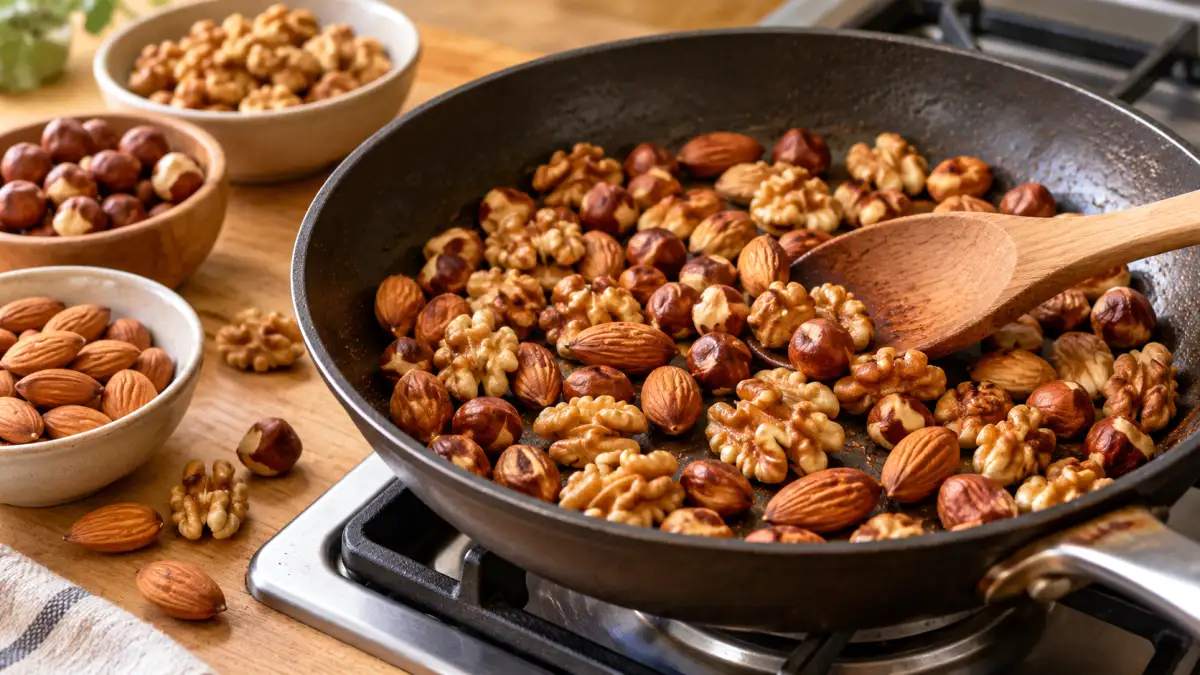
But have you ever noticed that a toasted hazelnut doesn’t taste exactly the same as a plain one? Its aroma often becomes more intense—almost irresistible.
The secret is roasting. And here’s the good news: you don’t need professional equipment to try it at home. We’ll explain when to roast nuts and how to avoid turning them into little burnt bits ;-)
What is coffee roasting?
Roasting involves heating nuts, usually without adding fat, to alter their flavors and texture.
Under the effect of heat, various reactions occur. Toasty notes develop, the texture often becomes crunchier, and the aroma becomes more pronounced.
But be careful: light roasting and over-roasting yield very different results. If heated too much, walnuts, hazelnuts, or almonds can become bitter and lose some of their flavor appeal.
The best approach, therefore, is to closely monitor the color and, above all, the aroma. As soon as a pleasant aroma begins to emerge, you’re often close to the desired result.
And since small pieces sometimes continue to cook for a few moments after being removed from the pan, it’s best to take them out before they get too dark.
In a skillet: perfect for a small amount
Do you just need to add a handful of hazelnuts to a dessert? A skillet is very handy.
Use a dry skillet over low or medium heat, then add the nuts in an even layer. Stir frequently to ensure they brown as evenly as possible.
Never leave them unattended. A small almond can go from beautifully golden to burnt in no time at all!
As soon as they start to smell good, transfer the nuts to a plate to stop them from cooking further as they come into contact with the hot pan.
Our tip? For a small amount to be used in a salad or yogurt, this method is particularly simple. No need to preheat the entire oven for just a few spoonfuls.
In the oven: convenient for large quantities
If you're preparing several holiday recipes, you can roast a larger quantity in the oven.
Spread the walnuts, hazelnuts, or almonds on a suitable baking sheet without crowding them. Use a moderate temperature (for example, around 300 to 340 °F/150 to 170 °C, depending on the nut, its size, and your oven) and check on them very frequently.
Stir if necessary to ensure even browning. There’s no one-size-fits-all timing: slivered almonds toast much faster than large, whole hazelnuts.
And above all, avoid letting them get too dark. Nuts can become bitter even before they look completely burnt.
Once ready, transfer them to a cool surface and let them cool before storing them.
Hazelnuts: the flavor that makes all the difference in desserts
For a chocolate cake, a spread, or homemade praline, lightly roasted hazelnuts are particularly good.
Their flavor becomes more pronounced, and their skins sometimes come off more easily after roasting.
Want to remove some of that skin? Once the hazelnuts have cooled enough to handle, gently rub them in a clean dish towel. It’s okay if a little skin remains.
Be careful not to overheat them when preparing a delicate dessert. A strong bitterness may overpower the flavor of the chocolate or other ingredients.
Petitchef’s extra tip? Save a few crushed hazelnuts to garnish the top of the cake just before serving.
Almonds and walnuts: Should they be treated the same way?
Almonds hold up well to light roasting, especially when they're whole. Slivered almonds, on the other hand, are much more delicate: keep a close eye on them almost the entire time.
Caution is also advised when roasting walnuts. Their flavor can intensify very quickly, but roasting them for too long brings out bitterness.
In a salad, you can also enjoy walnuts plain. So it’s not necessary to roast everything!
The choice depends on the recipe. For a cake where the nuts are already baking for a long time, roasting them too intensely beforehand might be excessive. For a topping added after baking, however, a few minutes in the pan can make all the difference.
When should you add them to your Christmas recipes?
Are you making a lamb's lettuce salad with walnuts? Add the walnuts—roasted if desired—just before serving to keep them crunchy.
For a cake or cookies, follow the recipe’s instructions: some recipes call for pre-roasted nuts, while others use them raw before baking.
In a stuffing, a few crushed hazelnuts can add a very pleasant texture, but check the cooking instructions before toasting them separately.
Finally, let the toasted nuts cool completely before storing them in a clean, airtight container, away from heat. Their fat content makes them prone to rancidity.
And don’t forget to let guests with nut allergies know that nuts are present.
See, just a few minutes of roasting can really change the flavor! And you—are you more of a hazelnut, almond, or walnut person? ;-)
 Adèle Peyches
Editorial manager who just can't wait for winter to enjoy raclette! Passionate about gastronomy and always on the lookout for new culinary gems, I first studied law before returning to my first love: the taste of good products and the joy of sharing around the table :)
Comments