Ramen feels complicated? These five elements make every bowl easier to understand
Wednesday 21 October 2026 10:00 - Juliette Hess
1. Broth: the base that gives ramen its soul
The broth is the first thing many people notice, because it carries warmth, aroma and body through the whole bowl. It can be light and clear, rich and cloudy, chicken-based, pork-based, seafood-based or entirely vegetarian. What matters most is that it has depth without overwhelming everything else.
A good broth should taste complete, but not too salty on its own. That is because ramen broth usually works with tare, the seasoning base added separately. If the broth is too intense before the tare arrives, the finished bowl can become heavy. If it is too weak, the ramen may taste watery. The best result sits in the middle: comforting, layered and ready to be seasoned.
A good broth should taste complete, but not too salty on its own. That is because ramen broth usually works with tare, the seasoning base added separately. If the broth is too intense before the tare arrives, the finished bowl can become heavy. If it is too weak, the ramen may taste watery. The best result sits in the middle: comforting, layered and ready to be seasoned.
2. Tare: the seasoning shortcut that changes everything
The tare is the concentrated seasoning placed in the bowl before the broth is added. It is one of the most important parts of ramen because it defines the main flavor direction. A shoyu tare brings soy-sauce depth, a miso tare adds fermented richness, and a shio tare keeps things lighter and salt-forward.
This is why two bowls can use a similar broth but taste completely different. The tare is where the ramen gets its identity. At home, this is also the easiest way to experiment: a spoonful of miso, soy sauce, garlic, ginger, sesame paste or chili paste can shift the bowl from mellow to bold in seconds.
This is why two bowls can use a similar broth but taste completely different. The tare is where the ramen gets its identity. At home, this is also the easiest way to experiment: a spoonful of miso, soy sauce, garlic, ginger, sesame paste or chili paste can shift the bowl from mellow to bold in seconds.
3. Noodles: texture matters as much as flavor
Ramen noodles are not just a filler. They decide how the bowl feels from the first bite to the last. Thin noodles suit lighter broths because they cook quickly and do not dominate. Thicker, wavier noodles are excellent with richer broths because they catch more sauce, fat and seasoning.
The key is springiness. Great ramen noodles should feel lively, not mushy. Cook them separately, drain them well and add them to the bowl just before serving. This keeps the texture clean and prevents excess starch from muddying the broth. A few seconds can make a difference, so ramen rewards attention.
The key is springiness. Great ramen noodles should feel lively, not mushy. Cook them separately, drain them well and add them to the bowl just before serving. This keeps the texture clean and prevents excess starch from muddying the broth. A few seconds can make a difference, so ramen rewards attention.
4. Fat: the little layer that makes ramen taste luxurious
Aromatic fat may look like a small detail, but it can completely change the bowl. A drizzle of chili oil, sesame oil, chicken fat, garlic oil or scallion oil adds aroma that rises with the steam. It also gives the broth a rounder mouthfeel, making each spoonful feel more satisfying.
The trick is moderation. Too much fat can make ramen feel greasy, while too little can make it taste flat. A small spoonful is often enough to bring shine, fragrance and comfort. This is the part that makes a simple bowl feel restaurant-worthy.
The trick is moderation. Too much fat can make ramen feel greasy, while too little can make it taste flat. A small spoonful is often enough to bring shine, fragrance and comfort. This is the part that makes a simple bowl feel restaurant-worthy.
5. Toppings: contrast, color and the final bite
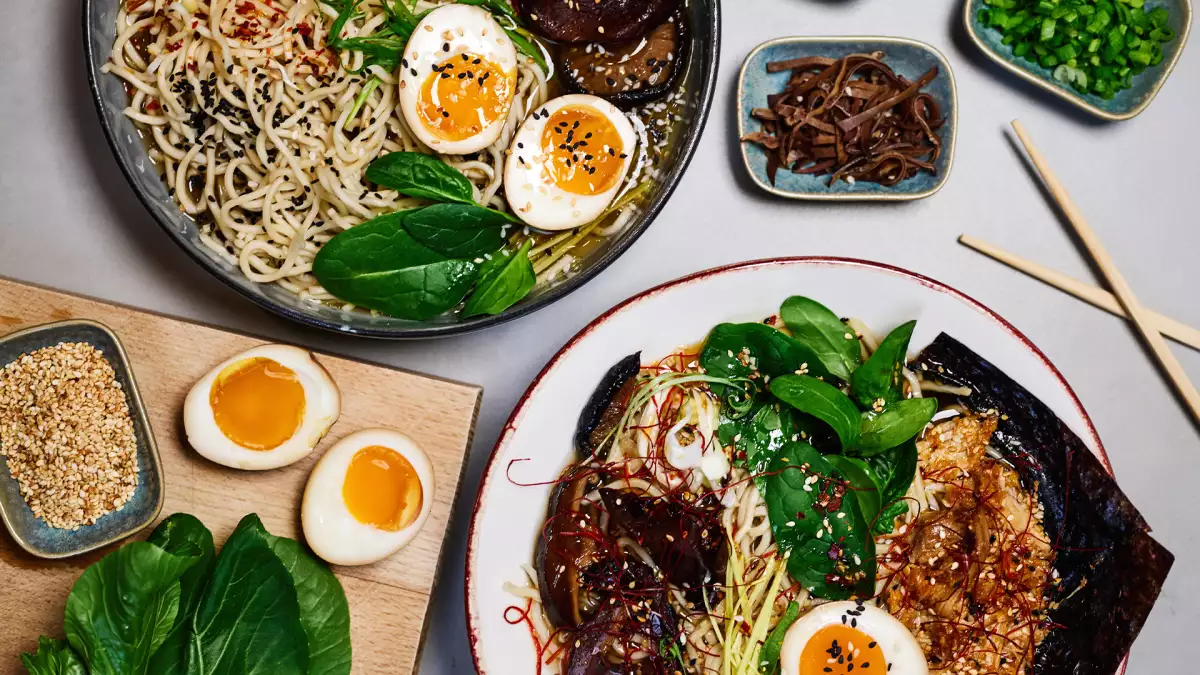
Toppings are where ramen becomes personal. Soft-boiled eggs, mushrooms, greens, corn, bamboo shoots, scallions, seaweed, tofu, chicken, pork or chili crisp can all work beautifully. The goal is not to overload the bowl, but to add contrast: something tender, something fresh, something savory and maybe something crunchy.
For a balanced bowl, choose toppings that support the broth rather than fight it. A rich miso ramen loves sweet corn and greens. A light shoyu ramen works well with mushrooms, egg and scallions. A spicy ramen can be softened with tofu or a jammy egg. The best toppings make every bite feel a little different.
For a balanced bowl, choose toppings that support the broth rather than fight it. A rich miso ramen loves sweet corn and greens. A light shoyu ramen works well with mushrooms, egg and scallions. A spicy ramen can be softened with tofu or a jammy egg. The best toppings make every bite feel a little different.
How to build a better bowl at home
Start with the broth, then decide the mood of the bowl: salty and clear, rich and creamy, spicy and bold, or vegetable-forward. Add tare to the serving bowl first, pour in hot broth, add freshly cooked noodles, finish with aromatic fat and arrange toppings last.
This order matters because it keeps the ramen lively. The noodles stay springy, the toppings look fresh, and the aroma of the fat remains bright. Once you learn the rhythm, ramen becomes less intimidating and much more playful.
This order matters because it keeps the ramen lively. The noodles stay springy, the toppings look fresh, and the aroma of the fat remains bright. Once you learn the rhythm, ramen becomes less intimidating and much more playful.
The takeaway
Great ramen is not about making every component from scratch or chasing perfection. It is about understanding how broth, tare, noodles, fat and toppings work together. When one element is missing, the bowl can feel unfinished. When all five are balanced, even a simple homemade ramen can feel deeply comforting.
So the next time ramen sounds complicated, remember this simple formula: build the base, season it well, respect the noodles, add a little aromatic richness and finish with toppings that bring texture and color. That is the path to a bowl that feels generous from the first spoonful to the last.
So the next time ramen sounds complicated, remember this simple formula: build the base, season it well, respect the noodles, add a little aromatic richness and finish with toppings that bring texture and color. That is the path to a bowl that feels generous from the first spoonful to the last.
 Juliette Hess
I have been creating culinary content for Petitchef since 2017.
I love travelling and discovering new dishes, trying out new food trends and exploring new restaurants.
I’m a huge fan of pasta and noodles in all their forms ❤ from udon noodles to tagliatelle, I love cooking them and even making them from scratch!
I’m currently preparing, filming and photographing your next recipe, and I hope you’ll enjoy it!
Comments