Store pre-chopped onions in the freezer without odor or frost: one simple step that works every time
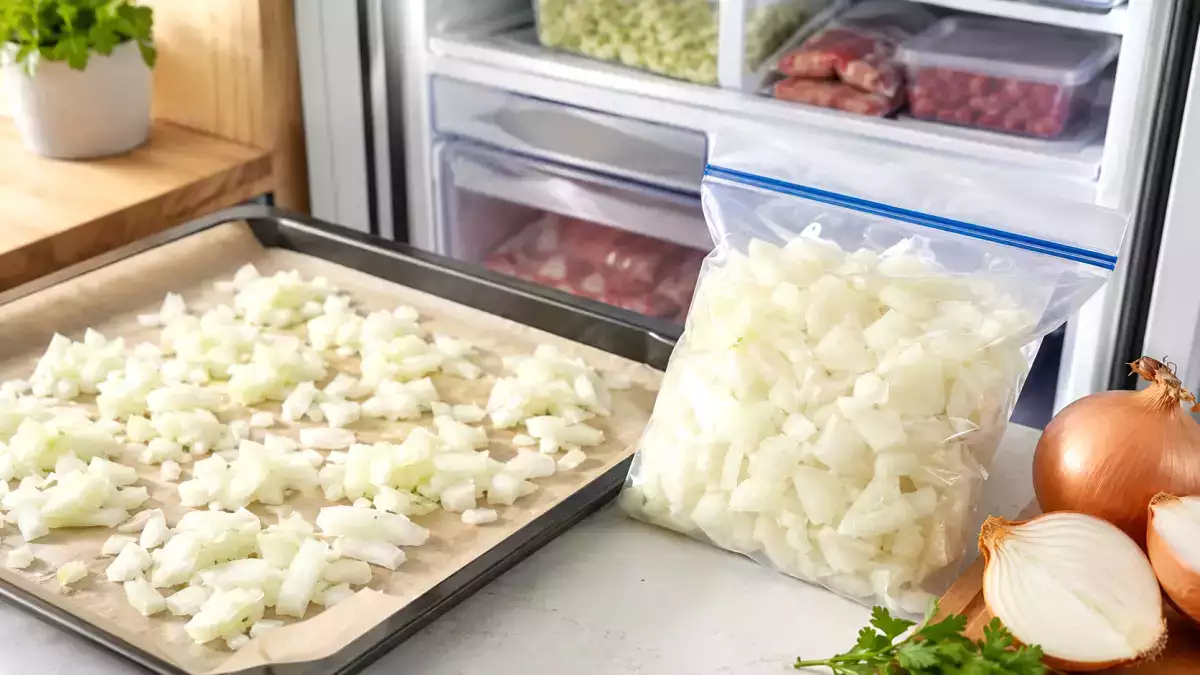
Having pre-chopped onions in the freezer can make preparing daily meals much easier. When you need a base for sauce, risotto, or soup, just take the desired amount and add it directly to the pan.
No knife, no cutting board to wash, and (best of all) no tears, especially when you’re short on time to cook.
The problem arises when the onions are chopped and immediately placed all together in a bag. The moisture in the pieces turns to ice, causing them to stick together. The result is a single block that’s hard to separate.
The smell can also be a problem. If the container isn’t sealed tightly, the onion’s aroma can spread throughout the freezer and affect other foods. To avoid both problems, just add one simple step: freeze the pieces separately first.
How can I freeze chopped onions without them sticking together?
- After removing the skin and any damaged parts, onions can be cut into cubes, slices, or larger pieces, depending on the recipes you prepare most often.
- Before freezing them, it’s important to pat them dry with a clean paper towel. Removing surface moisture reduces the formation of ice crystals and helps keep the pieces separate.
- The onions should then be spread out on a tray lined with parchment paper. They should form a single layer, without being piled up or stacked on top of each other.
- The tray can be left in the freezer until the pieces are thoroughly frozen. At that point, they can be transferred to a freezer bag or an airtight container.
This process, called pre-freezing, allows you to take only the amount you need without having to thaw the entire package.
The step-by-step process
To prepare ready-to-use frozen onions, you need to:
- peel the onions and remove any damaged parts;
- cut them into the desired shape;
- pat them dry to remove moisture;
- spread them out on a tray without overlapping them;
- let them freeze separately;
- Transfer them to a freezer-safe bag;
- remove as much air as possible;
- write the contents and date on the bag .
To make things even more convenient, you can prepare different types of bags. Small cubes are useful for sauces, meat sauces, and risottos, while slices are better suited for omelets, side dishes, and pan-fried dishes.
How can you prevent onion odor in the freezer?
To contain the odor, it’s essential to use a tightly sealed container. Regular thin plastic bags may not be sufficient, especially when they’re opened and resealed several times.
The most practical solution is to use a sturdy freezer bag, making sure to squeeze out the air before sealing it. The bag can also be placed inside an airtight container for double protection.
This is especially helpful when your freezer contains foods that easily absorb odors, such as bread, pastries, and butter.
It’s also a good idea to flatten the bag before freezing it. This way , it will take up less space, seal more easily, and make it simpler to see how much onion is left.
Should onions be washed before freezing them?
Onions must be carefully cleaned, removing the skin, dirt, and any damaged parts. If they are washed under running water, they must be dried very thoroughly before cutting and freezing them.
Any water left on the surface can freeze and cause the pieces to stick together. Drying is therefore one of the most important steps to prevent the onions from turning into a solid block.
The knife, hands, and cutting board must also be clean, since the frozen onions will be stored for several months.
How long do chopped onions last in the freezer?
Pre-chopped onions can be stored in the freezer for several months. To maintain their flavor and quality, however, it’s best to use them gradually and avoid leaving them forgotten at the bottom of the freezer drawer.
Writing the date on the package helps ensure that the bags prepared the longest ago are used first. An airtight seal also limits the formation of frost, ice crystals, and freezer burn.
If the package has a lot of ice buildup or has been left open, the onions may have lost some of their original aroma and texture.
Can you use onions straight from the freezer?
Onions can be used straight from the freezer in cooked recipes, without needing to be thawed.
They are particularly well-suited for:
- sautéing;
- sauces and ragù;
- soups and pureed soups;
- risottos;
- omelets;
- stuffed dishes;
- pan-fried side dishes.
They may release a little water during cooking. Just leave them on the stove for a few more minutes, waiting for the liquid to evaporate before adding the other ingredients.
Freezing tends to make the onion softer. For this reason, it’s best to use it in cooked dishes rather than in salads, sandwiches, or dishes where it should remain raw and crisp.
Is it better to freeze raw or cooked onions?
Pre-chopped raw onions are more versatile because they can be used in many recipes. However, you can also freeze cooked onions: for example, by preparing small portions of sautéed onions in advance.
In this case, let them cool, divide them into small containers, and store them in the freezer. The smaller portions allow you to thaw only what you need.
The small step that makes all the difference
The secret to freezing onions properly is not to put them all together in the bag right away. Spreading them out on a tray keeps the pieces separate, while the airtight bag prevents the odor from spreading.
With just a few minutes of prep, you’ll have a supply of ready-to-use onions that are easy to measure out and perfect for quickly making sautéed onions, sauces, soups, and risottos.
 Leandra Masha
Comments