Unveiling the mystery: why no one questions chicken orders at restaurants
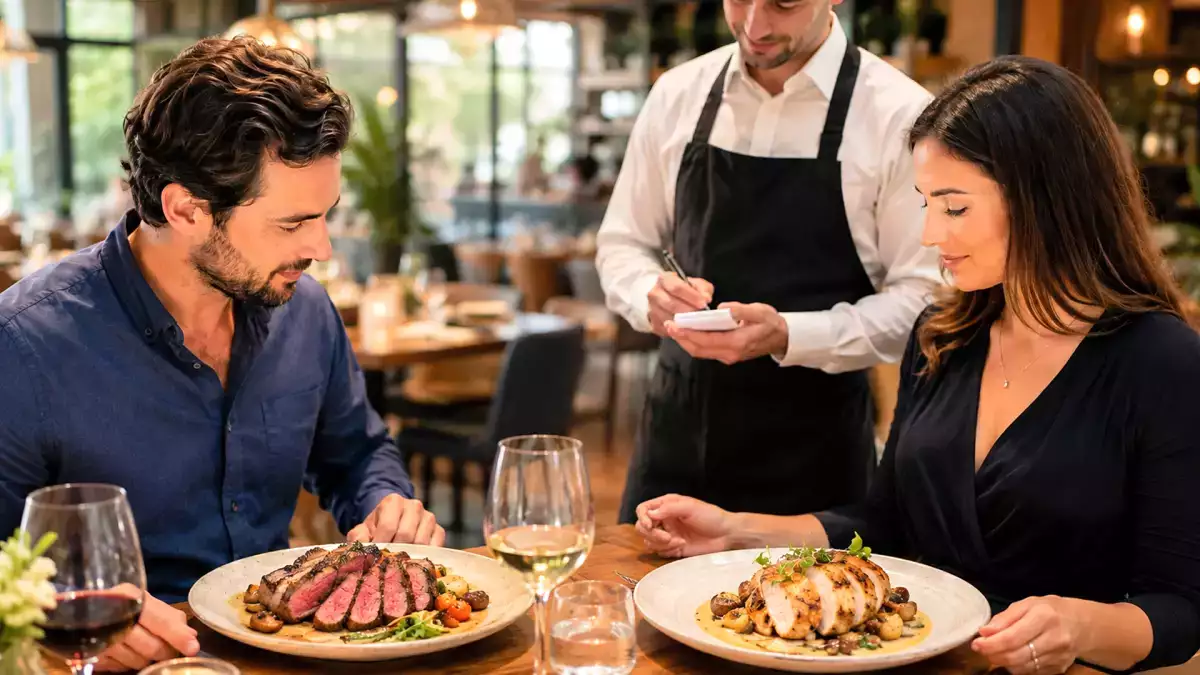
There’s something curious that happens in restaurants. You can order a steak rare, medium-rare, medium or well done. You can debate whether the center should stay red, pink or almost gray. Some people even have very strong opinions about how much a piece of meat should “bleed” before it’s considered good.
But there’s one question that never comes to the table:
“How would you like your chicken cooked?”
And no, it’s not because the server forgot to ask.
It’s not because chicken is a less noble meat, or because it doesn’t allow for nuance, or because chefs around the world secretly agreed to cook it the same way forever. The reason is far more interesting — and also much more serious. With chicken, the rules are completely different from those of a steak.
That’s where the confusion begins. We’re used to thinking of “doneness” as a matter of taste, when in reality not every meat allows the same flexibility.
Chicken doesn’t play by the same rules as steak
The misunderstanding usually comes from comparing chicken to red meat. In restaurants, we’re accustomed to choosing the doneness of a ribeye or filet as if all meats followed the same logic. But they don’t.
With a whole cut of beef, most of the bacterial risk tends to stay on the surface. That’s why searing the outside properly can make the meat safe enough to eat while leaving the inside less cooked.
Chicken is different.
Poultry can carry bacteria such as Salmonella and Campylobacter, two names nobody wants associated with dinner, but extremely important when it comes to food safety. And this is where the answer becomes clear: chicken isn’t something that can be cooked according to aesthetic preference alone. It has to reach a precise level of cooking.
In other words: chicken isn’t cooked “to taste.” It’s cooked until it’s safe.
The number that explains why nobody asks
Food safety agencies are very clear on this point. In the United States, the USDA recommends cooking poultry to an internal temperature of 165°F (74°C). That temperature is considered sufficient to destroy harmful bacteria and make the meat safe to eat.
The goal isn’t to dry the chicken out or turn a chicken breast into something resembling cardboard. It’s simply to make sure the heat has reached the center of the meat properly.
Chicken can absolutely be juicy, golden, tender and perfectly cooked. But it should never be intentionally served raw or undercooked in the middle.
That’s why nobody asks how you want it done.
It’s not a lack of sophistication. It’s a safety boundary.
Does this apply to other meats too?
Chicken isn’t the only meat where caution matters. Similar logic applies to turkey and especially to ground meats.
With a steak, bacteria usually stay on the surface. But once meat is ground, anything that was outside gets mixed throughout the entire product. That’s why a burger doesn’t follow the same rules as a whole steak.
Still, chicken remains the clearest example because it’s such a normal part of everyday cooking. We order it casually all the time without ever stopping to wonder why “medium-rare chicken” simply isn’t an option.
So why does chicken sometimes end up dry?
Here’s the big misunderstanding: for years, many people assumed that “fully cooked chicken” automatically meant dry chicken.
But the problem isn’t cooking chicken enough.
The problem is cooking it badly.
Chicken can be perfectly safe and still incredibly juicy if you control the cut, thickness, heat and resting time properly.
Chicken breast, being lean and delicate, dries out quickly if overcooked. Thighs and drumsticks, which contain more fat and connective tissue, tolerate longer cooking much better. In fact, slow cooking can actually improve their texture by allowing collagen to break down.
Juicy does not mean undercooked
That’s the real key.
With chicken, juiciness doesn’t come from leaving the center undercooked. It comes from precision.
A good cook doesn’t need to serve pink chicken to make it taste good. The difference between dry chicken and juicy chicken isn’t about taking risks, it’s about respecting the product and cooking it carefully.
That’s why restaurants don’t ask you to choose the doneness of chicken the same way they do with steak. The assumption is already built in: it should arrive fully cooked, but not overcooked.
So the next time nobody asks… that’s actually a good sign
The next time you order chicken and nobody asks how you’d like it cooked, don’t think of it as a limitation. It’s actually the opposite.
Some decisions simply shouldn’t be left to the customer.
With chicken, the real luxury isn’t choosing between rare and well done. It’s getting a plate that’s safe, juicy and cooked properly.
No food safety roulette. No unnecessary risks. Just good cooking doing exactly what it’s supposed to do.
 Patricia González
Comments