What is ube, how is it used and why is everyone talking about this purple ingredient?
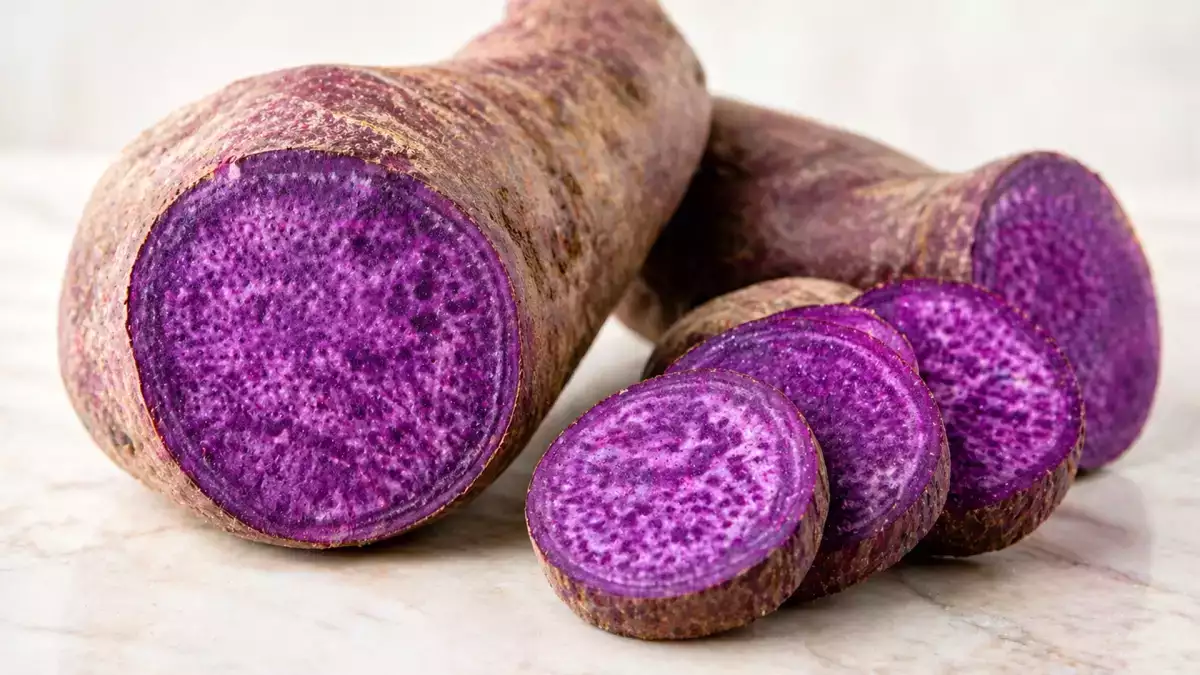
Not so long ago, the intense green of matcha seemed to have definitively conquered the menus of coffee shops and social networks. Before that, it was pistachio, ginger or even Dubai chocolate. But now the focus has changed color. It is enough to peek at Instagram or TikTok to check it: purple has made its way with force. And behind that hypnotic hue is a name that is sounding more and more: ube.
But what is this ingredient, this purple tuber that might remind us of a deep purple sweet potato, what does it taste like and what uses could we put it to in our kitchens?
A tuber with centuries of history
Ube is, in essence, a tuber. Specifically, a variety of purple yam (dioscorea alata) native to the Philippines. At first glance it may resemble the purple yam, but they are not the same: neither in texture, nor in taste, nor in culinary use.
In Philippine cuisine, ube is neither a recent fad nor an exotic ingredient. It has been part of everyday recipes for generations, especially in sweet dishes. Its naturally purple color makes it recognizable even before tasting it, but its true value lies in how it is integrated into traditional preparations.
One of the most representative examples is halayang ube, a thick cream obtained by cooking the tuber and mixing it with condensed milk, evaporated milk and sugar. It is served as a dessert, but also as a base or filling in many preparations.
What does ube taste like?
Defining the taste of ube is not easy, and perhaps that is why it generates so much conversation. It is not a direct or obvious taste. Those who try it often resort to comparisons: notes of vanilla, a slightly toasted touch reminiscent of nuts, a certain sweetness that can evoke coconut or even cereal milk.
It also has an earthy background, typical of tubers, which balances this sweetness and prevents it from being cloying. Overall, it is a pleasant aromatic profile, easy to accept even for those who try it for the first time. It is different, but not disconcerting. And that's why it's easy to imagine it outside a coffee shop menu: in a homemade sponge cake, in some Sunday pancakes or in a sweet cream served in small glasses.
Much more than a latte
Although ube has risen to global fame through beverages, lattes, frappés or combinations with matcha tea its use goes far beyond that. In the Philippines it has been present for decades in ice creams, cakes, puddings or sweet doughs. It also appears in more contemporary versions: brownies, cookies, doughnuts or enriched breads.
In a domestic kitchen, its natural terrain is in everything that already accepts soft and milky flavors: sponge doughs, creams, ice creams, custards, fillings and spoon desserts. Outside of sweets, it is beginning to appear in savory proposals, although more timidly: purees, fillings or dumplings.
The power of the visual (and of the algorithm)
The real turning point came when large coffee chains began to incorporate it into their menus. In a short time, ube went from being a relatively unknown ingredient outside Asia to starring in launches at Starbucks, Costa Coffee or specialty coffee shops in Europe and the United States.
If there is one key factor in its virality, it is obvious: its color. In an environment dominated by images, few ingredients are as striking as this intense purple. It needs no filters or retouching. It works on its own.
But it's not just a matter of appearance. There is also an emotional component: the discovery of new flavors, the sensation of trying something different without leaving the recognizable.
And from Instagram... to our kitchens
To the home cook, ube may seem like a distant ingredient, more at home in a trendy cafeteria than in an ordinary pantry. But its use doesn't have to be gimmicky. Many of its most popular applications are actually quite close to home: sweet doughs, creams, fillings or cakes.
The most practical way is not always to use the fresh tuber, which is difficult to find outside specialized Asian stores, but to resort to ready-made formats: ube powder, extract, paste or packaged halayang ube. The powder is usually incorporated into doughs and drinks; the extract mainly provides aroma and color; and the ube cream can be used almost like a thick jam, to fill a sponge cake, accompany toast, mix with yogurt or give body to a cold cake.
At home, perhaps the best starting point is a simple recipe: a marbled sponge cake, cupcakes, rice pudding with a spoonful of ube or purple-tinged custard.... There is no need to make it the absolute protagonist. Sometimes it is enough to add it to a known preparation to understand why it works.
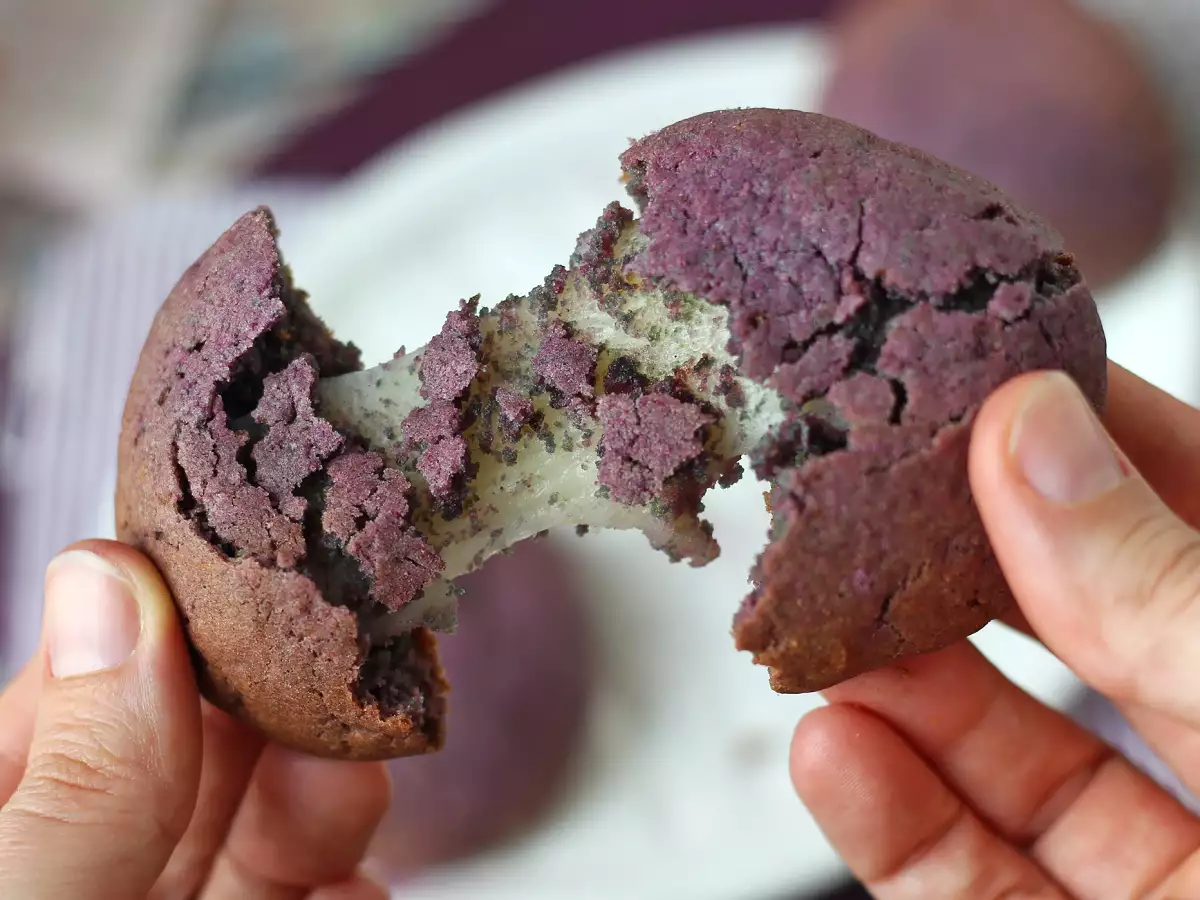
These mochi cookies with ube are the perfect blend of two textures we love: a soft cookie on the outside and a chewy, gooey mochi center on the inside. When baked, the cookie stays soft, while the center becomes slightly chewy , almost...
Between trend and tradition
This global success is not without its nuances. Some voices, especially within the Filipino community, have pointed out that many commercial versions of ube are far from the original. In some cases, the tuber is replaced by artificial colorings or flavorings that mimic its tone, but not its taste.
The comparison with matcha is inevitable. Both share the same path: from traditional product to international phenomenon, with a strong presence in beverages and great visual impact. But rather than replacing it, everything suggests that ube will coexist with it.
For now, purple rules. But beyond the perfect photo, ube has something that a trend alone cannot achieve: it invites you to turn on the oven, to mix familiar ingredients and to look at a traditional cake with different eyes. That, perhaps, is where the real fun begins.
 Patricia González
Comments