Why we don't break pasta in Italy (and abroad they still don't really get it)
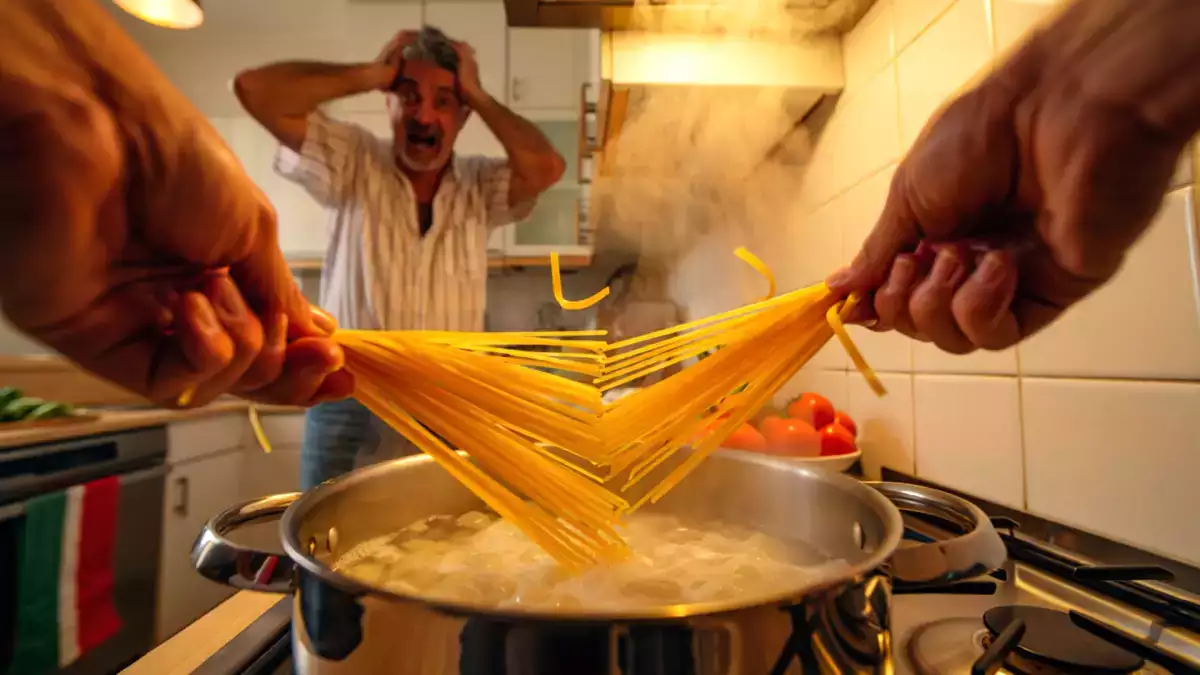
There is a scene that, if you are Italian, will give you chills: someone takes a package of spaghetti, breaks it in half... and throws it in the water. The end. National trauma and emotional damage.
Yet, outside Italy, it's a very common practice. "That way they fit in the pot better," they say. And every time I stand there, silent, torn between wanting to explain and wanting to save that pasta with emergency intervention.
But why in Italy does pasta never break? Is it just tradition or is there something deeper? Spoiler: there is much more, and no, it is not just a matter of "how it has always been done."
Long pasta is no accident: it is designed this way
Let's start with a simple but often ignored truth abroad: long pasta (spaghetti, linguine, bucatini) has a specific function.
It is not long by accident. It is long to bind better to the sauce.
Breaking the pasta means completely altering:
- the texture in the mouth
- the ability to hold the sauce
- the overall experience of the dish
A whole noodle wraps around, picks up the sauce and creates that perfect forkful we all know. A broken one? Well ... it becomes something much less interesting (not to mention sad).
The famous "perfect forkful": not a myth
Those who grew up in Italy know: rolling spaghetti is almost an automatic, almost meditative gesture.
Abroad you often cut pasta, but we Italians have developed a real technique. And no, it is not snobbery.
It is that the length of the pasta allows you to:
- create a balanced forkful
- distribute the sauce better
- perceive textures and flavors in a harmonious way
When I first saw someone eating spaghetti broken with a spoon ... I realized that it was not just a cultural difference. It was just another way of experiencing food.
"But they don't fit in the pot": the most common false problem
This is the number one justification abroad.
"I break them because the pot is small."
And every time I think: just wait 30 seconds.
The noodles, as soon as they get into the boiling water, start to soften and come down on their own. You don't need to break them. You just need a little patience. It's a small detail, but it tells a lot: cooking in Italy is also about time, waiting and respecting ingredients.
Italian tradition: it's not rigidity, it's culture
Breaking pasta, for many Italians, is not just "wrong." It is almost a culinary sacrilege.
But it is not because of rigidity. It is because Italian cuisine is made up of:
- handed-down gestures
- balance between ingredients
- respect for recipes
Every pasta format is born for a specific purpose. Changing it means losing part of that identity. Kind of like putting ketchup on pizza: you can do that, sure...but then don't say it's the same thing.
Abroad they don't understand (and often don't want to understand)
The most curious thing is this: abroad it is often not ignorance, but a different habit.
In many countries:
- pasta is seen as a side dish, not as a protagonist
- practicality comes before tradition
- you adapt recipes to your lifestyle
And so yes, breaking spaghetti becomes normal.
But when you try to explain that it's not done in Italy...they often look at you as if you're exaggerating. "It's just pasta," they say. And there you understand everything: for them it's just food. For us it's culture.
The next time you see someone breaking spaghetti....
Breathe.
Count to ten.
And then maybe tell him this: that long pasta is not just long. It is thought out, studied.
And that in Italy you don't break it - not because we are complicated, but because we know how much everything can change - even with such a small gesture.
 Daniele Mainieri
Comments