Are ketchup packets about to disappear? What customers and chains need to know about the trend in restaurants
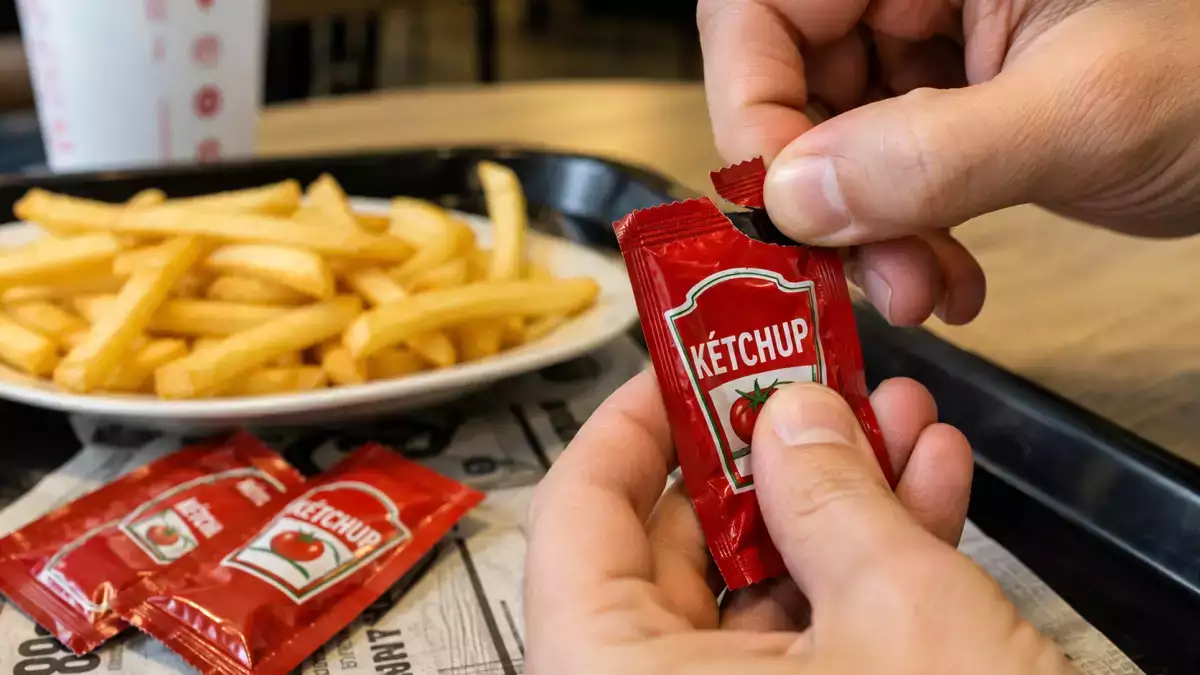
There are few setbacks as minor and familiar as trying to open a ketchup packet only to have the plastic resist. You pull on one corner, squeeze in the wrong spot, and when it finally gives way, the sauce ends up on your fries, your fingers, or your shirt.
Seen from the table, the invention isn’t always convenient. From the other side of the counter, however, the reasons for its success become clearer: it arrives sealed, takes up little space, allows for portion control, and eliminates the need to clean or refill containers. Thus, that little rectangle has been a fixture in bars, cafes, hotels, and restaurants for decades, even though we only use it for a few seconds before throwing it away.
Now Europe wants to remove it from many tables. And that has led to headlines announcing the end of ketchup packets as of August 12, 2026.
Is this true? Many plastic packets do indeed have their days numbered, but they won’t disappear on that date, they won’t be banned in all situations, and, of course, no one intends to leave the fries without sauce.
The date exists, but it doesn't mean what it seems to mean
August 12, 2026, is not a made-up date. On that day, the new European regulation on packaging and packaging waste will take effect.
But ketchup packets won’t disappear then. The restriction on certain single-use plastic items in hotels, restaurants, and cafes is scheduled to take effect on January 1, 2030.
The rumor, therefore, is based on a real fact but mixes up two dates: 2026, when the regulation takes effect, and 2030, when this restriction will go into effect.
So, which envelopes are in the spotlight?
The regulation applies to certain single-use plastic containers holding individual portions of sauces, condiments, coffee creamer, sugar, and similar products in the hospitality industry. This includes sachets, tubs, and other containers that are opened, consumed, and discarded during the same meal.
An important point to note is that ketchup itself is not being banned, but rather a specific way of packaging and serving it. Furthermore, the measure will not be universal: there will be exceptions for takeout food and for certain healthcare or assistive uses justified by hygiene and safety concerns.
Therefore, in 2030, we will still be able to find single-serve packets in some takeout orders, hospitals, or nursing homes. Where they will no longer be used is primarily in bars, restaurants, cafes, and hotels.
Why did a package that almost no one knows how to open properly become a success?
It’s easy to make fun of the little packet when it tears open the wrong way, ends up half-empty, or squirts the sauce in an unexpected direction. But single-serve packets didn’t take the hospitality industry by storm by chance.
For a business, they’re easy to count, transport, and store. They eliminate the need to refill containers, allow for precise control over portion sizes, and reduce direct contact between customers. Plus, each portion remains sealed until it’s time to eat.
They also simplify service. All you have to do is place two packets next to a hamburger or toss a handful onto a tray. There are no bottles to collect, no sauce dishes to wash, and no dispensers to check during the shift.
The problem arises when you look at the big picture. Each packet fulfills a tiny need using packaging that becomes waste almost immediately. And, since this action is repeated at millions of tables, what seemed insignificant is no longer so.
In 2022, each resident of the European Union generated, on average, about 186.5 kilograms of packaging waste. About 36 kilograms of that was plastic packaging. The ketchup packet represents only a tiny fraction of that mountain, but it sums up the problem well: a lot of packaging for very little content.
What will we find on the table instead?
The most obvious alternative is the traditional bottle, although it’s probably not the only one.
Some establishments may use refillable self-service dispensers. Others will serve sauces in small, reusable sauce dispensers or add them directly from large containers handled by staff. There will also be suppliers developing new formats that use less material or no plastic subject to the restriction.
The dining table of the near future won’t necessarily be a table without ketchup. Rather, it will be a table where wrapping ten grams of sauce in plastic is no longer the default option.
Sustainability can also stain the tablecloth
Replacing sachets with refillable bottles seems simple until someone has to take care of them.
A shared container requires frequent cleaning, proper refilling, and appropriate storage conditions. A half-empty bottle shouldn’t be endlessly topped off with fresh sauce, nor should it be left for hours in the heat on a patio. Not all sauces hold up equally well when served outside the refrigerator.
Single-serve portions offer a real advantage: the contents remain sealed and protected until they reach the consumer. If they’re eliminated, establishments will have to offset that advantage with better handling, cleaning, and storage routines.
The challenge, therefore, is not merely to reduce plastic, but to replace it without creating new problems related to hygiene, waste, or operational efficiency.
About 40% of the plastic used in the European Union goes into packaging. The new regulation aims to reduce unnecessary materials, improve recyclability, and promote reuse whenever possible.
That doesn’t make every mustard packet an environmental catastrophe or every dispenser a perfect solution. It’s a matter of scale. A tiny piece of packaging may seem insignificant; millions of single-use packages tell a different story.
So, should we say goodbye to the little packet?
Not yet. On August 12, 2026, there won’t be a Europe-wide ketchup shortage or inspectors confiscating single-serve packets on outdoor patios.
What’s beginning is a more gradual change. Starting in 2030, many single-use plastic sachets and containers will no longer be allowed in bars, restaurants, cafes, and hotels. In other contexts, they may still be used, especially for takeout or when there are specific hygiene and safety reasons.
Perhaps the ketchup packet won’t disappear from the world, but it will no longer be the automatic accompaniment to every plate of fries.
And perhaps no one will miss it all that much—until the day when, standing in front of an empty dispenser, they remember with unexpected fondness that tiny, impossible-to-open rectangle that always ended up staining their fingers.
 Patricia González
Comments