Avoid these common mistakes that silently spoil a jarred salad before lunch: simple fixes you can use
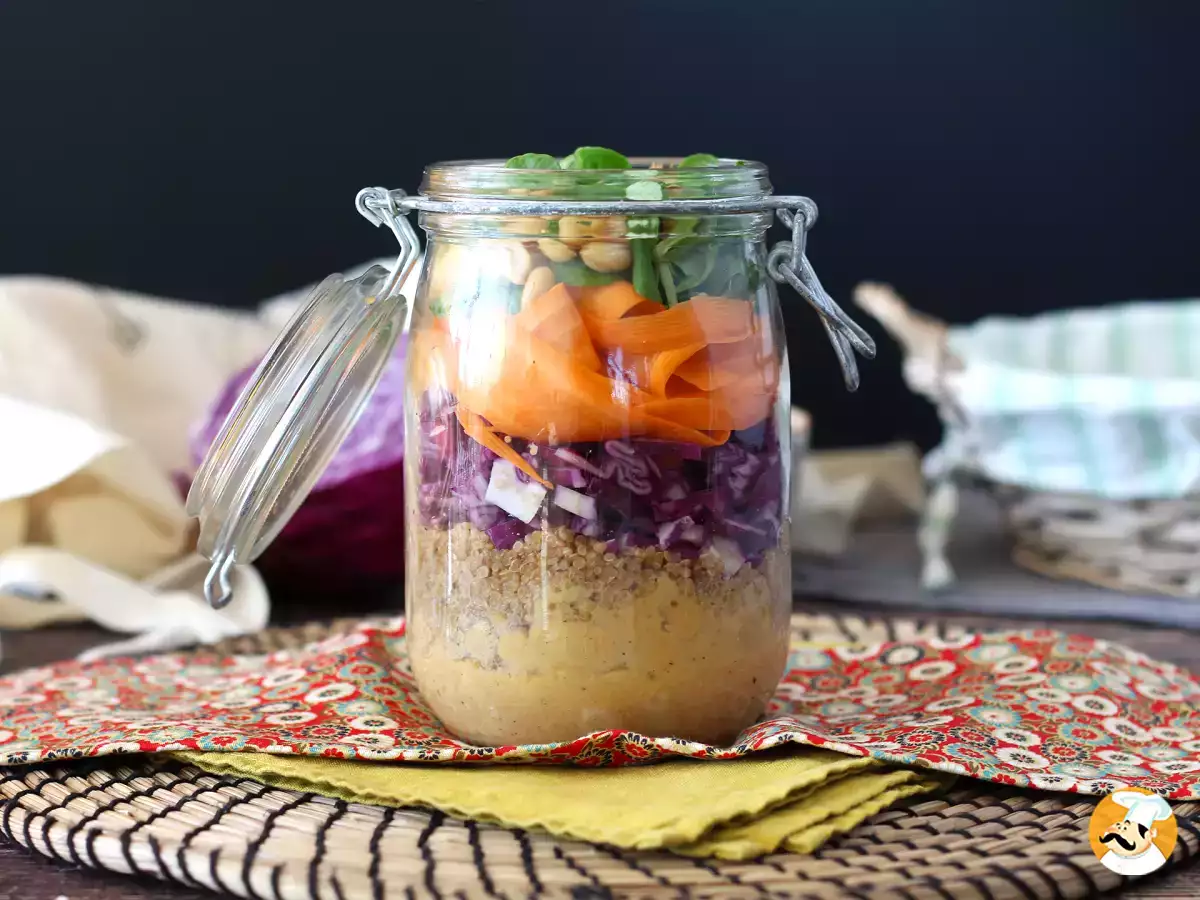
You know, that lovely salad you make in a big glass jar, pop in the fridge or a cooler bag, and give a good shake right before eating :-) On paper, it’s simple, colorful, clever: perfect for the office, a picnic, or lunches prepared in advance.
But be careful: there’s a little secret to keeping it really tasty: the order of the ingredients.
Because if you pour the dressing directly onto the greens, or let the juicy tomatoes sit against the croutons… let’s be honest, by lunchtime it won’t be nearly as appealing. Soggy greens, soggy ingredients, unevenly distributed dressing… in short, everything we want to avoid!
Good news: once you know the right method, it’s almost impossible to get it wrong ;)
Step 1: Keep the sauce at the bottom
This is THE golden rule for jar salads: the dressing goes all the way to the bottom.
Olive oil and lemon dressing, yogurt dressing, mustard vinaigrette, pesto, tahini sauce… whatever you choose, it must stay at the bottom of the jar. That way, it doesn’t immediately come into contact with the delicate ingredients, especially leafy greens, arugula, or fresh herbs.
When it’s time to eat, just give the jar a shake or pour everything onto a plate. The dressing will then distribute much more evenly, without turning your salad into soup by mid-morning.
A quick tip: don’t add too much dressing. Since everything is sealed tightly in the jar, a small amount is often enough to coat the entire salad.
Step 2: Solid ingredients that can withstand anything
Right on top of the sauce, place the most durable ingredients: the ones that can come into contact with the dressing without causing a disaster.
Think, for example , of chickpeas, red beans, lentils, pasta, rice, quinoa, shredded carrots, chunky cucumber, corn, or potatoes. They’ll act as a sort of barrier between the dressing and the rest of the salad.
This is also where you can add ingredients that benefit from marinating a bit. Chickpeas in a lemon-based dressing, carrots in a vinaigrette, pasta with pesto… honestly, they’re not afraid of that, quite the opposite :)
Step 3: Softer vegetables and garnishes
Next, add the more delicate ingredients: the ones that can still hold up for a few hours: cherry tomatoes, bell peppers, grilled zucchini, beets, avocado with lemon, hard-boiled eggs, tuna, chicken, feta, and mozzarella.
The idea is to protect them from the dressing without placing them right on top. This way, they stay in place without crushing the lettuce leaves.
For the tomatoes, we prefer cherry tomatoes cut in half or left whole if they’re small. They release less liquid than large, diced tomatoes. And for the mozzarella, be sure to drain it well before adding it. Yes, it’s a small detail, but it’s often what keeps the bottom of the jar from getting too watery!
Step 4: The green leaves at the very top
Green salad, arugula, baby greens, fresh spinach, or delicate herbs should always go on top of the jar.
Why? Because these are the most delicate ingredients. If they come into contact with the dressing too early, they’ll get soggy. If they’re crushed under the rice, pasta, or vegetables, they’ll lose all their volume.
By adding them last, you keep them dry and well-aerated until it’s time to eat. And when you turn the jar upside down or shake it, they mix with the rest of the ingredients just before you dig in.
Our little tip: Pack them down lightly, but not too much. A jar salad that’s too compact will be harder to mix… and less enjoyable to eat.
Step 5: Crispiness at the Last Minute
Croutons, toasted seeds, nuts, almonds, fried onions, or tortilla chips: they’re delicious in a salad. But in a jar prepared several hours in advance, they can quickly lose their crunch.
The best approach? Keep them in a separate small bag, or add them on top right before closing the jar if you’re going to eat the salad right away.
The same goes for certain very delicate herbs like basil: you can place them on top of the jar, but if the salad is going to sit for a whole day, it’s better to add them at the very last moment. That way, they’ll retain their fragrance and vibrant color better.
And when it comes to conservation, we're careful
A salad in a jar is convenient, but it’s still a fresh dish. So keep it in the refrigerator, in a clean, tightly sealed jar.
For leftovers from homemade meals, we recommend storing them in the refrigerator and eating them as soon as possible, within 3 days. But if your salad contains perishable ingredients such as fish, eggs, homemade mayonnaise, cream, or cream cheese, it’s best to eat it sooner: ideally within 24 hours.
And if you’re taking it to the office, be sure to use a cooler bag with an ice pack, especially in the summer. ANSES reminds us that improper storage or a break in the cold chain can promote bacterial growth.
The correct order to remember
To make sure you never get it wrong again, just remember this order:
- Sauce at the bottom.
- Solid ingredients next.
- Vegetables and protein in the middle.
- Green leafy vegetables on top.
- Crunchy toppings on the side or last.
And there you have it! Your jarred salad will stay fresh, colorful, easy to take with you, and much more enjoyable to eat.
Now that you know all this, all you have to do is grab a large jar, open the fridge, and layer your salad like a savory mille-feuille. I promise, come lunchtime, you’ll thank yourself!
 Adèle Peyches
Comments