It's not the cheese, it's how you treat it: keys to preserving and serving it well

In almost every home there’s a little ritual that repeats itself whenever there’s company, a celebration, or a special meal: someone stands up before the first course arrives and says, “I’m going to put out some cheese.” It’s automatic, almost a reflex. It doesn’t matter if it’s a casual Sunday birthday, an office dinner, Christmas Eve or New Year’s: there’s always a moment for cheese.
The problem is that, too often, the cheese hits the table in worse shape than the guests. Ice cold, dull, stiff, dry around the edges, cut into sad, uneven wedges that don’t say anything good about the cheese or the person who bought it.
Sometimes we spring for a really nice cheese and then treat it badly at home. And that’s a shame, because cheese, when you treat it right, “remembers.” All it takes is understanding a few basic ideas and respecting the timing so the cheese keeps all its flavor.
Cheese is not an object: it's alive
This may sound dramatic, but it’s the key to everything. Cheese reacts to cold, heat, air, humidity, and the passing of time. A firm aged cheese is nothing like a gooey sheep’s milk “torta”, a blue cheese is nothing like a young goat log but they all have one thing in common: they need a bit of care and don’t tolerate shortcuts just to save five minutes.
Most cheese disasters at family dinners, holiday spreads, and friendly get-togethers come down to three main mistakes:
- Serving it way too cold, straight from the fridge.
- Cutting it hours in advance and leaving it out on the counter until serving time.
- Storing it badly wrapped, glued to plastic or abandoned in the coldest corner of the refrigerator.
With that in mind, let’s go step by step: from the moment you buy it to the moment someone reaches out for that first piece.
From the counter to home: starting off right
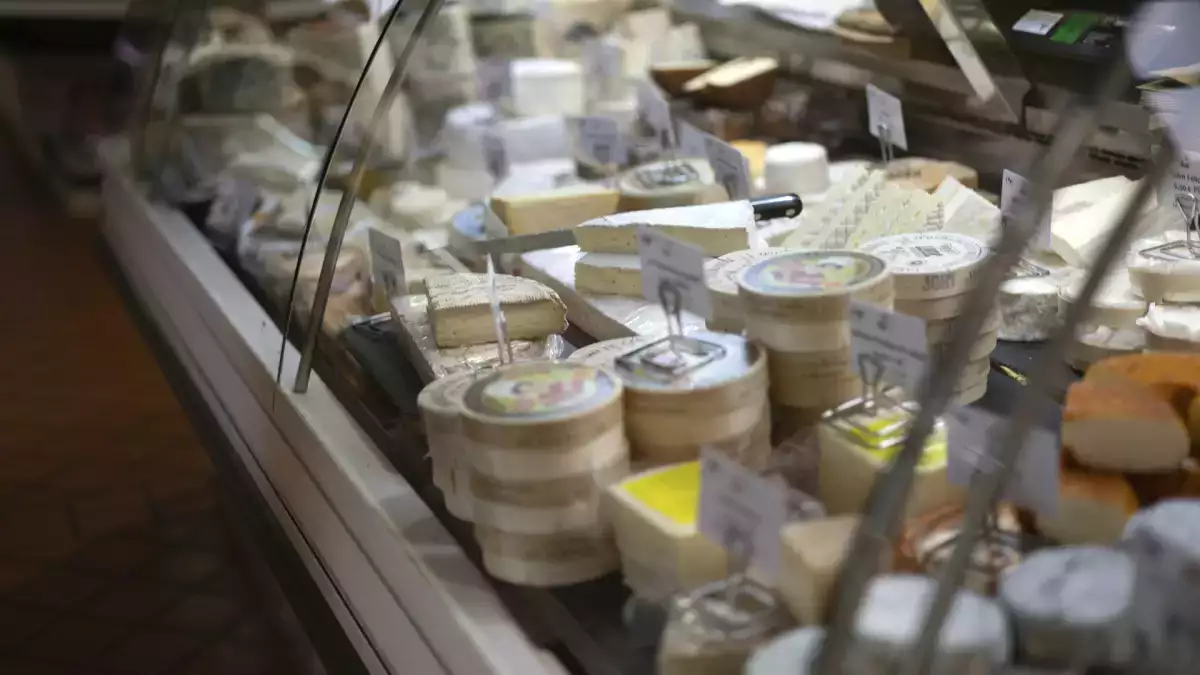
What and how much to buy
- If cheese is just one part of the appetizer (with ham, charcuterie, nuts, etc.), plan on about 2–3 oz (60–80 g) per person.
- If the cheese board is almost a course on its own, you can go a bit higher, but no need to go wild.
- Different milks: cow, sheep, goat.
- Different ages: soft or bloomy rind, semi-aged, aged, blue.
Transport: on the way home
Life in the fridge: where most things go wrong
Where to store it
How to wrap it
- Keep the original paper from the cheesemonger when you can, it’s usually designed to let cheese breathe.
- If not, wrap the cheese in parchment paper, waxed paper, or butcher paper as a first layer that protects but doesn’t smother it.
- Then place it in a loose container or reusable bag, without sealing it completely, to create a small air chamber.
Freezing: yes or no?
The day of the dinner: timing and cuts
This is where things usually go wrong, at home and in restaurants: lack of time, crowded kitchens…
Bringing cheese to room temperature: when to take it out
Simple rule: cheese tastes way better at room temperature than straight from the fridge.
Rough timing:
- Soft cheeses (brie, camembert, creamy goat logs, very soft wheels): take them out about 1 hour before serving so they become supple and aromatic.
- Semi-aged and aged cheeses (manchego-style, aged cow cheeses, young comté types): about 30–45 minutes is usually enough to lose the fridge chill and open up.
- Strong blue cheeses: often appreciate a bit more time out, as long as the kitchen isn’t so hot that they collapse into a puddle.
Don’t take the cheese out at 5 p.m. if you’re eating at 10. Too many hours at room temperature will dry the surface, oxidize the cut, and ruin things just as much as serving it ice cold.
When and how to cut it
The difference between stiff, sad cheese and a board that makes you want to dig in is often right here.
- Ideally, cut the cheese shortly before serving, not in the morning “to get it done.”
- If you must work ahead, you can cut it, arrange the pieces on the board, and lightly protect them with a clean cloth or a piece of plastic wrap placed like a canopy—not pressed against the cheese.
As for shapes, respect the structure of each cheese:
- Wedges of aged cheeses are usually cut into thin triangles that go from rind to center, so each piece includes every part.
- Small cylindrical cheeses (like goat logs) work well sliced into rounds—but not paper-thin, or they’ll dry out instantly on the table.
- Very soft, spoonable cheeses or “tortas” can be opened on top and eaten with a spoon or spread, but they still need care: don’t leave them uncovered for hours.
And a small but important detail: don’t use the same knife for every cheese, especially if you have a blue on the board. That way the strong blue doesn’t “invade” the milder cheeses.
The cheese board at the table: order and extras
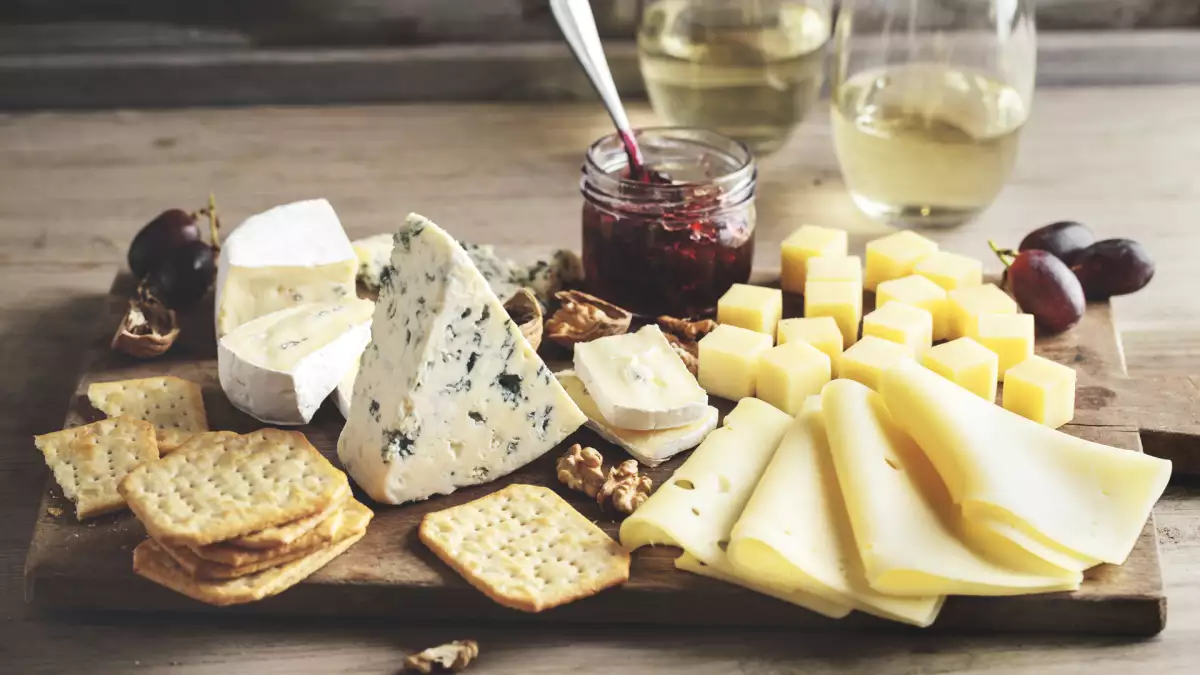
The ideal scene isn’t a chaotic mountain of random chunks, but a tray that feels inviting, not intimidating.
Order and variety
A simple way to arrange the board is to place cheeses from mildest to strongest, following the direction of a clock. Anyone who wants to taste in order will intuitively know where to start.
For variety, aim for:
- One mild cow’s milk cheese.
- One semi-aged or aged sheep’s milk cheese.
- One good goat cheese.
- One blue for those who love it.
No need to turn it into a competition, but it’s nice if everything doesn’t taste the same.
Accompaniments: yes, but keep it simple
Cheese doesn’t need a complicated stage set. A good bread, a few fresh or dried fruits, some toasted nuts, and, if you like, a couple of light jams or honeys are more than enough. If you’re serving cured ham or other strong charcuterie, it’s better to put it on a separate plate, so it doesn’t overwhelm everything.
Giving cheese the place it deserves
In the end, taking care of cheese isn’t about being fancy, it’s about respect. If someone has spent weeks or months making it, the least we can do at home is give it a proper entrance to the table: right temperature, freshly cut, a bit of order, a little patience.
Next time someone at Christmas dinner says, “I’m going to put out some cheese,” you’ll have this little mental guide in the back of your mind. No need to lecture anyone or recite temperatures. It’s enough that, when the board reaches the table, the cheese isn’t stiff or frozen, but perfectly in its prime. And without a word, everyone will notice.
 Patricia González
Comments