Oven-roasted butternut squash: the quickest way to get tender pieces with minimal fuss every time
Tuesday 22 September 2026 15:30 - Adèle Peyches
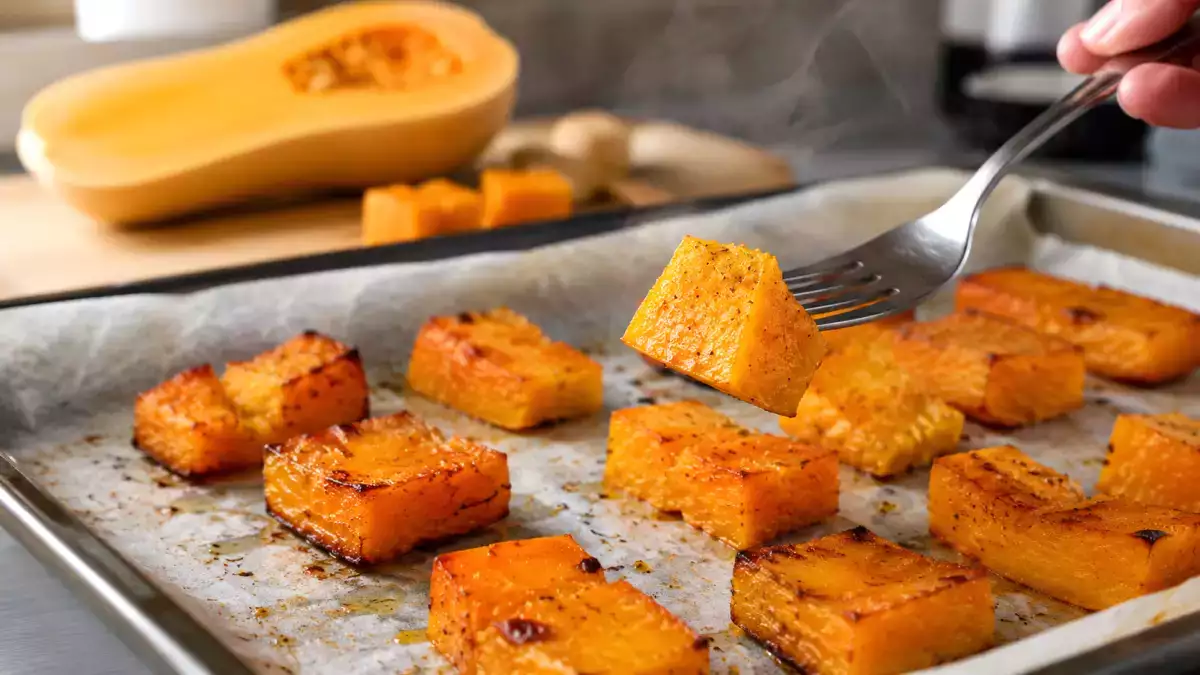
But if the pieces are too big, too tightly packed, or undercooked, you’ll quickly end up with squash that’s still firm in the center or dry around the edges.
Don’t worry: it’s not complicated at all: the key is to choose the right cut size, the right temperature, and give the butternut squash time to become truly tender.
Should you peel the butternut squash before cooking it?
For tender pieces, it’s often best to peel the butternut squash before cutting it into cubes. Its skin is thinner than that of other squash varieties, but it can remain a little firm depending on the cooking method and the size of the pieces.
If you cut it in half to roast it whole, you can leave the skin on. Once cooked, the flesh comes out very easily with a spoon.
The right approach: peel it for tender cubes, leave the skin on for a roasted half butternut squash.
If you cut it in half to roast it whole, you can leave the skin on. Once cooked, the flesh comes out very easily with a spoon.
The right approach: peel it for tender cubes, leave the skin on for a roasted half butternut squash.
The right cut for even cooking
How you cut the meat is almost as important as the cooking time. Evenly sized pieces cook better and help you avoid that classic mix of “one piece burnt, one piece still tough.”
For cubes, aim for about 2 to 3 cm. For slices, keep them about 1.5 to 2 cm thick. The thicker the pieces, the longer it will take for them to become tender.
And above all, don’t crowd them on the baking sheet. The butternut squash should roast, not steam.
For cubes, aim for about 2 to 3 cm. For slices, keep them about 1.5 to 2 cm thick. The thicker the pieces, the longer it will take for them to become tender.
And above all, don’t crowd them on the baking sheet. The butternut squash should roast, not steam.
In cubes: 30 to 40 minutes at 390°F/200°C
This is the most convenient method for a side dish, a warm salad, or a bowl. Cut the butternut squash into even cubes, add a drizzle of olive oil, salt, pepper, and your choice of spices.
Spread the pieces on a baking sheet in a single layer, then bake at 390°F/200°C for 30 to 40 minutes.
Turn the pieces over halfway through cooking. They’re ready when the tip of a knife slides in easily and the edges start to brown.
Spread the pieces on a baking sheet in a single layer, then bake at 390°F/200°C for 30 to 40 minutes.
Turn the pieces over halfway through cooking. They’re ready when the tip of a knife slides in easily and the edges start to brown.
In slices: 35 to 45 minutes at 370-390°F/190–200°C
Butternut squash slices look beautiful on a plate, especially with a little honey, thyme, rosemary, or feta after baking.
Cut the squash into slices about 1.5 to 2 cm thick, brush them with a little oil, then arrange them on a baking sheet. Bake for 35 to 45 minutes at 370-390°F/190–200°C.
If the slices brown too quickly but remain firm, lower the temperature slightly and continue baking for a few more minutes.
Cut the squash into slices about 1.5 to 2 cm thick, brush them with a little oil, then arrange them on a baking sheet. Bake for 35 to 45 minutes at 370-390°F/190–200°C.
If the slices brown too quickly but remain firm, lower the temperature slightly and continue baking for a few more minutes.
Halved butternut squash: 45 to 60 minutes, depending on size
For a very tender butternut squash that can be served with a spoon, cut it in half lengthwise, remove the seeds, lightly score the flesh with a knife, then add oil, salt, pepper, and herbs.
Place the halves flesh-side up or down, depending on the desired result. With the flesh side down, it cooks faster and stays very tender. With the flesh side up, it browns more.
Bake for 45 to 60 minutes at 370-390°F/190–200°C, depending on the size of the squash.
Place the halves flesh-side up or down, depending on the desired result. With the flesh side down, it cooks faster and stays very tender. With the flesh side up, it browns more.
Bake for 45 to 60 minutes at 370-390°F/190–200°C, depending on the size of the squash.
The little trick that helps make it melt-in-your-mouth
If you're worried the butternut squash might dry out, add a tiny bit of water to the baking sheet or cover it with a sheet of parchment paper for the first few minutes. This creates a little steam at the beginning.
Then, let it finish cooking uncovered so the pieces brown. It’s this combination of steam and roasting that gives it a tender texture without making it taste boiled.
Be careful not to add too much water, though, or the pieces may become mushy without browning.
Then, let it finish cooking uncovered so the pieces brown. It’s this combination of steam and roasting that gives it a tender texture without making it taste boiled.
Be careful not to add too much water, though, or the pieces may become mushy without browning.
Which seasonings should you choose?
Butternut squash pairs well with both mild flavors and spicier seasonings. For a simple version, olive oil, salt, pepper, and thyme are more than enough.
For a richer version, add a little honey, maple syrup, paprika, curry, cumin, garlic, rosemary, or mild chili pepper.
After cooking, you can also add feta, hazelnuts, pumpkin seeds, or a squeeze of lemon. This adds crunch and brings out the natural sweetness of the squash.
For a richer version, add a little honey, maple syrup, paprika, curry, cumin, garlic, rosemary, or mild chili pepper.
After cooking, you can also add feta, hazelnuts, pumpkin seeds, or a squeeze of lemon. This adds crunch and brings out the natural sweetness of the squash.
The classic mistake: overloading the baking sheet
We often want to put everything on a single baking sheet to save time. But if the pieces are too crowded, they’ll release moisture and steam instead of roasting.
The result: the butternut squash gets soft but doesn’t really brown. And sometimes, it stays moist instead of becoming tender.
The right way to do it: spread the pieces out in a single layer. If necessary, use two baking sheets. This is much better for getting golden brown edges.
The result: the butternut squash gets soft but doesn’t really brown. And sometimes, it stays moist instead of becoming tender.
The right way to do it: spread the pieces out in a single layer. If necessary, use two baking sheets. This is much better for getting golden brown edges.
How can you tell if it's really cooked?
The best test is still the knife. Pierce a piece: the blade should go in very easily, with no resistance in the center.
Visually, the edges should be slightly golden, and the flesh should look tender. If the top is browned but the center is still firm, continue cooking at a slightly lower temperature.
A well-cooked butternut squash should be tender all the way to the center, not just golden on the outside.
Visually, the edges should be slightly golden, and the flesh should look tender. If the top is browned but the center is still firm, continue cooking at a slightly lower temperature.
A well-cooked butternut squash should be tender all the way to the center, not just golden on the outside.
Ideas for using it after cooking
Roasted butternut squash pairs well with meat, fish, eggs, or a vegetarian dish. It also works great in salads, pasta, risotto, or comfort food.
For a light and satisfying meal, butternut squash soup is always a safe bet.
In a butternut squash pasta dish, it adds a delightful creamy texture.
In a salad with lentils, red cabbage, and beets, it adds a lovely touch of fall.
And for a more original take, a butternut squash crumble with hazelnuts really highlights its melt-in-your-mouth quality.
For a light and satisfying meal, butternut squash soup is always a safe bet.
Irresistible butternut squash velouté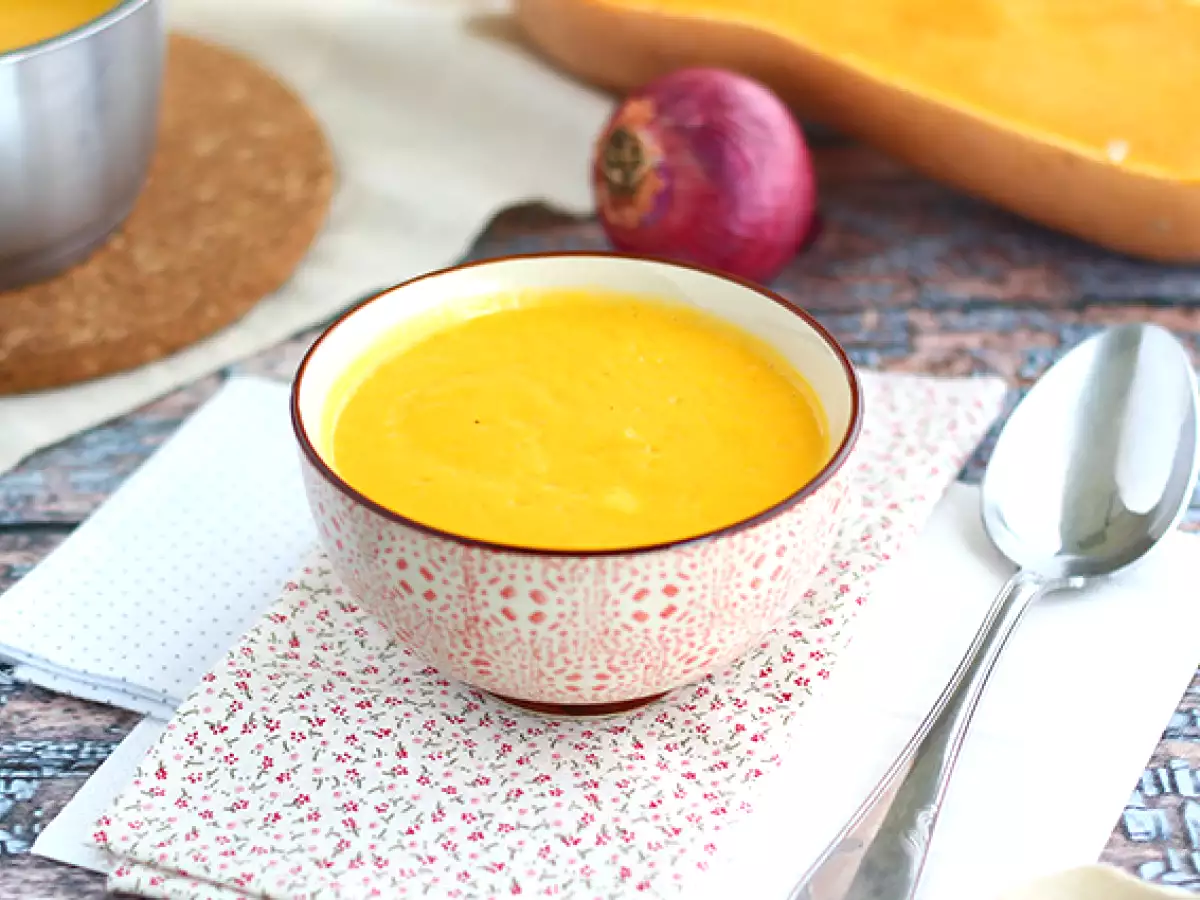
Squash season is here! Pumpkin, butternut, and more... How to cook them? We offer you a simple and perfect recipe for autumn/winter: a velouté! Easy for beginners, just cook your ingredients for a few minutes before blending. Simple, right? Follow our...
In a butternut squash pasta dish, it adds a delightful creamy texture.
Fresh butternut pasta with only 2 ingredients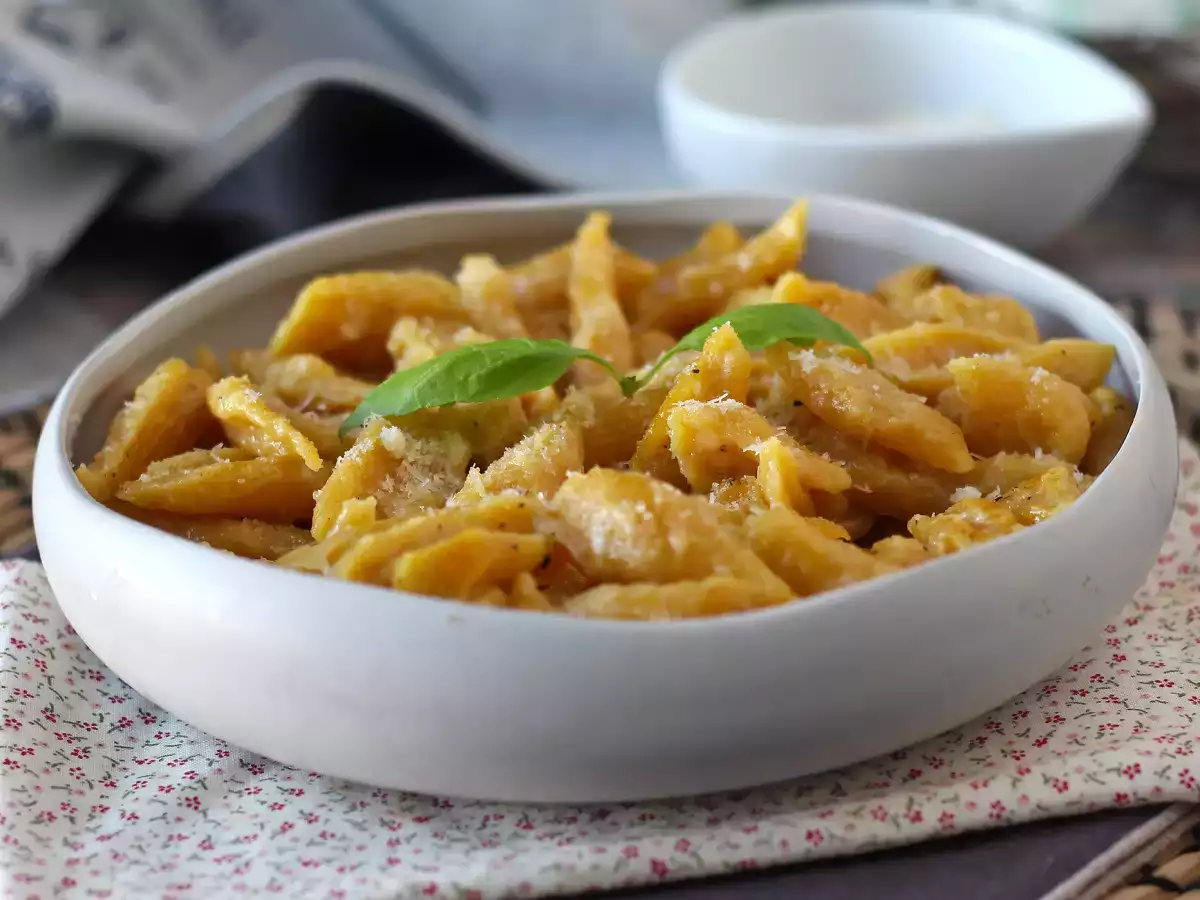
Fresh butternut pasta is the perfect example of a simple, delicious recipe :) With just two ingredients - butternut puree and flour - you can make an easy and original homemade recipe , without the need for sophisticated equipment. Butternut, with...
In a salad with lentils, red cabbage, and beets, it adds a lovely touch of fall.
Lentil, butternut, red cabbage, beet and parsley salad (perfect for fall/winter)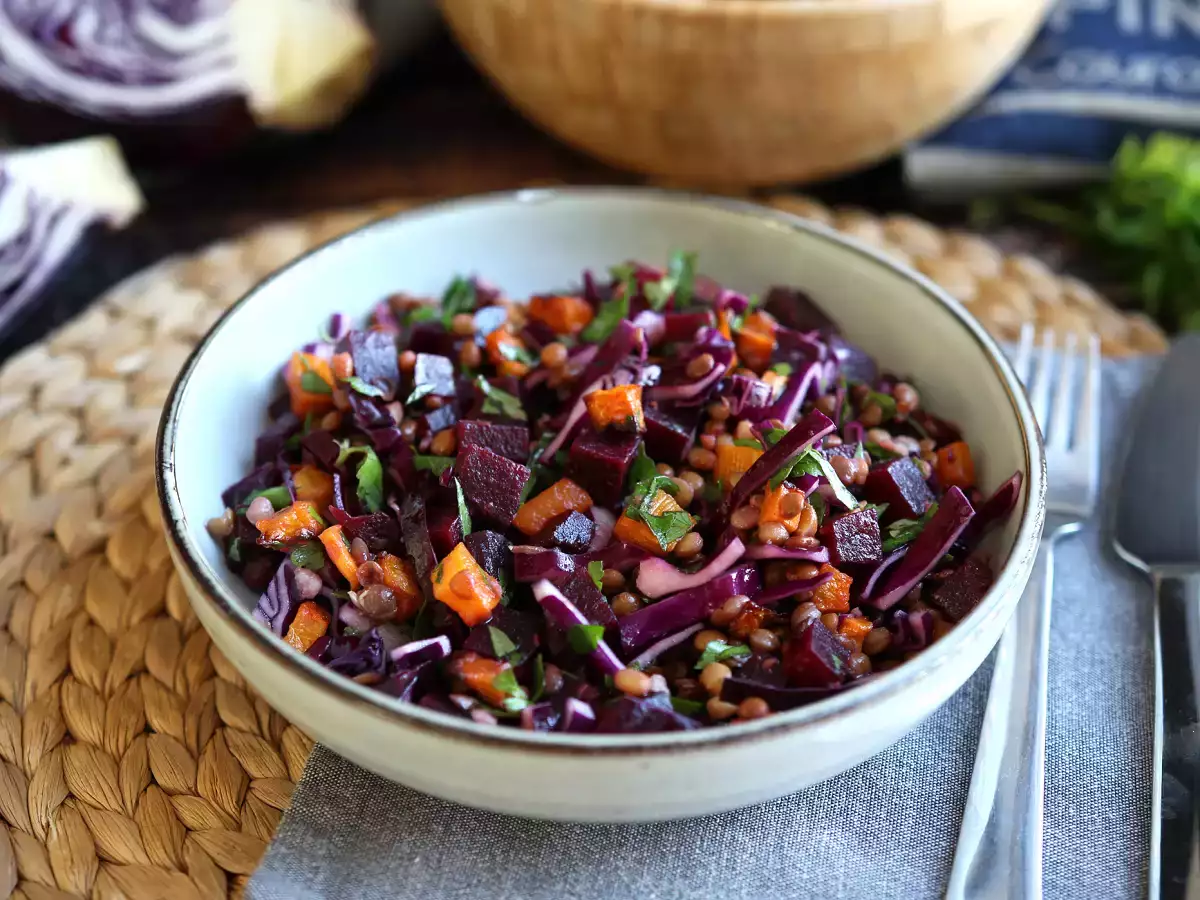
We love salads so much we had to make a fall/winter one! So we swap our raw vegetables for seasonal vegetables by combining red cabbage, beet and butternut squash with lentils and parsley. An easy to make, quick and vegetarian recipe . Eat...
And for a more original take, a butternut squash crumble with hazelnuts really highlights its melt-in-your-mouth quality.
A handy summary of cooking times
For diced butternut squash, bake for 30 to 40 minutes at 390°F/200°C. For slices, bake for 35 to 45 minutes at 370-390°F/190–200°C. For half a butternut squash, bake for 45 to 60 minutes, depending on its size.
In any case, check on it regularly, add a little oil, spread the pieces out well, and test for doneness with the tip of a knife.
The secret to tender butternut squash isn’t to rush it, it’s to give it time to cook all the way through.
In any case, check on it regularly, add a little oil, spread the pieces out well, and test for doneness with the tip of a knife.
The secret to tender butternut squash isn’t to rush it, it’s to give it time to cook all the way through.
 Adèle Peyches
Editorial manager who just can't wait for winter to enjoy fondue! Passionate about gastronomy and always on the lookout for new culinary gems, I first studied law before returning to my first love: the taste of good products and the joy of sharing around the table :)
Comments