Salt keeps clumping? here’s why it happens and a simple trick to help keep it loose at home
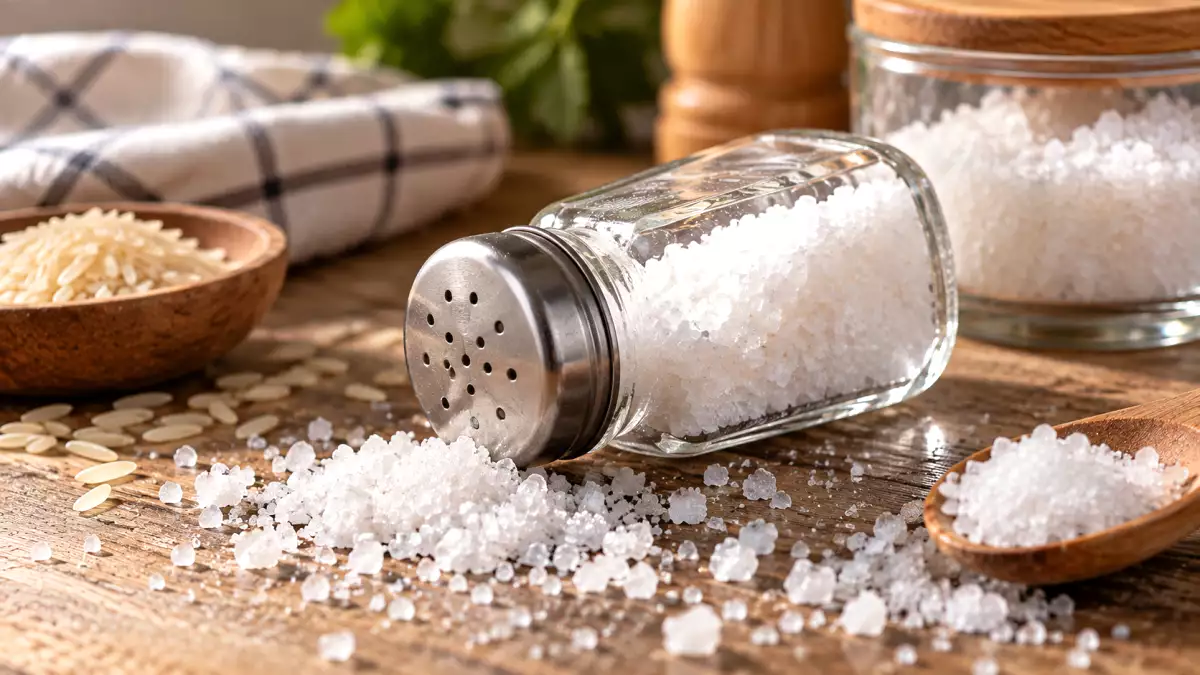
You tilt the salt shaker, but nothing comes out. You shake it. You tap it a couple of times against the table. You try again, and with a little luck, a few grains come out, followed by a small white lump.
The strange thing is that just a few days ago, that same salt flowed effortlessly through the holes. No one has poured water into the container, and, apparently, nothing out of the ordinary has happened. However, the grains that were once separate have begun to clump together, forming small lumps.
It’s one of those common household problems that we hardly ever stop to wonder why they happen. Is it the steam from the kitchen? The type of salt? The container? And do those little rice-like grains we still find in many salt shakers actually serve any purpose?
To answer this, we need to look at something we don’t normally see: what happens between two tiny salt crystals when the humidity around them changes.
Lumps start with moisture
Salt seems completely dry, but that doesn’t mean it’s unaffected by what’s happening in the air around it. When humidity is high, its crystals can absorb small amounts of water on their surface. No one needs to dip a wet spoon into it, nor does a drop need to fall inside the salt shaker.
And in a kitchen, there’s no shortage of opportunities. We take the lid off a pot, drain the pasta, bring water to a boil, or leave the salt shaker next to the stove. Each of those little clouds of steam temporarily increases the humidity around it.
An isolated incident probably won’t make much of a difference. The problem arises when the salt repeatedly moves from a humid environment to a drier one. It’s this back-and-forth fluctuation in humidity that can eventually cause the crystals to stick together.
How a few loose grains end up forming a clod
Let's imagine two grains of salt resting against each other. When there is enough moisture, a tiny amount of water can accumulate right where they touch and dissolve part of their surface.
Then the air dries out again. The water disappears, and the salt that had dissolved reformed into crystals. Only now, it does so by creating a small bond between the two grains.
Once, it doesn’t seem like much. But if the process repeats itself, those small bonds begin to connect many crystals to one another. That’s how a small clump can form first, and, over time, that block that forces you to tap the salt shaker against the table.
That’s why salt can clump even if we’ve never poured water directly on it. Sometimes all it takes is for it to be exposed to small amounts of moisture and then dry out again and again.
Why Do Some Salts Clump More Than Others?
Not all salts behave exactly the same way when exposed to moisture.
The size and shape of the crystals play a role, as does their composition. Sea salt, for example, may contain small amounts of other minerals that alter how it behaves when exposed to water. Studies comparing different types of table salt have found noticeable differences in both moisture absorption and the tendency to clump.
This partly explains why some sea salts can clump more easily than refined table salt treated with anti-caking agents.
Many commercial salts also contain anti-caking agents—authorized additives whose purpose is precisely to prevent the crystals from sticking together and to keep the salt free-flowing.
This does not mean that salt that clumps is inferior. It simply means that not all salts behave the same way when humidity increases.
Does putting rice in the salt shaker really work?
And here we come to the old trick used in bars, diners, and many home kitchens: putting a few grains of uncooked rice inside the salt shaker.
The idea makes sense. Dry rice can help absorb some of the moisture inside a small container, and, furthermore, as it moves around with the salt every time we shake the salt shaker, it helps break up small clumps and keep the grains looser.
That said, it’s best not to attribute powers to it that it doesn’t have. Rice can help, but it doesn’t turn a damp salt shaker into a perfectly dry container.
If we leave it next to a pot that gives off steam every day, open it constantly, or stick a damp spoon inside, a few grains of rice will hardly be enough to counteract all that moisture.
If you want to try this trick, simply place a few grains of raw, completely dry rice inside—preferably ones small enough that they won’t fall out through the salt shaker’s holes.
The most effective trick happens before the lumps appear
Paradoxically, one of the most common places to store salt—next to the stove—is also one of the places that most contributes to the problem.
Steam from a pot, frequent temperature changes, and splatters create a much more humid environment than the inside of a cabinet or a work area away from the stove.
Therefore, to keep the salt from clumping, it’s more effective to take preventive measures: store it in a tightly sealed container, keep it reasonably far from steam, and always use completely dry spoons or utensils.
If you also live in a particularly humid climate or use a salt shaker that you open constantly, rice grains can serve as a helpful little extra.
Should you throw away salt once it's clumped together?
If we're talking about plain salt that has simply clumped together, then generally speaking, no. The grains have stuck together, but that doesn't necessarily mean the salt has gone bad.
The dry clumps can be broken up with a spoon, a mortar, or a few gentle taps, and the salt can be stored properly again.
But perhaps the most interesting thing is that this white block, which seemed to have appeared spontaneously, actually tells the story of what has been happening around it: a bit of moisture, small changes in humidity, and crystals that gradually clump together each time the salt gets damp and dries out again.
And that also explains why the famous rice trick can help, but isn’t the real solution. To keep the salt flowing as smoothly as it did on the first day, the most effective approach is to keep moisture away from the salt shaker.
 Patricia González
Comments