The one easy freezer step that best preserves the aroma and texture of fresh porcini mushrooms
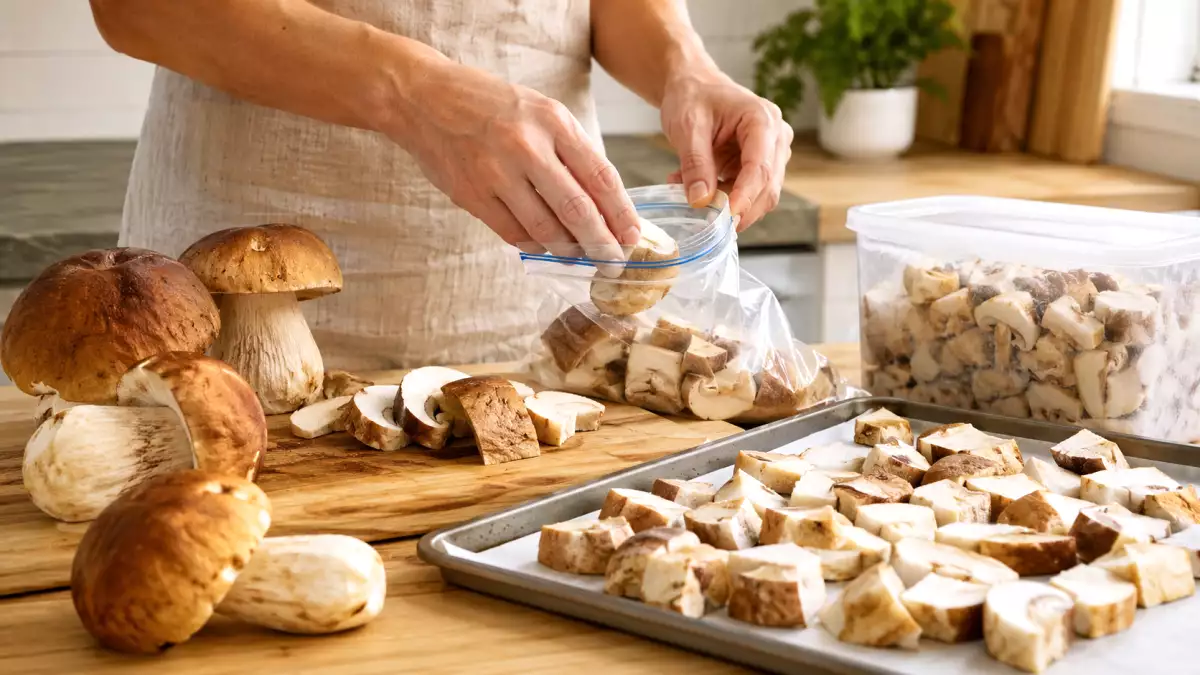
So the question is: can you freeze fresh porcini mushrooms? Yes, but with a little care. The key is to prepare them properly beforehand: inspect them, clean them without soaking them, cut them into the right size, and, in most cases, cook or blanch them before freezing. This way, they become a handy fall supply ready for pasta, risottos, soups, polenta, and side dishes.
Rule #1: Freeze only porcini mushrooms that are safe and in good condition
Choose only firm, fragrant specimens that are not slimy and have no strange odors. Mushrooms that are too old, very wet, bruised, or full of dark spots are not ideal for freezing. The freezer preserves, but it doesn’t improve: if a porcini mushroom starts out bad, it will end up worse.
How do you clean porcini mushrooms before freezing them?
The first mistake to avoid is washing them for too long under running water. Porcini mushrooms are like little fragrant sponges: they absorb moisture and then release it during cooking. That’s why it’s best to clean them gently and carefully.
Here are the most practical steps:
- Check the cap and stem, removing any damaged, soft, or discolored parts.
- Remove the dirt from the base with a small knife, cutting off only what is necessary.
- Use a kitchen brush to remove any remaining dirt from the folds.
- Wipe with a slightly damp cloth only where needed, without getting them too wet.
- Separate any damaged parts: they shouldn’t go into the freezer bag.
After cleaning, dry them thoroughly. The drier the porcini are when you freeze them, the better the final result will be.
Is it better to freeze raw or cooked porcini mushrooms?
For porcini mushrooms, a quick sauté is often more flavorful than simply boiling them: it concentrates the aroma and reduces the moisture. Simply heat a skillet, add the sliced mushrooms, and let them cook for a few minutes, until they lose some of their moisture. Salt? Better to use just a little or none at all, so they remain more versatile for future recipes.
A Step-by-Step Guide to Freezing Fresh Porcini Mushrooms
To freeze fresh porcini mushrooms without damaging them, take your time but don’t leave them at room temperature for too long. Here’s the easiest way:
- Clean the porcini mushrooms with a brush, a small knife, and a slightly damp cloth.
- Cut them into slices or chunks depending on how you plan to use them: slices for side dishes and crostini, cubes for sauces and risottos.
- Sauté them briefly in a pan, just long enough to let some of the moisture evaporate.
- Let them cool completely: never put hot food in the freezer.
- Spread them out on a tray in a single layer and pre-freeze them.
- Transfer them to bags or containers, removing as much air as possible.
- Write the date on the package, because after a few months, your memory can play tricks on you.
Pre-freezing is a step many people skip, but it really makes a difference in convenience: the pieces won’t freeze into a single block, and you can take out just the amount you need.
How long do frozen porcini mushrooms last?
To preserve them better, use small portions: one bag for risotto, one for pasta, and one for a cream soup. That way, you won’t have to keep opening and resealing the same package, and you won’t risk thawing more mushrooms than you need.
How to Use Frozen Porcini Mushrooms in Cooking
For more delicate preparations, such as a stuffing or a cream sauce, you can let them thaw in the refrigerator and then drain them if they release liquid. That liquid—if fragrant and from safe, well-cooked mushrooms—can be reduced in a pan and used to add flavor, rather than watering down the recipe.
Pros and Cons of Freezing Porcini Mushrooms
The pros:
- helps prevent waste when you have a lot of them;
- makes porcini mushrooms available even out of season;
- helps you prepare quick risottos, sauces, and side dishes;
- with the right portion sizes, your freezer becomes much more organized.
Cons:
- the texture can become softer;
- some of the aroma fades;
- if frozen improperly, they may release too much water;
- they aren’t ideal for dishes that call for a perfect, meaty slice like when fresh.
The trick, then, is to use them where they shine: pasta dishes, cooking broths, creams, fillings, and hot recipes.
Mistakes to Avoid
The freezer is unforgiving, especially when it comes to delicate ingredients like mushrooms. The most common mistakes are simple, but they can ruin the final result:
- soaking porcini mushrooms in water while cleaning them;
- freezing old or damaged mushrooms;
- failing to cook them first when you want a safer and more practical way to store them;
- putting them in the freezer while they’re still hot;
- making bags that are too large and inconvenient to use;
- forget the date they were frozen.
Another mistake is assuming that freezing solves every problem. This is not the case: if the mushrooms were foraged, inspection by a mycologist remains essential before consuming them.
A reliable, ready-to-use supply of porcini mushrooms
And remember: cleaning and freezing do not guarantee edibility. For mushrooms you’ve picked yourself, you should always consult a mycologist. That way, the pleasure of porcini mushrooms remains just as it should be: intense, convenient, and above all, safe.
 Daniele Mainieri
Comments