The real reason pasta water boils over and why almost nobody understands what's actually happening
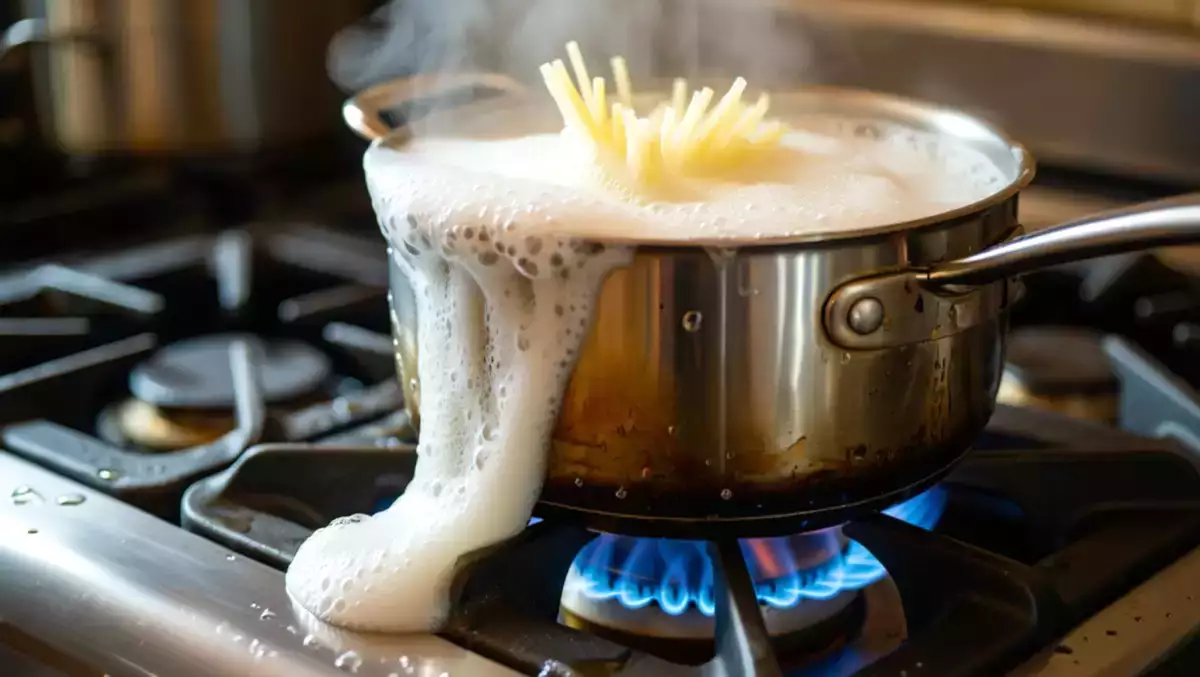
You put the water on to boil, add the pasta, and everything seems under control. But a few minutes later, the scene can change completely. Foam starts to rise, grows quickly, and before you know it, the pot is overflowing and the stovetop is a mess.
It happens to a lot of people, and it often looks like simple distraction or too much heat. But the explanation goes beyond that.
There is a scientific reason behind it, directly linked to what happens to the water and the pasta during cooking. Understanding the process not only satisfies your curiosity, but also helps you avoid the problem in a very simple way.
What happens when water starts to boil
When plain water boils, it forms large bubbles that rise and burst easily at the surface.
This natural movement allows steam to escape without much trouble, keeping everything under control inside the pot.
The role pasta plays
The problem begins when the pasta goes in.
As it cooks, pasta releases starch into the water. That starch changes the way the boiling water behaves.
Instead of large bubbles that burst easily, smaller and more stable bubbles begin to form. These bubbles do not pop as quickly.
Why foam forms
The starch creates a kind of thin film on the surface of the water.
This layer acts like a barrier that traps steam. As a result, a dense foam begins to build up and rise little by little.
And the longer the pasta cooks, the more starch is released, which can make the foam grow even more.
Why the water suddenly overflows
When the heat is high, steam continues to form quickly.
But now, it cannot escape as easily. It gets trapped inside the foam, pushing it upward.
That is why it feels like everything happens all at once. The foam rises fast and spills over the edge of the pot.
Pot size matters
Another important factor is the amount of space inside the pot.
If the pot is too full, the foam has nowhere to go. The result: an overflow can happen almost immediately.
How to prevent pasta water from boiling over
Once you understand why it happens, preventing it becomes much easier.
Lower the heat after the water returns to a boil. This helps a lot.
Using a larger pot also makes a difference, because it gives the foam more room to rise without spilling over.
Stirring the pasta during the first few minutes helps break up the starchy layer on the surface, which can reduce foam formation.
And that classic wooden spoon trick? It works because the spoon helps interrupt the foam before it climbs over the edge.
In the end, it is just science in your kitchen
What looks like a common cooking mistake is actually a small physics phenomenon happening right in front of you.
Next time the water starts to rise, you will not only know why—it will also be much easier to stop the mess before it happens.
 Mirella Mendonça
Comments