The simple technique for perfect poached eggs
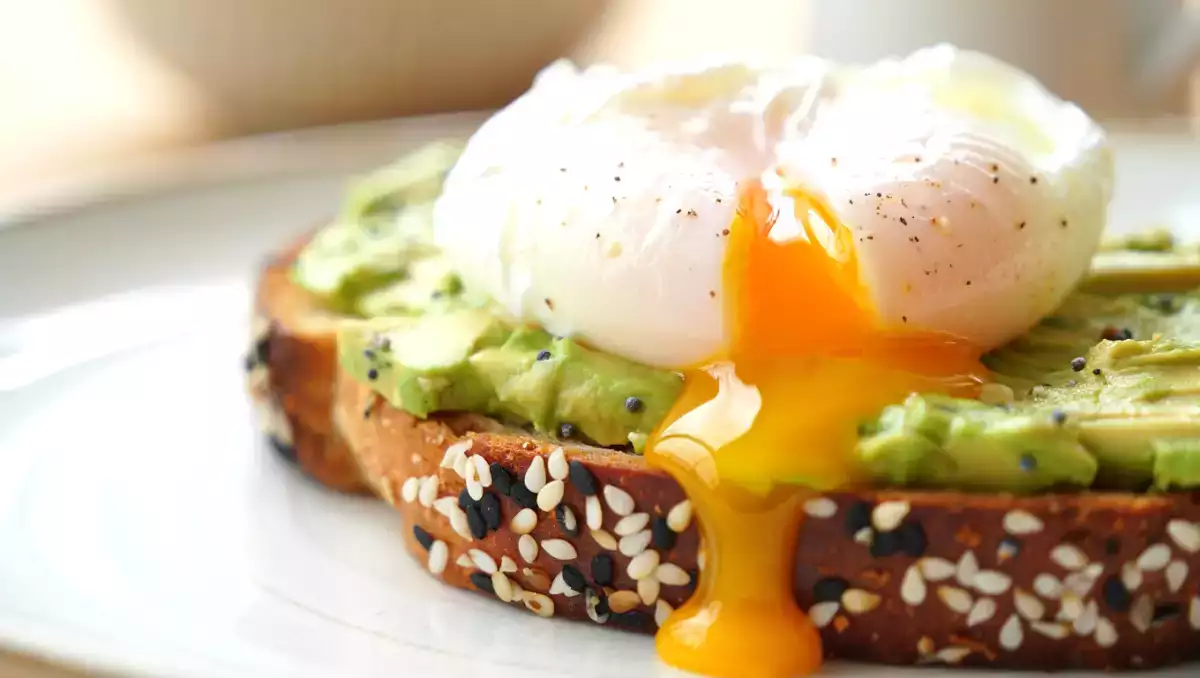
Poached eggs are one of those little preparations that look simple... but often escape our notice.
Frayed whites, overcooked yolks, failed vortexes, cloudy water... in short, chaos. And yet, a simple trick seen on Instagram has been circulating for a few weeks: soak raw eggs for 10 minutes in a mixture of equal parts water + vinegar. The result? A firm, "almost indestructible" white, and above all, the ability to poach several eggs at the same time without them mixing. Here's how this simplifying technique works:
Why this tip completely changes cooking
When you poach an egg, the main problem comes from the white: it tends to scatter as soon as it touches the hot water. That's why we're often advised to create a whirlpool, use very little water, break the egg into a ladle... In short, techniques that aren't always easy to master.
Soaking the egg in vinegar water provides a very simple solution: the vinegar begins to coagulate the proteins in the white, very gently, without thighs. This makes it denser, more compact, and it literally holds together like a little cushion. This makes the egg much easier to poach afterwards, as the white doesn't fall apart.
And the other major advantage is that you don't have to deal with one egg at a time: because the whites are reinforced, they don't mix together. So you can prepare 3, 4 or 5 eggs at a time, ideal for brunch or a festive meal.
How to use this technique at home
The method is almost disconcertingly simple. Pour as much water as white vinegar into a bowl. Then gently break the eggs into the mixture, without piercing them, and leave for 10 minutes. There's no need to stir, stir or watch: just forget about it and come back later.
Meanwhile, the vinegar works gently. You'll notice that the white takes on a slightly denser texture, as if it were thickening slightly around the yellow. It's nothing spectacular or dramatic, but it's precisely what makes for impeccable cooking afterwards.
Once the 10 minutes have elapsed, simply remove the eggs one by one (with a spoon or gently with your fingers), plunge them into a pan of simmering water - never boiling - and leave to cook for 2 to 3 minutes, depending on the desired result. The white immediately sets and forms a beautiful envelope around the yolk.
Surprisingly, the water in the pan remains clear, even if you cook 4 eggs at the same time. No filaments, no white leakage, just nice, clean, even poached eggs, as if you'd just stepped out of a hotel brunch ;)
Why even beginners can do it
What makes this technique brilliant is that it eliminates complicated steps:
- no need to create a whirlpool,
- no need to add vinegar directly to the pan,
- no need to be ultra-precise in the gesture.
The vinegar does all the work upstream. The white is stabilized before going into the water, so poaching becomes almost automatic. Even if you drop the egg in awkwardly, it retains its shape.
It's also very reassuring: when you pick it up, the white is already somewhat "held", so you can feel that it's not going to explode in the pan. For people who often miss poached eggs, this is a liberation.
Does vinegar change the taste?
No, not at all. The egg remains in the mixture for just 10 minutes, and once plunged into hot water, any vinegar remaining on the surface is immediately diluted.
The final taste is identical to that of a classic poached egg, neither more acidic nor more pronounced.
No need for technique, no need for perfect gesture
Just let the vinegar do the work. The egg holds together, the cooking is clean, and the result looks truly professional. It's a simple, clever method that's perfect for shining at holiday time... or just for a no-fuss Sunday brunch!
 Adèle Peyches
Comments