Have you cut open a squash? Here's how long it really lasts in the fridge
Tuesday 20 October 2026 21:00 - Adèle Peyches
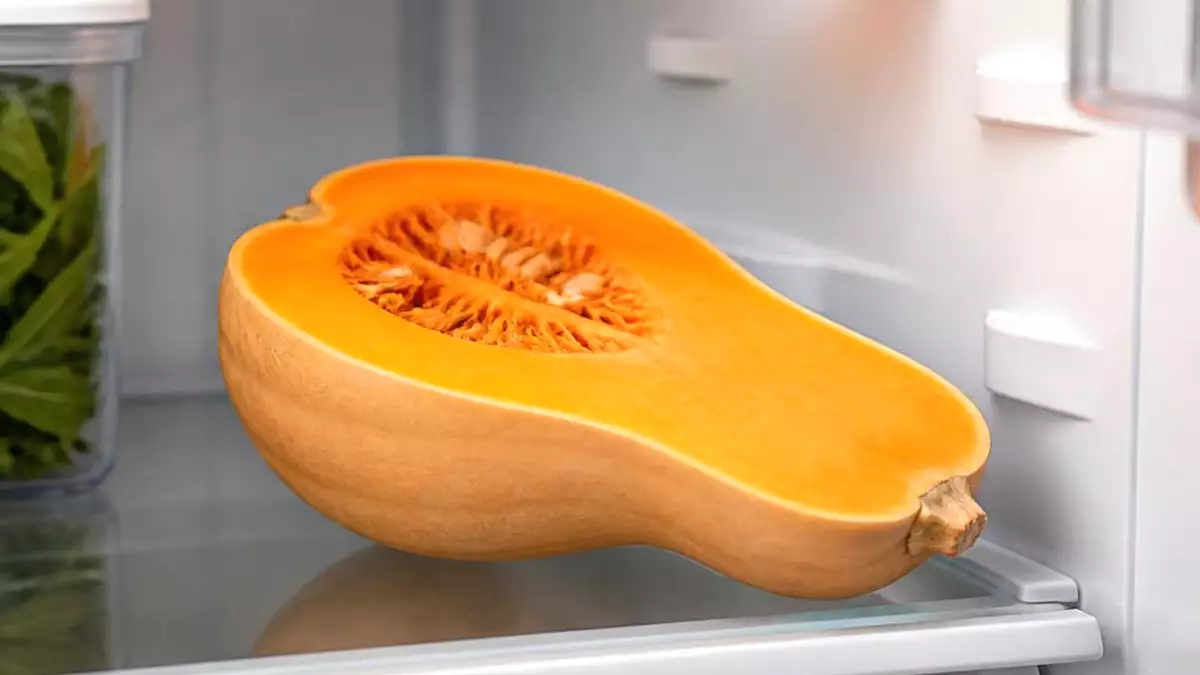
Fall squashes can be deceiving: their thick skin makes it seem like they’ll last forever. That’s almost true as long as they’re whole. But once you cut into them, the rules change.
Whole, a squash can last a long time… but once cut, much less so
That’s why it’s easy to be misled. A whole pumpkin or winter squash can be stored for several weeks, or even several months, in a dry, cool, and well-ventilated place, provided it is intact and has not been damaged.
The Department of Agriculture also notes that a whole pumpkin can be stored for several months under these conditions.
But once cut open, the flesh is no longer protected by the skin. It begins to dry out, may absorb odors from the refrigerator, and, most importantly, becomes much more fragile.
The Department of Agriculture also notes that a whole pumpkin can be stored for several months under these conditions.
But once cut open, the flesh is no longer protected by the skin. It begins to dry out, may absorb odors from the refrigerator, and, most importantly, becomes much more fragile.
So, how many days in the refrigerator?
For a cut-open winter squash, the official guideline is simple: a maximum of four days in the refrigerator.
This timeframe is a good rule of thumb for half a raw pumpkin, butternut squash, or potimarron. If you’ve already peeled and cubed it, don’t expect to keep it for an extra week: the exposed flesh is even more vulnerable.
And of course, these four days assume that your refrigerator is set to the correct temperature. ANSES recommends a maximum temperature of 4°C in the coldest part of the refrigerator.
The plastic wrap that's only half covering it? We can do better than that.
You know that piece of plastic wrap loosely draped over half a butternut squash because we were in a hurry? That’s not exactly the best strategy ;-)
After cutting it, make sure to cover the surface properly with suitable packaging or place the pieces in a clean, airtight container. The goal is to prevent them from drying out and to minimize cross-contamination with other foods in the refrigerator.
If you’ve already cut the entire squash into cubes, the airtight container is clearly the most practical option.
Should you leave the seeds inside?
If you’re only cooking half the squash, take this opportunity to remove the seeds and strings from the part you’re keeping.
It’s not complicated: a spoon is all you need. You can then wrap the flesh neatly, and it’ll be ready for your next recipe.
And what about the seeds? If they look good, don’t just throw them away. Once cleaned and dried, they can be roasted in the oven with a little salt and spices.
It’s not complicated: a spoon is all you need. You can then wrap the flesh neatly, and it’ll be ready for your next recipe.
And what about the seeds? If they look good, don’t just throw them away. Once cleaned and dried, they can be roasted in the oven with a little salt and spices.
How can you tell if the squash has been left to sit too long?
The calendar helps, but your eyes and nose are still useful. A slightly dry surface isn’t necessarily cause for concern—you can sometimes trim off a thin slice before cooking.
On the other hand, a slimy texture, very soft spots, mold, or an unusual odor are good reasons not to cook it.
And if you really can’t remember whether you cut it on Monday or the previous weekend, it’s best not to take a guess. Next time, a small piece of tape with the date on the box will prevent any debate in front of the fridge.
You already know you won't be cooking it within the next four days, right?
In that case, don’t put it off, hoping to suddenly find inspiration on Thursday night. Freeze it while it’s still fresh.
You can cut it into cubes and freeze it in portions suitable for your recipes. The Department of Agriculture notes that pumpkin can be frozen, with one small caveat: it may release more water after thawing.
This isn’t a problem for soups, purees, curries, or blended dishes. For recipes where you want firm chunks, the texture will simply be a little different.
What if the squash is already cooked?
Here, we’re switching categories again. A roasted squash, mashed potatoes, or leftover gratin is no longer considered a partially consumed raw vegetable—it’s a leftover cooked dish.
French guidelines are more cautious when it comes to homemade dishes: store them in the refrigerator and eat them quickly, ideally within 48 hours. Also, don’t let a hot dish cool for hours on the countertop before putting it away.
French guidelines are more cautious when it comes to homemade dishes: store them in the refrigerator and eat them quickly, ideally within 48 hours. Also, don’t let a hot dish cool for hours on the countertop before putting it away.
Half a squash that needs to be used up quickly? That's often where dinner comes from.
If your squash is still fresh, there’s no need to plan a three-hour cooking project. Soups, gratins, and baked dishes are perfect for quickly using up a half that’s already been cut open.
You can also bake it in a simple gratin:
Or try a stuffed butternut squash if you have a half that’s big enough:
Butternut squash and red lentil soup
On the menu tonight: a super comforting, spicy soup that lets you travel while staying cozy under a blanket. Rich in plant-based protein thanks to the red lentils, this hearty soup also showcases one of the seasonal squashes: butternut squash :-)...
You can also bake it in a simple gratin:
Vegetarian pumpkin parmigiana
The vegetarian pumpkin parmigiana offers a rich and satisfying sensory experience, ideal for those who enjoy delicate flavors that are well balanced. The golden, gratinated top , enhanced by melted cheese, creates an inviting contrast with the...
Or try a stuffed butternut squash if you have a half that’s big enough:
Quinoa- and pomegranate-stuffed butternut squash
Have you got a butternut squash and want to make something other than soup with it? It’s time to stuff it! Enjoy a hearty, filling, colorful winter meal! Its orange flesh is good for both body and mind :-) Paired with the red pomegranate arils and...
A simple tip to remember
A whole squash can easily wait in a cool, dry place. A cut squash, on the other hand, should be refrigerated and used within four days at most.
If you don’t think you’ll be able to use it that quickly, it’s better to freeze it right away rather than wait until the fourth day to decide.
And finally, this might be the best way to avoid food waste: decide right when you cut it what to do with the other half. Because we all know how that famous half butternut squash “we’ll cook tomorrow” ends up ;-)
 Adèle Peyches
Editorial manager who just can't wait for winter to enjoy fondue! Passionate about gastronomy and always on the lookout for new culinary gems, I first studied law before returning to my first love: the taste of good products and the joy of sharing around the table :)
Comments