How do you cook green lentils without them staying hard or turning into a puree?
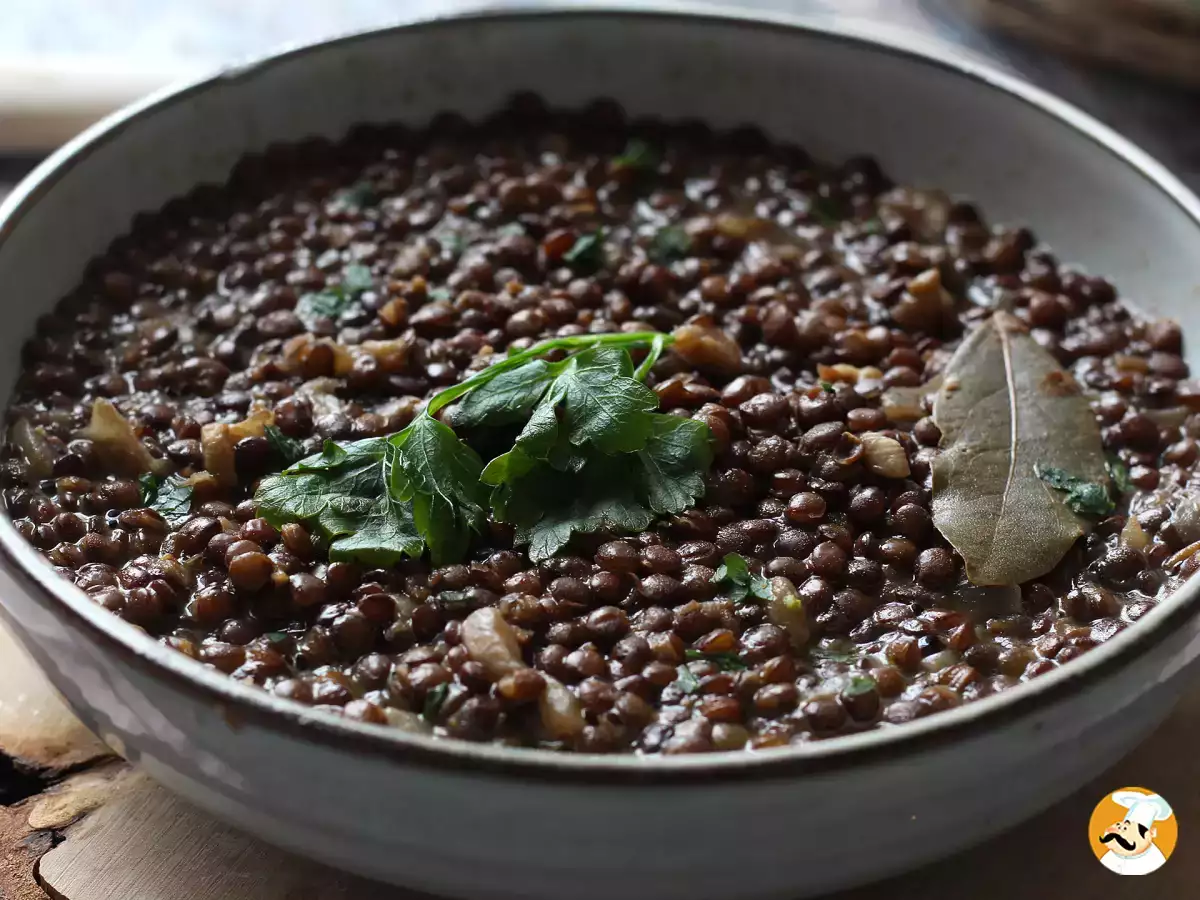
The right method isn’t complicated. In our recipe, we start by sautéing onion and garlic in a little olive oil, then add cumin, followed by water, the lentils, the bay leaf, and seasoning. After that, it’s all about gentle, even cooking, with the pot partially covered.
The goal: tender, flavorful lentils that are still whole.
The basic method: season before adding the lentils
This simple step makes all the difference: the lentils aren’t just cooked in water, they’re cooked in a base that’s already full of flavor. This prevents the bland result you sometimes get with lentils that are simply boiled.
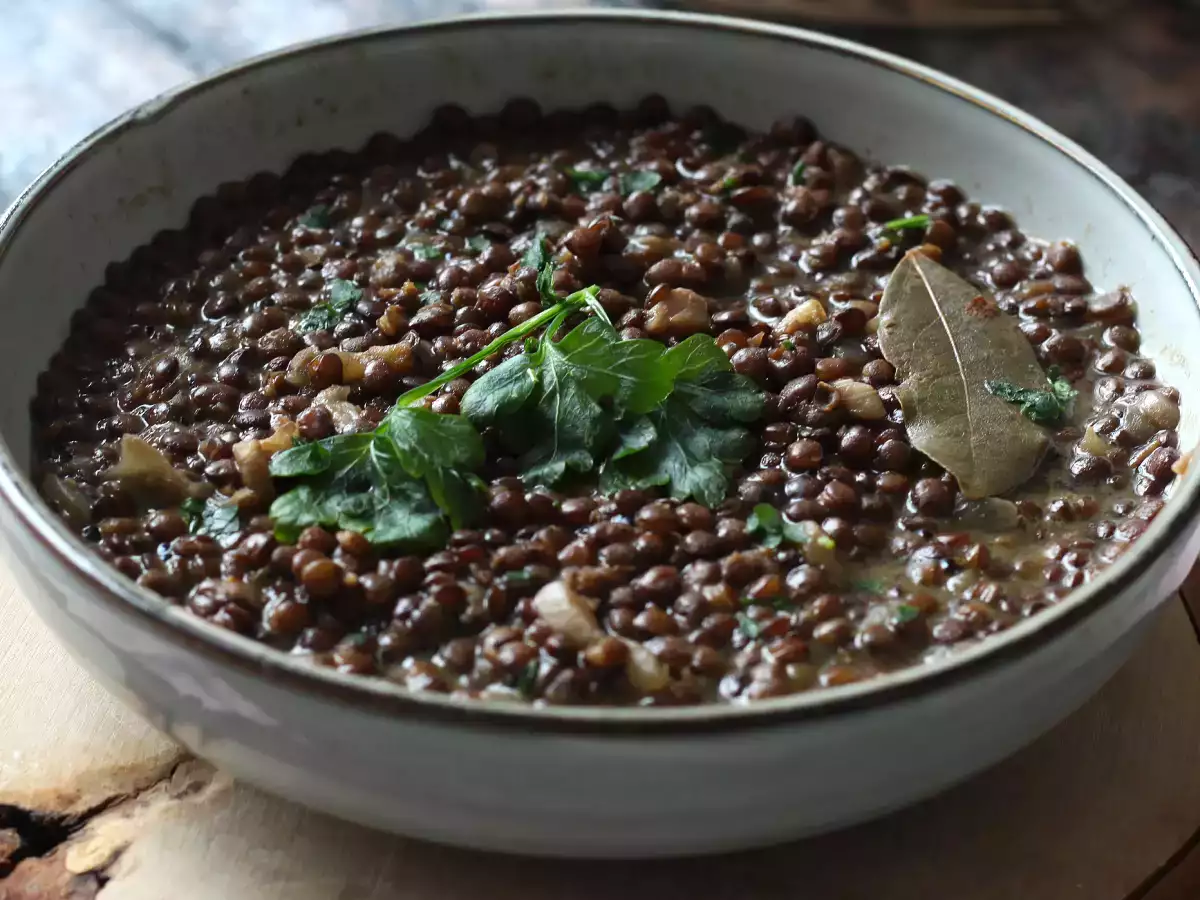
Here's a super-simple and tasty way to prepare cooked lentils without a pressure cooker. Easy and very healthy, this legume has many advantages: it's packed with nutrients and is versatile, since you can add vegetables or meat. It's also...
Cumin is optional if you prefer a more neutral flavor, but it adds a subtle warmth that pairs very well with green lentils.
The right amount of water to prevent drying out
There’s also an easy-to-remember rule of thumb: about three parts water to one part lentils. This is a good starting point, to be adjusted based on the size of the pot, the heat level, and the actual cooking time.
If the pot dries out too quickly while the lentils are still firm, add a little hot water; not a large amount all at once. The idea is to extend the cooking time without flooding the dish.
Why You Should Turn Down the Heat After It Comes to a Boil
As soon as the water boils, reduce the heat and cover the pot halfway. The lentils should simmer gently. If they move around too much in the water, they may split and lose their firmness.
This is often where lentils go from being a good side dish to having a texture that’s too mushy: the heat is too high, the cooking is too vigorous, and the beans burst.
How long should green lentils be cooked?
But don't let the timer take the place of taste. Depending on the type of lentils, how old they are, the pot, or the heat level, cooking time may vary. Start checking toward the end, then taste regularly.
Perfectly cooked lentils should be tender to the bite, without a dry center, but they shouldn’t turn to mush immediately.
The key step: stir regularly
Stir gently, without crushing them. The goal isn’t to mash them like a purée, but to move the lentils around to ensure even cooking.
Toward the end, pay closer attention: as the broth reduces, the lentils can stick to the bottom more quickly. This is also when they can go from being perfectly tender to overcooked.
Why lentils sometimes stay hard
In this case, add a little hot water, stir, cover halfway again, and continue cooking in small increments. It’s better to cook them slowly than to turn the heat up very high.
A lentil that’s hard in the center often needs time and moisture, not aggressive cooking.
Why they sometimes end up as mashed potatoes
To avoid this, keep the heat low after the water comes to a boil, stir gently, and taste toward the end. When they are tender, stop cooking at just the right moment.
If you want whole lentils for a salad, be even more careful: it’s better to keep them slightly firm than too soft.
Do you need to soak green lentils?
Soaking can shorten the cooking time slightly for some older lentils, but it’s not essential for everyday use. If you’ve soaked your lentils, just check them a little earlier than usual while they’re cooking.
In any case, the best indicator is still how they feel in your mouth.
How to serve them once they're cooked
These lentils, flavored with onion, garlic, cumin, and bay leaf, can be served as is as a side dish. They go very well with vegetables, fish, sausage, tofu, eggs, or a fresh salad.

For a fresh and colorful meal, try our tacos! Homemade wheat tortillas to fill as you like ;-) Here we suggest a vegetarian filling packed with flavor. The ideal meal (to enjoy with your fingers, of course!) for a night in front of the TV or dinner...

We love salads so much at Ptitchef that there’s no way we’re giving them up in fall and winter. So we swap raw vegetables for seasonal vegetables , combining red cabbage, beet and butternut squash with lentils and parsley. An easy, quick and...
Small adjustments that make all the difference
If you prepare them in advance, store them in an airtight container in the refrigerator. Cooked lentils will keep for several days and can also be frozen in portions.
The most important thing is consistency: a pot that isn’t too hot, enough water, a lid left slightly ajar, and tasting them regularly.
The method to remember
Taste, adjust the seasoning, then remove from heat when the lentils are tender. This is the best way to avoid the two most common problems: lentils that remain hard or a pot that ends up as a mash.
With this method, green lentils become a true meal staple: simple, economical, flavorful, and easy to use in other dishes.
 Adèle Peyches
Comments