Basil turning black in the fridge? The storage mistake you're likely making and how to stop it
Saturday 15 August 2026 10:00 - Adèle Peyches
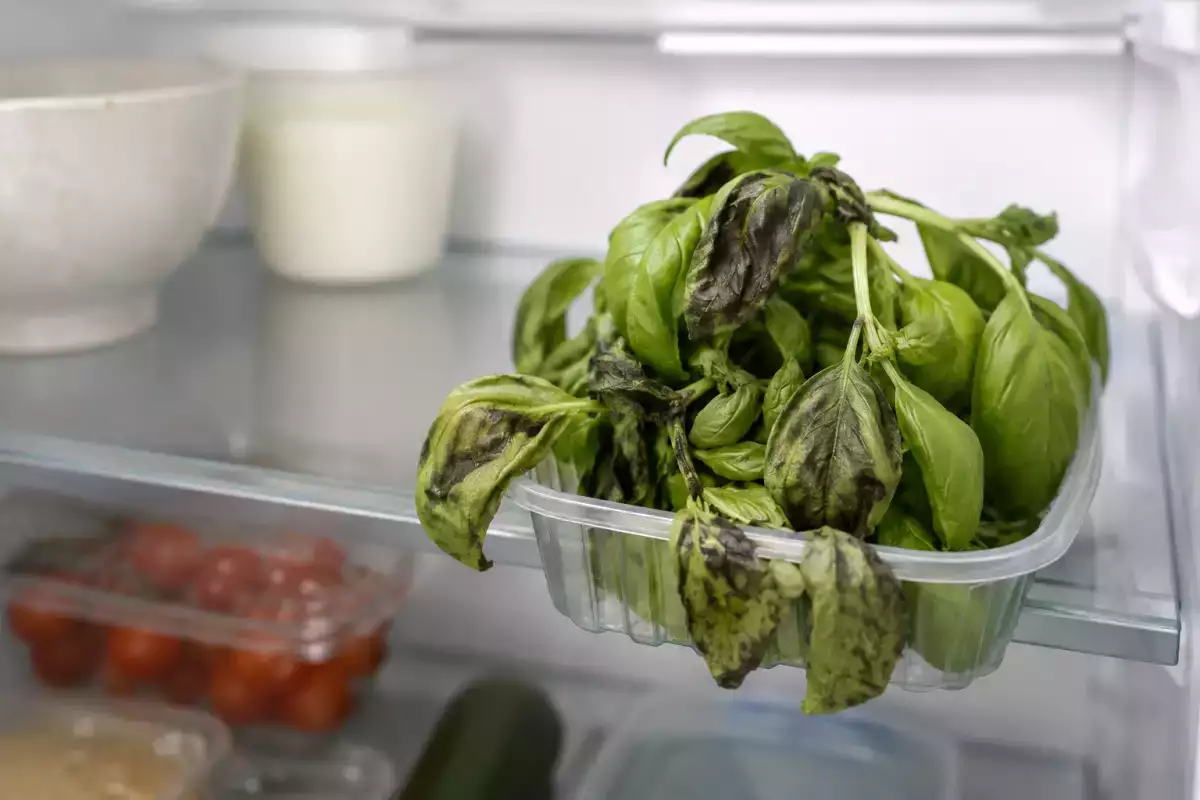
The problem often stems from the same mistake: treating all fresh herbs the same way. But basil doesn’t react like parsley, mint doesn’t keep exactly like thyme, and a bunch left damp in a plastic bag can quickly turn into a limp, unappetizing little bundle.
To store them better, you need to understand two key things: some herbs do best as a bouquet of flowers, with the stems in a little water, while others prefer to be wrapped and kept cool, well protected from excessive moisture. And for basil, this rule is even more important: the cold of the refrigerator can quickly damage it. Here’s how to avoid blackened leaves, wilted bunches, and herbs forgotten at the bottom of the crisper drawer.
Why does basil turn black in the refrigerator?
Basil is a delicate herb that is sensitive to cold and handling. Unlike parsley or cilantro, it does not fare well in a standard refrigerator. If placed directly in the cold( especially if it’s damp or crammed into a bag) it can develop black spots and lose its texture very quickly.
The best approach, therefore, is to avoid automatically storing it in the crisper drawer. If the bunch still has its stems, place it instead in a glass with a little water at the bottom, just like flowers, and keep it at room temperature, away from direct sunlight and heat sources. If the air is very dry, lightly cover the leaves with a clean bag, without pulling it too tight.
Basil prefers mild conditions, not extreme temperature fluctuations. It’s therefore best to keep it on the countertop for a few days and pick the leaves only when you’re ready to use them.
The best approach, therefore, is to avoid automatically storing it in the crisper drawer. If the bunch still has its stems, place it instead in a glass with a little water at the bottom, just like flowers, and keep it at room temperature, away from direct sunlight and heat sources. If the air is very dry, lightly cover the leaves with a clean bag, without pulling it too tight.
Basil prefers mild conditions, not extreme temperature fluctuations. It’s therefore best to keep it on the countertop for a few days and pick the leaves only when you’re ready to use them.
How can I keep fresh basil fresh longer?
First and foremost, avoid washing basil too early. Wash the leaves only when you’re ready to use them, then pat them dry gently. Moisture speeds up browning and makes the leaves more fragile.
If you’ve bought a bunch, trim the stems slightly, place them in a glass with a little water, and change the water if it becomes cloudy. Keep the bunch in a cool spot in the kitchen, but not in a refrigerator that’s too cold. If some leaves start to wilt, use them quickly in a sauce, soup, stir-fry, or blended dish.
For longer storage, the freezer is often a better option than the refrigerator. You can freeze the washed and thoroughly dried leaves (whole or chopped) in an ice cube tray with a little olive oil. They won’t be perfect for garnishing a salad anymore, but they’ll be very handy for adding flavor to a hot dish.
If you’ve bought a bunch, trim the stems slightly, place them in a glass with a little water, and change the water if it becomes cloudy. Keep the bunch in a cool spot in the kitchen, but not in a refrigerator that’s too cold. If some leaves start to wilt, use them quickly in a sauce, soup, stir-fry, or blended dish.
For longer storage, the freezer is often a better option than the refrigerator. You can freeze the washed and thoroughly dried leaves (whole or chopped) in an ice cube tray with a little olive oil. They won’t be perfect for garnishing a salad anymore, but they’ll be very handy for adding flavor to a hot dish.
What about mint that wilts too quickly?
Fresh mint keeps best when it’s kept slightly moist, without being soggy. If the bunch is whole, you can place it in a glass of water, just like basil, and then store it in the refrigerator or in a cool place, depending on the temperature of your kitchen. Lightly cover the leaves to prevent them from drying out.
If you only have stems or loose leaves, wrap them in slightly damp paper towels, then place them in a closed container or bag without crushing them too much. The goal is to maintain a humid environment, but not a wet one. Too much water causes the leaves to turn black and become mushy.
Mint generally tolerates the cold better than basil, but it doesn’t like being left in a damp bag. Check it quickly, remove any damaged leaves, and use the most delicate ones first.
If you only have stems or loose leaves, wrap them in slightly damp paper towels, then place them in a closed container or bag without crushing them too much. The goal is to maintain a humid environment, but not a wet one. Too much water causes the leaves to turn black and become mushy.
Mint generally tolerates the cold better than basil, but it doesn’t like being left in a damp bag. Check it quickly, remove any damaged leaves, and use the most delicate ones first.
Parsley, cilantro, chives: Store them as bunches
Parsley and cilantro often keep very well using the “bouquet” method. Trim the stems slightly, place them in a glass with a few centimeters of water, then put the whole thing in the refrigerator, covered with a clean bag or a suitable lid. This method prevents the leaves from drying out too quickly.
Chives, which are more delicate, are generally best wrapped in slightly damp paper towels and then placed in a container. They can also be frozen after chopping, provided they are completely dry before freezing.
In any case, one rule always applies: remove any damaged leaves or stems as soon as you spot them. A part that’s too damp or starting to rot can speed up the deterioration of the rest of the bunch.
Chives, which are more delicate, are generally best wrapped in slightly damp paper towels and then placed in a container. They can also be frozen after chopping, provided they are completely dry before freezing.
In any case, one rule always applies: remove any damaged leaves or stems as soon as you spot them. A part that’s too damp or starting to rot can speed up the deterioration of the rest of the bunch.
Thyme, rosemary, bay leaf: the hardier herbs
Herbs that are considered more woody, such as thyme, rosemary, sage, or bay leaves, behave differently. They are less delicate than basil or mint and hold up better when stored in a cool place, wrapped in paper towels or kept in a slightly ventilated container.
They can also be dried more easily. To do this, simply tie them into small bunches, hang them in a dry, well-ventilated place, and then store the leaves in a jar once they are thoroughly dry. The flavor will be different from that of fresh herbs, but they’re very handy for stews, sauces, and marinades.
For these herbs, the main enemy is stagnant moisture. A wet bunch sealed in a bag is likely to mold instead of drying properly.
They can also be dried more easily. To do this, simply tie them into small bunches, hang them in a dry, well-ventilated place, and then store the leaves in a jar once they are thoroughly dry. The flavor will be different from that of fresh herbs, but they’re very handy for stews, sauces, and marinades.
For these herbs, the main enemy is stagnant moisture. A wet bunch sealed in a bag is likely to mold instead of drying properly.
Can you freeze herbs?
Yes, freezing herbs is a good solution when you know you won’t use them soon enough. It’s especially suitable for herbs used in cooking: basil, parsley, cilantro, chives, dill, mint, or tarragon.
The simplest method is to wash the herbs, dry them very thoroughly, then chop them before placing them in a bag or container. To avoid large clumps, it’s best to freeze them in small portions. Ice cube trays are very handy: simply place the chopped herbs in them with a little water or oil, then pop out the cubes once they’re frozen.
After freezing, herbs often lose their fresh texture. They won’t be ideal for garnishing a plate, but they’ll work just fine in a sauce, soup, stir-fry, or hot dish.
The simplest method is to wash the herbs, dry them very thoroughly, then chop them before placing them in a bag or container. To avoid large clumps, it’s best to freeze them in small portions. Ice cube trays are very handy: simply place the chopped herbs in them with a little water or oil, then pop out the cubes once they’re frozen.
After freezing, herbs often lose their fresh texture. They won’t be ideal for garnishing a plate, but they’ll work just fine in a sauce, soup, stir-fry, or hot dish.
Mistakes to avoid
The first mistake is to wash the herbs and then store them while they’re still wet. Water left on the leaves causes them to turn black, wilt, and sometimes develop mold. If you need to wash them ahead of time, dry them very thoroughly.
The second mistake is putting basil in the refrigerator like any other salad green. This is often why the leaves turn black after just a short time. For basil, it’s best to store it in a bunch at room temperature, or freeze it if you want to keep it longer.
The third mistake is leaving herbs in their original packaging without checking them. A sealed plastic bag, with a bit of moisture and crushed leaves, creates the perfect conditions for them to wilt quickly.
An easy rule to remember: keep basil out of the fridge; store parsley and cilantro in bunches in the fridge; keep mint slightly moist; store hardy herbs in a dry place; and freeze them in small portions if you want to avoid waste.
The second mistake is putting basil in the refrigerator like any other salad green. This is often why the leaves turn black after just a short time. For basil, it’s best to store it in a bunch at room temperature, or freeze it if you want to keep it longer.
The third mistake is leaving herbs in their original packaging without checking them. A sealed plastic bag, with a bit of moisture and crushed leaves, creates the perfect conditions for them to wilt quickly.
An easy rule to remember: keep basil out of the fridge; store parsley and cilantro in bunches in the fridge; keep mint slightly moist; store hardy herbs in a dry place; and freeze them in small portions if you want to avoid waste.
 Adèle Peyches
Editorial manager who just can't wait for winter to enjoy fondue! Passionate about gastronomy and always on the lookout for new culinary gems, I first studied law before returning to my first love: the taste of good products and the joy of sharing around the table :)
Comments