Greek yogurt vs cottage cheese: Which is the smarter pick when you're closely watching what you eat?
Wednesday 7 October 2026 10:00 - Adèle Peyches
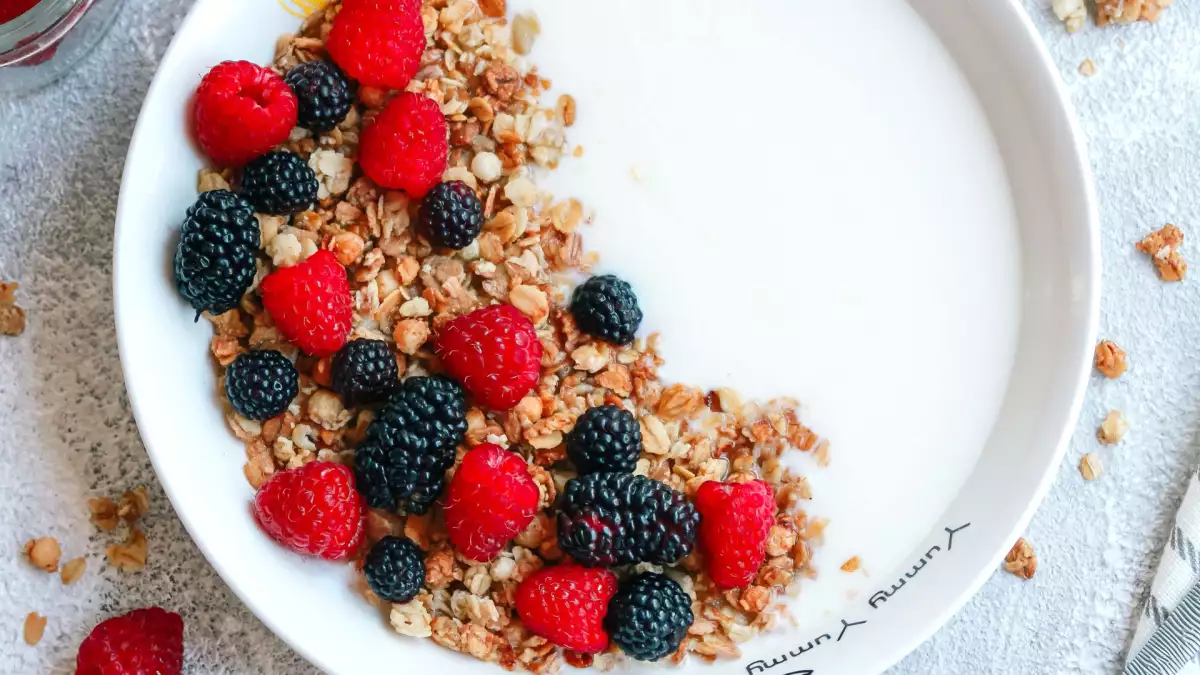
Between two products, the amounts of protein, fat, saturated fat, and sugar can vary significantly. Plain Greek yogurt and “Greek-style” yogurt enriched with cream don’t necessarily have the same nutritional profile. The same goes for low-fat and full-fat cottage cheese.
Rather than looking for a one-size-fits-all winner, the most helpful approach is to compare the nutrition facts per 100 g and see how the dairy product fits into the rest of your breakfast!
There’s no clear winner between Greek yogurt and fromage blanc
French dietary guidelines do not single out any one type of yogurt as superior to others for cardiovascular health. Instead, they emphasize variety in dairy products and an overall balanced diet.
The French National Health Insurance system specifically recommends varying dairy choices and limiting consumption of the highest-fat products. For people watching their cholesterol, it also notes that yogurts and cottage cheese made with reduced-fat milk can certainly be part of a healthy diet.
In other words, the nutritional profile of the yogurt matters more than its label.
The French National Health Insurance system specifically recommends varying dairy choices and limiting consumption of the highest-fat products. For people watching their cholesterol, it also notes that yogurts and cottage cheese made with reduced-fat milk can certainly be part of a healthy diet.
In other words, the nutritional profile of the yogurt matters more than its label.
Why Two Greek Yogurts Can Be Very Different
On store shelves, products marketed as Greek yogurt or “Greek-style” yogurt do not all have the same recipe.
Some are thick because they are strained more thoroughly and may contain more protein. Others derive their creamy texture mainly from the addition of cream and therefore have a higher fat content, particularly saturated fat.
In fact, ANSES distinguishes, within its dairy product categories, between “classic” plain yogurts and higher-fat versions, with the difference often resulting from the addition of cream.
That’s why the word “Greek” alone doesn’t tell you what’s actually in the container.
Some are thick because they are strained more thoroughly and may contain more protein. Others derive their creamy texture mainly from the addition of cream and therefore have a higher fat content, particularly saturated fat.
In fact, ANSES distinguishes, within its dairy product categories, between “classic” plain yogurts and higher-fat versions, with the difference often resulting from the addition of cream.
That’s why the word “Greek” alone doesn’t tell you what’s actually in the container.
Cottage cheese also varies widely
Fromage blanc is available in a wide range of fat contents. A low-fat version therefore does not have the same nutritional profile as a richer fromage blanc or a specialty variety with added cream.
The texture may also vary without providing precise information about the protein or fat content.
The best way to compare is to place the two packages side by side and look at the values per 100 g. This is more reliable than relying on the color of the container, its texture, or marketing claims.
The texture may also vary without providing precise information about the protein or fat content.
The best way to compare is to place the two packages side by side and look at the values per 100 g. This is more reliable than relying on the color of the container, its texture, or marketing claims.
The first number to look at: protein
Greek yogurt and cottage cheese are both good sources of protein. Some strained varieties contain more protein than more traditional dairy products, but this isn’t always the case.
If you’re looking for a more filling breakfast, simply compare the “protein” value per 100 g. Two products sitting side by side on the shelf can have a significant difference.
However, you don’t necessarily need to choose the container with the highest number at all costs. A balanced breakfast doesn’t depend on a single nutrient.
If you’re looking for a more filling breakfast, simply compare the “protein” value per 100 g. Two products sitting side by side on the shelf can have a significant difference.
However, you don’t necessarily need to choose the container with the highest number at all costs. A balanced breakfast doesn’t depend on a single nutrient.
When it comes to heart health, pay special attention to saturated fats
The “fat” line provides some initial information, but the sub-line “of which saturated fatty acids” is particularly useful when comparing dairy products with varying fat content.
The French National Health Insurance recommends limiting excessive intake of saturated fatty acids as part of cardiovascular disease prevention. A very creamy yogurt containing a lot of cream may therefore have a significantly higher level than a lower-fat fromage blanc—but the opposite can also be true, depending on the products chosen.
This is precisely why a classification based solely on the terms “Greek yogurt” and “fromage blanc” is too simplistic.
The French National Health Insurance recommends limiting excessive intake of saturated fatty acids as part of cardiovascular disease prevention. A very creamy yogurt containing a lot of cream may therefore have a significantly higher level than a lower-fat fromage blanc—but the opposite can also be true, depending on the products chosen.
This is precisely why a classification based solely on the terms “Greek yogurt” and “fromage blanc” is too simplistic.
The line “of which sugars” alone does not indicate whether sugar has been added
Milk naturally contains lactose, a type of sugar. Plain yogurt or plain cottage cheese may therefore list several grams of sugar even if no sugar has been added.
To find out if the manufacturer has added sugar, syrup, or another sweetening ingredient, also check the list of ingredients. The DGCCRF reminds consumers that ingredients must be listed in descending order of quantity.
When comparing two plain products, this two-step approach—checking both the nutrition facts panel and the ingredients list—provides much more information than simply looking at the “sugars” line.
To find out if the manufacturer has added sugar, syrup, or another sweetening ingredient, also check the list of ingredients. The DGCCRF reminds consumers that ingredients must be listed in descending order of quantity.
When comparing two plain products, this two-step approach—checking both the nutrition facts panel and the ingredients list—provides much more information than simply looking at the “sugars” line.
A simple way to compare two jars in 30 seconds
Place the two products side by side and always check the values per 100 g, not just those listed per serving.
Start with protein. Next, look at the fat content, especially saturated fat. Check the sugar content, then review the ingredient list to see if any sugar or cream has been added.
Finally, take into account how much you actually eat. A 150-gram container and a 250-gram bowl are not the same serving size, even if the values listed per 100 grams are identical.
Start with protein. Next, look at the fat content, especially saturated fat. Check the sugar content, then review the ingredient list to see if any sugar or cream has been added.
Finally, take into account how much you actually eat. A 150-gram container and a 250-gram bowl are not the same serving size, even if the values listed per 100 grams are identical.
A breakfast centered around dairy products is just as important as the dairy products themselves
Plain yogurt can be served with very sweet cereal, just as cottage cheese can be eaten with fruit, rolled oats, and a few nuts. The nutritional value of the breakfast will be very different.
For a more balanced bowl, you can add a whole piece of fruit, rolled oats, and a small handful of unsalted nuts. Santé publique France specifically recommends increasing your intake of unsalted nuts and opting for whole-grain cereals.
For a more balanced bowl, you can add a whole piece of fruit, rolled oats, and a small handful of unsalted nuts. Santé publique France specifically recommends increasing your intake of unsalted nuts and opting for whole-grain cereals.
Muesli (homemade granola)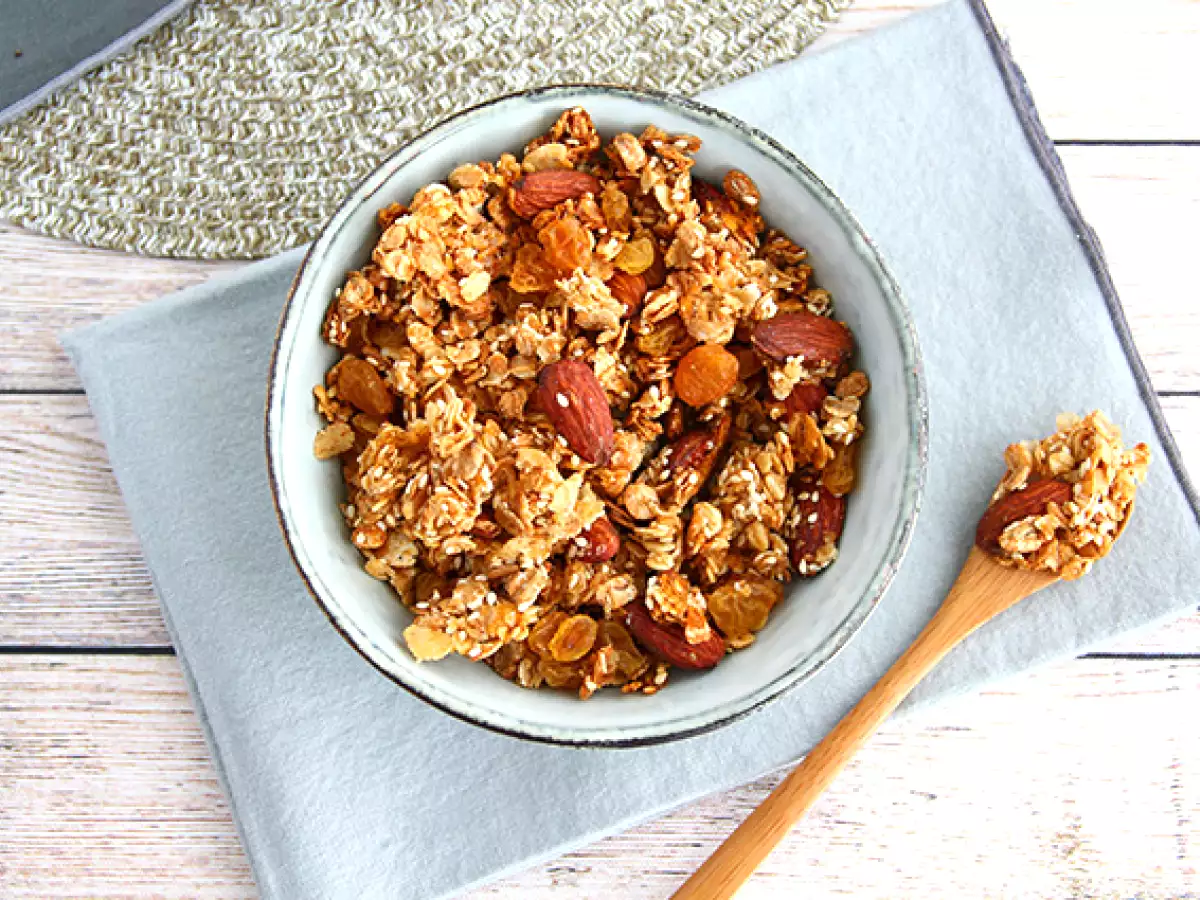
To start the day full of energy, enjoy this easy homemade muesli for breakfast. It's also perfect for a snack, helping you recharge before a workout! Add your favorite ingredients and vary the flavors :-) Nuts, dried fruit, chocolate, coconut flakes......
The pitfall of resource-intensive versions
Today, the dairy aisle features a mix of plain yogurts, Greek-style products, dairy desserts, flavored preparations, and recipes with fruit purees or other additions.
A product can therefore retain the image of a dairy product while containing more cream or sugar than a plain version. ANSES also distinguishes several categories based on fat content and the presence of sugar.
If your goal is to compare two everyday dairy products, it’s best to start with two plain versions. You can then add fruit, seeds, or other toppings yourself.
A product can therefore retain the image of a dairy product while containing more cream or sugar than a plain version. ANSES also distinguishes several categories based on fat content and the presence of sugar.
If your goal is to compare two everyday dairy products, it’s best to start with two plain versions. You can then add fruit, seeds, or other toppings yourself.
High-protein Greek yogurt or low-fat cottage cheese: both can be a good choice
In practice, high-protein Greek yogurt may be a good choice for someone who enjoys a thick texture and is looking for a filling breakfast. A lower-fat cottage cheese may be a good option for someone who wants to limit saturated fat intake.
But these examples aren’t universal rules: you need to check the specific product. A Greek yogurt may be higher in fat than cottage cheese, while a higher-fat cottage cheese may exceed certain yogurts in this regard.
The right choice is therefore the one that fits your overall diet, your appetite, and the actual composition of the container.
But these examples aren’t universal rules: you need to check the specific product. A Greek yogurt may be higher in fat than cottage cheese, while a higher-fat cottage cheese may exceed certain yogurts in this regard.
The right choice is therefore the one that fits your overall diet, your appetite, and the actual composition of the container.
If you prepare your breakfast the night before, the base can remain the same
A bowl made with rolled oats, fruit, and plain dairy can be made with either thick yogurt or fromage blanc, depending on what you have in the fridge.
The advantage is that the quality of your breakfast then depends on several components—cereal, fruit, dairy, and toppings—rather than on finding the so-called “perfect” dairy product.
The advantage is that the quality of your breakfast then depends on several components—cereal, fruit, dairy, and toppings—rather than on finding the so-called “perfect” dairy product.
Overnight oats with red berries and chocolate, a healthy and filling breakfast!
Here's a breakfast that combines indulgence and balance: overnight oats with red berries and chocolate ! Prepared the night before in just a few minutes, this bowl will be waiting for you when you wake up, ready to enjoy. The rolled oats and chia...
The habit to keep in mind when you're at the grocery aisle
If you’re torn between Greek yogurt and fromage blanc, don’t start by wondering which one is supposed to be “better for your heart.”
Look at the protein, saturated fat, sugars, ingredients, and serving size. Compare similar products—ideally unsweetened ones—and then choose the one that fits best with the rest of your diet.
The name of the dairy product can give you an idea of its texture or how it’s made. It’s no substitute for the nutrition label.
Look at the protein, saturated fat, sugars, ingredients, and serving size. Compare similar products—ideally unsweetened ones—and then choose the one that fits best with the rest of your diet.
The name of the dairy product can give you an idea of its texture or how it’s made. It’s no substitute for the nutrition label.
 Adèle Peyches
Editorial manager who just can't wait for winter to enjoy fondue! Passionate about gastronomy and always on the lookout for new culinary gems, I first studied law before returning to my first love: the taste of good products and the joy of sharing around the table :)
Comments