How to cook green asparagus: when to grill, boil, steam and bake them
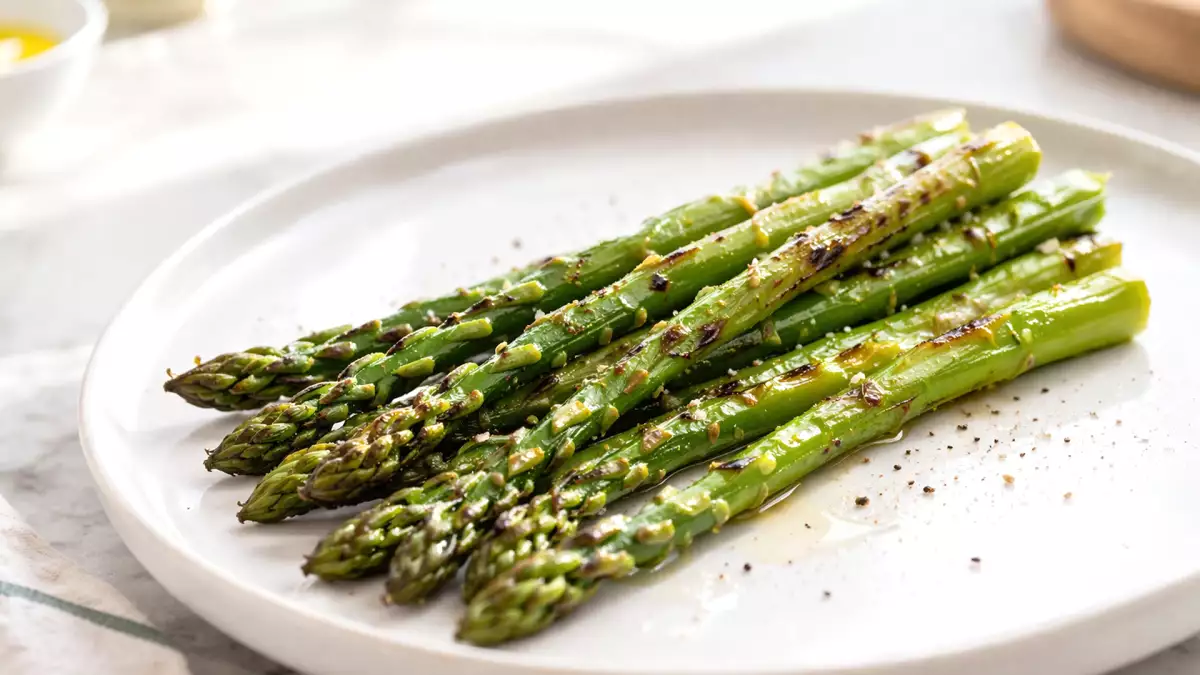
Green asparagus has a bad reputation among those who start cooking it at home. It is often hard at the base and overcooked at the tip; other times, it is soft, dull and without the grace it has when it is well done. It is not usually the product that fails, but the way it is treated. Or, more precisely, the idea that all green asparagus can be cooked in the same way.
This is not the case. Thin green asparagus need to be cooked quickly; thicker ones need a little more time or previous preparation. Before turning on the fire it is convenient to pay attention to three things: the thickness, the freshness and the fiber of the stalk. From that point on, the choice of method is no longer a matter of habit and becomes a decision that makes sense.
Before cooking: what to do
There is a basic gesture that improves any result whatever the type of cooking that we will apply afterwards: remove the woody part of the base. This can be done by bending the asparagus until it splits at its natural point or by cutting the dry end with a knife. In thicker specimens it is also worthwhile to slightly peel the lower part of the stem: this simple operation prevents the tip from remaining in its point while the base is still hard.
Washing them, drying them well and not starting with them cold from the fridge also helps, especially if they are going to be grilled or baked.
Grilled: the technique that best concentrates flavor
This is the most popular option, and with good reason. When the asparagus is fresh and of medium or fine caliber, the griddle allows browning the outside and maintaining a certain firmness on the inside, which is precisely one of the graces of this vegetable.
To make it work, a few things are necessary, but important: a very hot surface, a light film of oil and enough space for the asparagus to touch the pan or griddle directly. If they are crowded together, rather than browning, they will cook in their own moisture.
The good point is not the soft asparagus, but the one that offers some resistance when biting, with toasted areas and concentrated flavor. In thick pieces it can be good to cover them for a moment at the beginning or lower the heat slightly at the end so that the heat reaches the center without burning the surface.
Cooked: a useful technique, as long as it is not prolonged
Boiling green asparagus may sound unappealing to those who associate this technique with soft, overcooked vegetables. However, when cooked well, they are juicy, clean in flavor and very suitable for warm salads, vinaigrettesThey are very suitable for warm salads, vinaigrettes or dishes in which they will be served dressed.
Here the important thing is that the water boils already when the asparagus enters and that it is salted. The cooking should be brief. The time will depend a lot on the thickness, so it is convenient to watch them more than to trust a closed figure. In the thickest ones, the water helps to soften the stalk; in the very thin ones, on the other hand, the margin between being done and overdone is minimal.
If they are to be served cold, cooling them immediately helps to better fix the color and texture. It is also worth doing this if you want to give them only a partial cooking before finishing them later in a pan or grill.
Blanching: the prep step that gives you control
Blanching isn’t really a full cooking method, it’s a way to prep asparagus so you can finish it later. It means briefly boiling the asparagus, then cooling it quickly to stop the cooking process. This technique is especially useful for thick stalks, for pieces you plan to sauté or marinate afterward, or when you want to get ahead and finish the dish later.
The advantage is simple: it takes away the raw edge inside while giving you control for a quick, precise finish. That’s why it’s so common in professional kitchens. What you want to avoid is overdoing it at this stage. If the asparagus comes out already too soft, any further cooking will just reheat it, not improve it.
Steaming: clean and precise cooking
Steaming is less present in domestic cooking than it deserves. Done well, it leaves asparagus juicy, brightly colored and clean tasting. It is a particularly suitable technique when the raw material is good and there is no need to cover them with too heavy flavors.
Its main advantage is that it cooks without diluting the flavor with water. The disadvantage, for some palates, is that it does not develop the toasted flavors that do appear in the grill or oven.
That is why it is usually grateful for light dressings that give contrast: olive oil, a vinaigrette or accompanied by an egg. It does not seek intensity by accumulation, but precision.
Baked: practical when there is a lot of quantity
It is not usually the first technique that comes to mind when cooking fresh green asparagus, but it is very useful when you have to cook a large quantity at a time. The oven concentrates flavor, slightly dries out the surface and can leave very nice golden brown tips .
It is best to place them in a single layer, season them sparingly and keep a close eye on the time. If too much fat or moisture is added, they lose their ability to brown. Very thin asparagus are more likely to dry out, so the oven usually favors medium or thick asparagus. It also works best when the pieces are of a similar size, as this makes cooking more even.
Raw: only in specific cases
Green asparagus can be eaten raw, yes, but not always or in any way. This possibility is usually reserved for very fresh, tender and fine specimens, even better if they are cut in thin slices or strips. This way they are more palatable and show a fresher vegetable profile, with a sweet touch.
It is not the best entry point for those who have never cooked asparagus, because it requires very good raw material and leaves less room for correction. If the asparagus has fiber or is a little too fresh, the texture can easily become leathery. Even so, if well prepared, it can work very well in salads.
Stir-fries: the most flexible way for everyday cooking
When asparagus are going to be part of a pasta, a rice or risotto, a stir-fry or a quick vegetable stew, the most sensible thing to do is to chop them up and sauté them. This method is easy to control and very useful in everyday cooking.
Here it is convenient to separate tips and stems, or at least keep in mind that they do not need the same time. The lower part of the stems needs a few minutes more; the buds, on the other hand, are cooked immediately. It does not have the brilliance of whole asparagus served as is, but it does have a lot of culinary logic.
And what do you do with canned asparagus?
How are you going to cook them?
In the end, cooking green asparagus well does not consist in learning a fixed formula, but in first looking at the product and then deciding. The grill concentrates them; water makes them more tender; steam treats them gently; the oven resolves the quantities well. Understanding this is what allows us to stop cooking them by inertia and start cooking them judiciously.
 Patricia González
Comments