That whitish film on plums: why it looks like dust and what it actually means for freshness
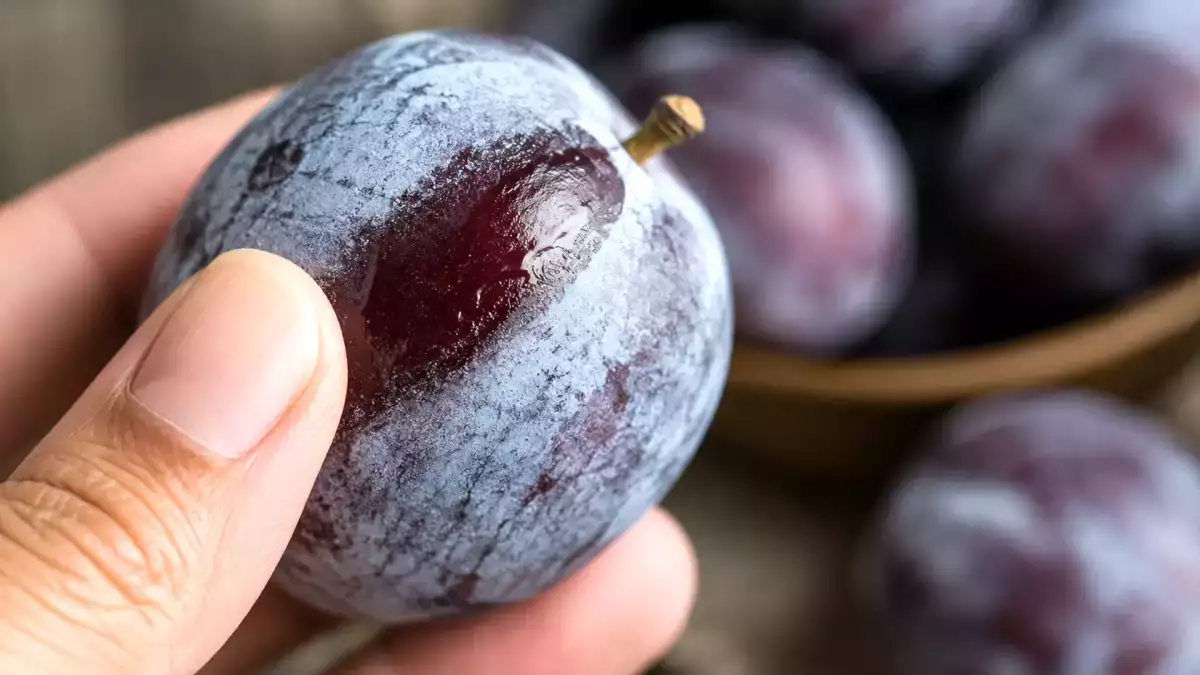
There are fruits that arrive at the table looking as if they’ve been through a cloud. Plums (especially the purple and bluish ones) are among the most suspicious: smooth skin, a beautiful color, and, to top it off, that whitish film that sticks to your fingers when you touch them. The scene plays out again in the kitchen, in the grocery bag, or by the pool, when someone picks up a plum, looks at it warily, and asks: “Do I have to remove this? Can I eat it? Is it mold?”
What is the white coating on plums and what is it for?
What we see on many plums is known as bloom, a natural waxy film that the fruit itself produces on its surface. It is not a foreign substance nor an automatic sign of poor quality. It is part of the skin.
This extremely thin, matte, and slightly powdery layer acts as a natural barrier against various factors:
- water loss;
- external moisture;
- friction during handling;
- light;
- contact with other surfaces.
In a way, it acts as a small natural shield between the fruit and its surroundings.
Why do some plums have a whiter skin than others?
That layer is also found on other fruits, such as grapes and blueberries, and explains why some pieces have a velvety, almost powdery appearance. It’s more noticeable on dark plums because the contrast with the skin is greater.
Just running a finger over it leaves a shinier mark, as if we’d wiped a fogged-up window. In reality, what we’ve done is displace or alter that surface layer. That’s why some plums look more matte and others more glossy: it’s not always a matter of freshness, but also of variety, handling, friction, and prior washing.
Should you wash plums even though that coating is natural?
We need to be careful here. Just because the bloom is natural doesn’t mean we should eat the fruit exactly as it comes from the store. A plum’s skin has been exposed to fields, crates, storage rooms, transportation, hands, and various surfaces. It may carry dust, traces of soil, or microorganisms from all that handling. That’s why the sensible recommendation remains simple: wash them under running water right before eating, rubbing gently with your fingers, and dry them with paper towels or a clean cloth. No soap is needed.
It’s also not a good idea to wash plums when you get home if you’re not going to eat them right away: adding moisture before storing them can cause them to spoil sooner. It’s better to store them unwashed and rinse them just before eating.
How to Tell the Difference Between the Natural White Coating and Mold on Plums
The big question, however, is another: How can we tell the difference between that natural film and something we shouldn't eat?
The bloom has a fine, uniform, dry, and matte appearance. It rubs off easily and is odorless. Mold, on the other hand, usually appears as a fuzzy or cottony patch that’s more irregular, often around a crack, a dent, or a soft spot.
If the piece is damp, sunken, or sticky, if it shows signs of fermentation, or if it gives off a strange odor, it’s best to discard it.
What that whitish film can tell you about how the fruit was handled
Nor should the absence of a powdery film be mistaken for inferior fruit. Some plums appear shinier because they have been handled more, have been rubbed during transport, or have undergone washing or brushing processes. Others retain that film better because they have been handled less.
The bloom can provide a clue about surface handling, but it is not a guarantee of freshness or food safety.
The best approach is to look at the fruit as a whole: firm skin, no deep bruises, no suspicious soft spots, no unusual moisture, and a clean aroma.
One reason not to view mate plums with suspicion
And perhaps that is the beauty of this tiny detail. That dust that we so often interpret as dirt is, in reality, one of the fruit’s most discreet ways of protecting itself. A plum doesn’t need to be as shiny as a storefront apple to be in good condition. Sometimes, that slightly powdery appearance actually tells us the opposite: that it still retains part of its natural coating.
So the next time a plum leaves a white mark on your fingers, there’s no need to look at it with suspicion. Just understand what it is, wash it properly, and enjoy it.
 Patricia González
Comments