Mozzarella vs burrata vs stracciatella: how to spot the differences and lift your recipes with ease
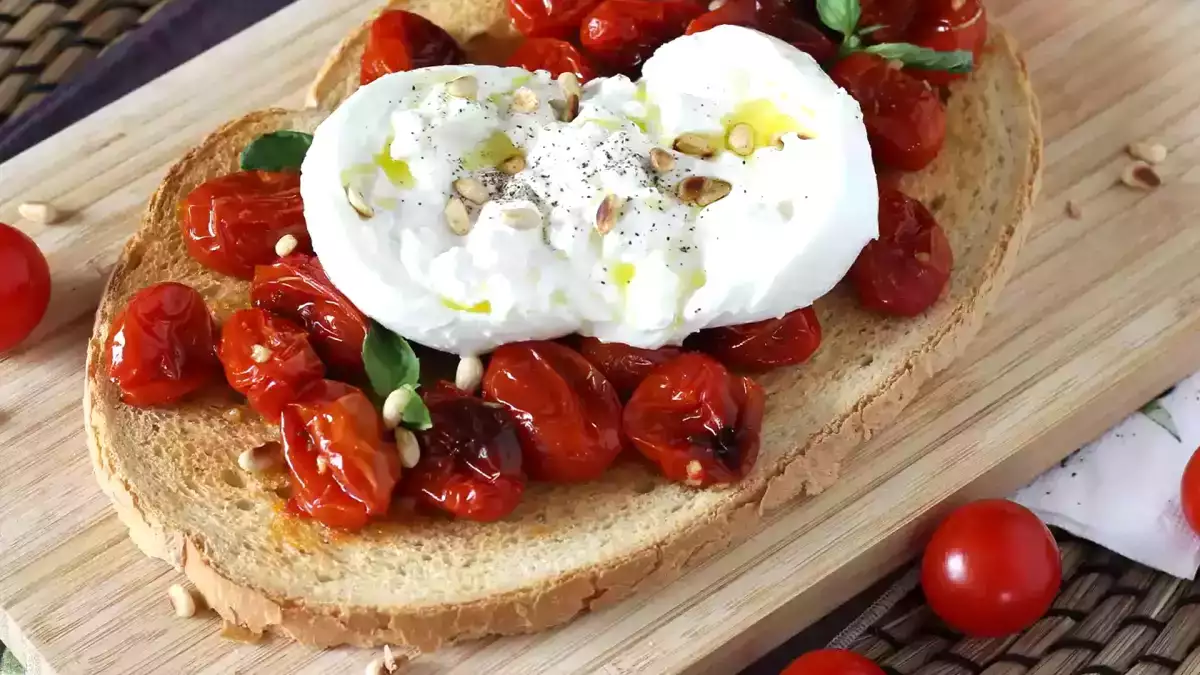
There are products that have made their way from Italian menus into our refrigerators almost without us noticing. Mozzarella, burrata, and stracciatella are part of that small group of ingredients that seem to work in every dish: a salad, pasta, pizza, bruschetta... They’re white, fresh, dairy-based, and incredibly photogenic. They look alike, but they’re not the same. And understanding their differences significantly changes how we buy, serve, and use them in our recipes.
Because it’s not enough to know that they all belong to the world of Italian fresh cheeses. Each has a distinct texture, structure, and behavior in the kitchen. It’s worth knowing when to choose mozzarella, in which dishes it’s worth opening a burrata, and why stracciatella can be much more than just the creamy center of another cheese. Let’s see what each one is, how they differ, and how to make the most of them without treating them as if they were interchangeable.
Mozzarella: the foundation of everything
Mozzarella is the starting point. It is made using the pasta filata technique, a process in which the curd is worked with hot water until it becomes elastic and moldable. This results in those round, smooth, and moist pieces that are usually stored in whey or brine to maintain their freshness.
It can be made with buffalo milk or cow’s milk.
- Buffalo mozzarella, especially Mozzarella di Bufala Campana DOP, has a more pronounced flavor, a juicier texture, and a very recognizable milky character.
- The cow’s milk variety, known in Italy as fior di latte, is milder and usually works very well in everyday cooking.
Good mozzarella shouldn’t be a rubbery ball or a cheese without character. It should offer resistance when cut, moisture on the inside, and a clean, fresh, slightly tangy flavor. That’s why it pairs so well with tomatoes, basil, extra virgin olive oil, or roasted vegetables. It also withstands heat better than burrata or stracciatella, though not all mozzarellas melt the same way: the moister ones may release liquid if used directly on pizza or baked pasta.

Got some tortillas lying around and don't know what to do with them? Turn them into delicious, easy, budget-friendly quiches ! With just a few eggs, milk, a little mozzarella and bacon, you can make crispy, irresistibly delicious mini-quiches....
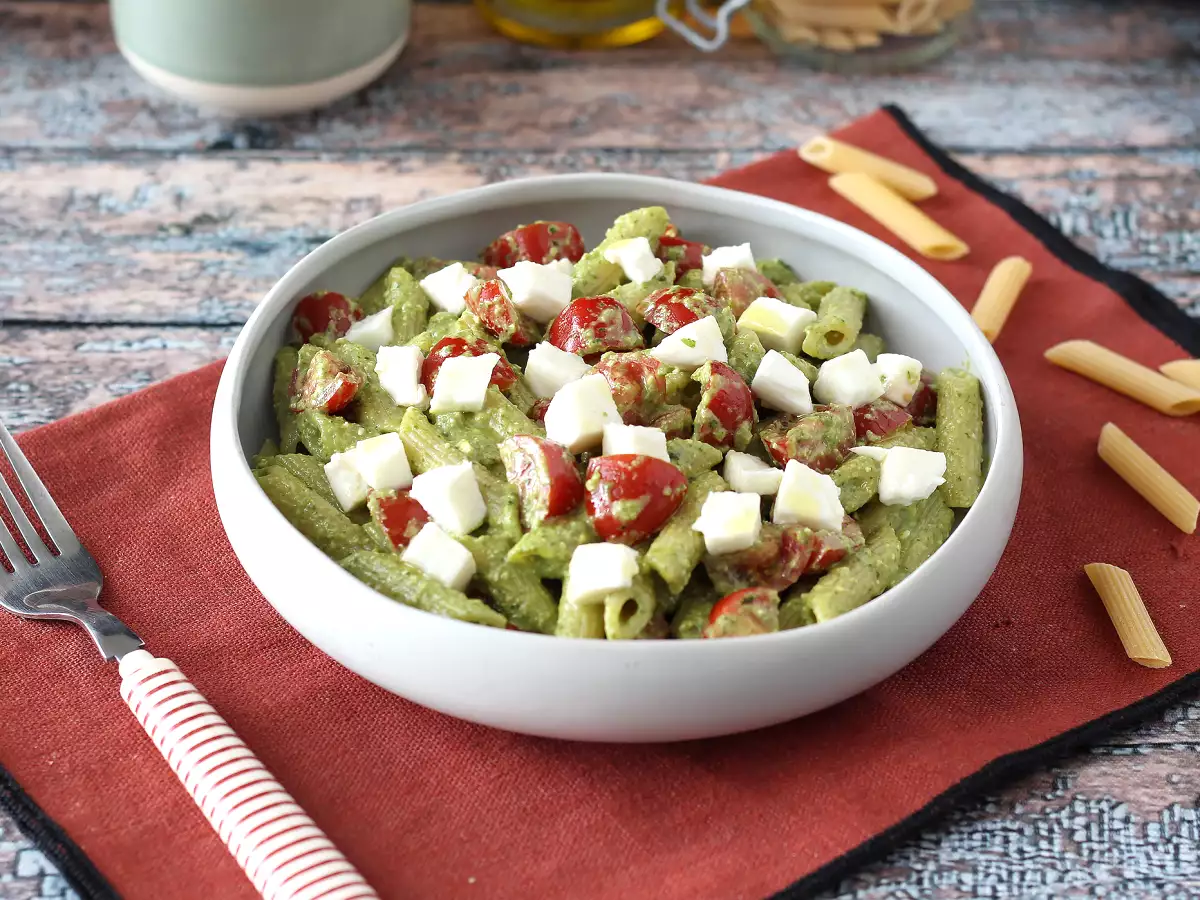
The first time I tried this cold pasta with arugula pesto, cherry tomatoes and mozzarella was during an impromptu lunch on the terrace with friends in the middle of summer. Just a few ingredients , no desire to cook and a craving for something...
Burrata: a creamy surprise
Burrata plays with appearances. On the outside, it resembles mozzarella, but its interior takes it to a whole new level. It consists of a shell of stretched curd that encloses stracciatella—that is,strips of cheese mixed with cream. That structure explains its appeal: it’s served whole, cut at the table, and opened like a small pouch of cream.
Its origins are linked to Apulia, in southern Italy, and Burrata di Andria holds a Protected Geographical Indication. It began as an ingenious way to use up leftover stretched curd and cream, but today it has become one of the most sought-after Italian fresh cheeses outside of Italy.
Burrata is creamier, more enveloping, and more delicate than mozzarella. It also doesn’t hold up well to prolonged cooking. Its best moment usually comes at the end: atop a plate of pasta, with seasoned tomatoes, roasted eggplant, pesto, grilled zucchini, or simply with bread and olive oil. Overheating it can ruin precisely what makes it special: that creamy center that oozes out when you cut into it.
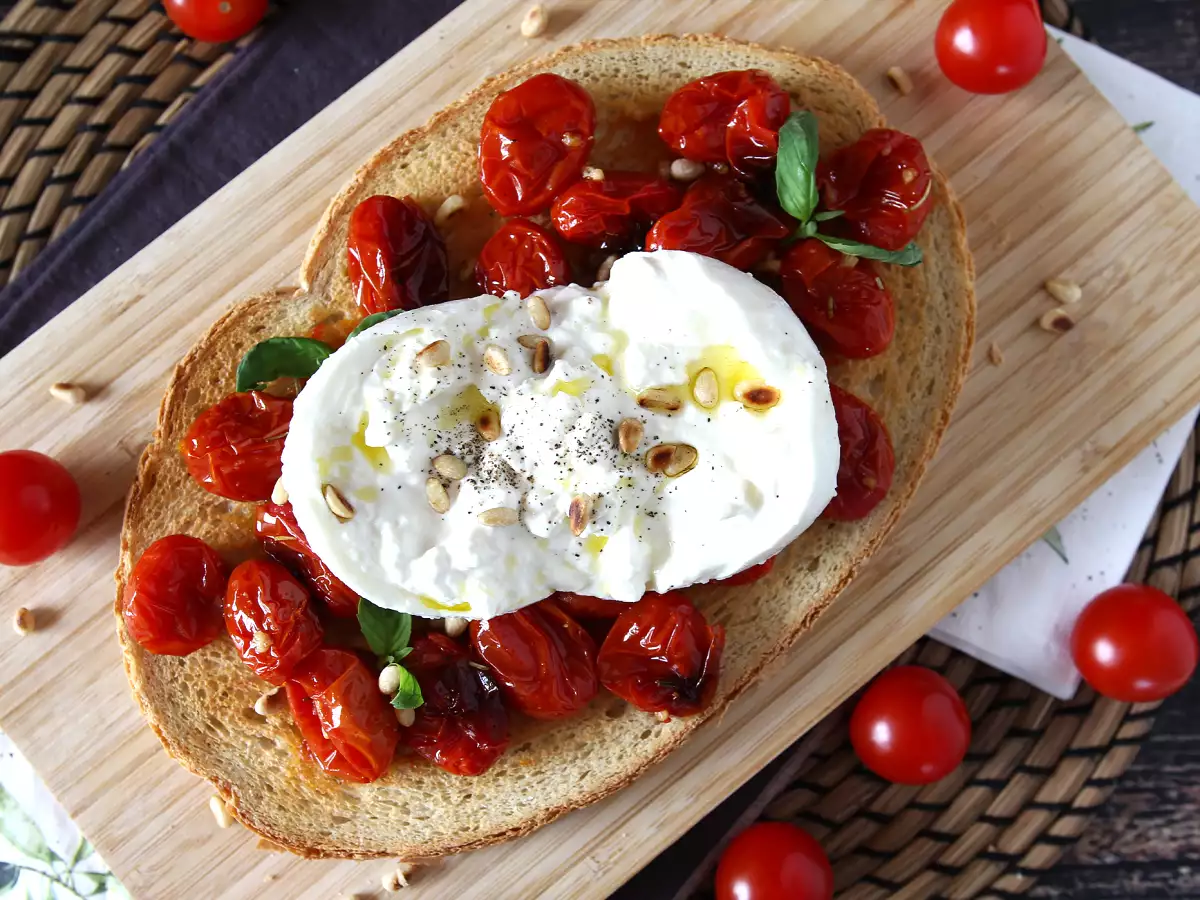
Our favorite meal when the weather is hot? A nice, crispy bruschetta with a generous topping ;-) Here, we topped it with roasted tomatoes and extra-creamy burrata. Add a few basil leaves and you'll feel like you're in Italy ;-) Enjoy the best toast in...
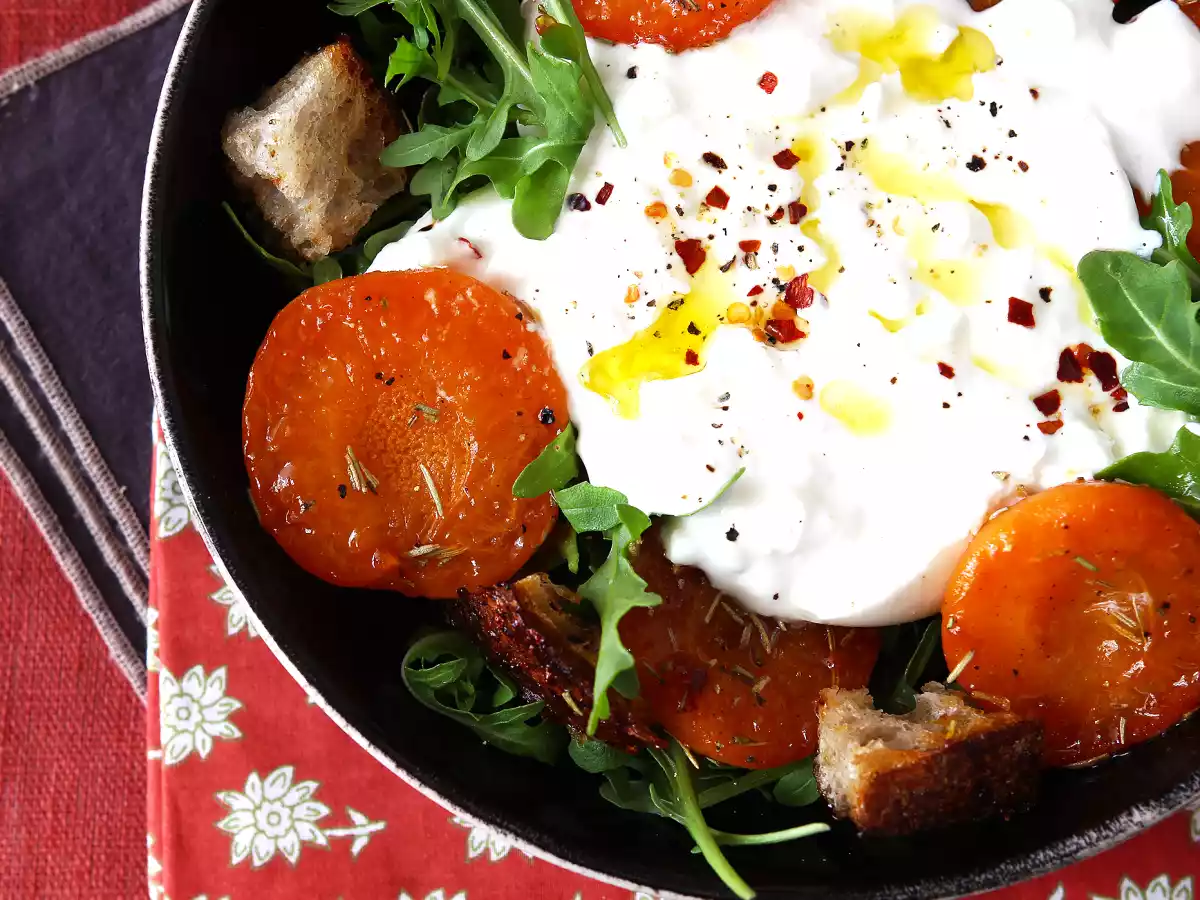
Looking for a fresh, fruity, indulgent salad with a twist? Try this salad of roasted apricots, arugula and burrata : a perfectly balanced sweet-and-savory combination! The apricots, lightly caramelized with honey and rosemary, add a soft, fragrant...
Stracciatella: the filling takes center stage
Stracciatella is the easiest to misunderstand because its name is used for several things in Italy: an ice cream with chocolate chips, a Roman egg soup, and this creamy fresh cheese. In this case, we’re talking about strands of spun cheese mixed with cream. Its name comes from the idea of “tearing” or “fraying,” a fairly accurate description of its texture.
For a long time, it has been understood primarily as the filling for burrata, but it is increasingly sold separately. And it makes perfect sense: it’s easier to use, requires no cutting or presentation, and allows you to add creaminess by the spoonful.
It works very well on focaccia, a vegetable soup, a tomato salad, a pizza fresh out of the oven, or warm pasta. It doesn’t aim for the theatrical effect of burrata, but rather an immediate creaminess that’s more evenly distributed and easier to incorporate.
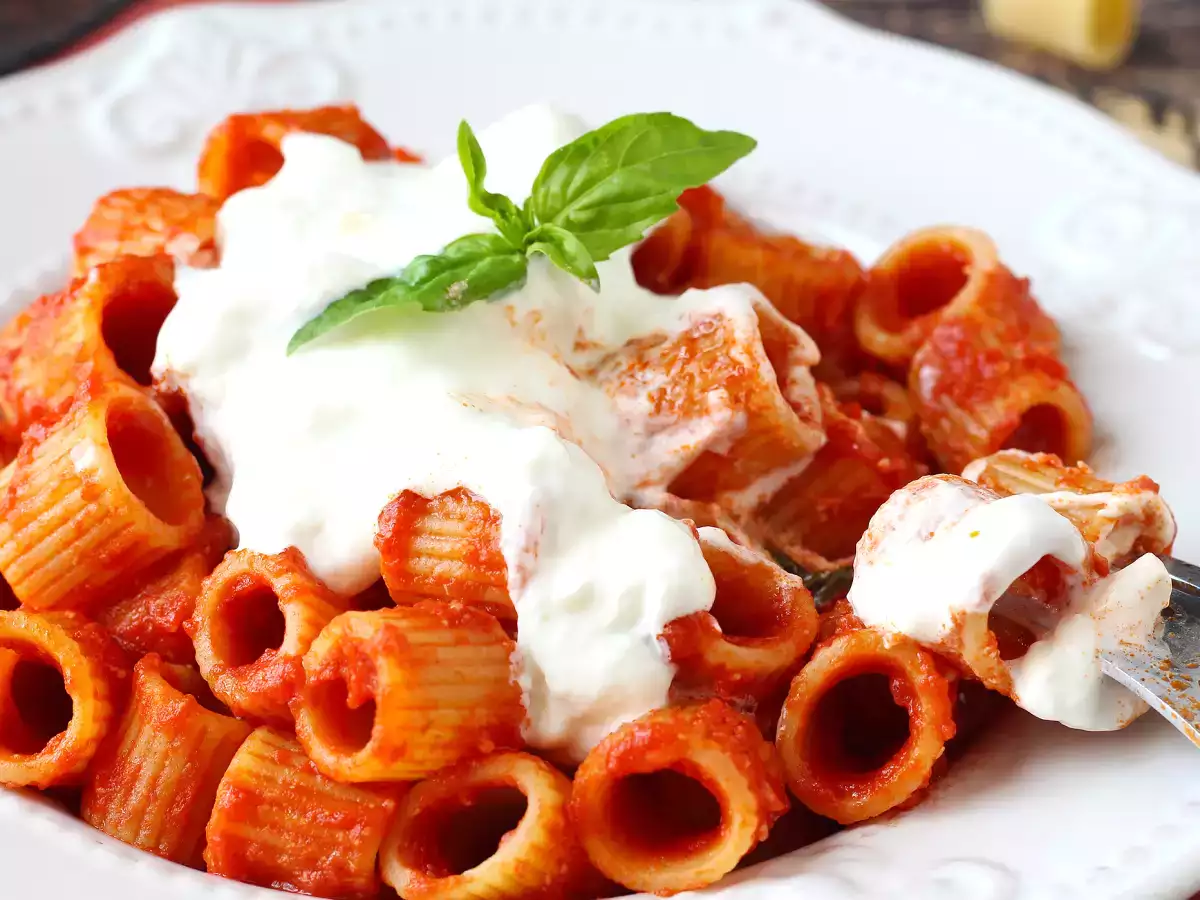
This pasta with stracciatella is a simple, irresistible main course that brings together the flavor of tomato sauce, the aroma of fresh basil, and the softness of fresh stracciatella . It’s a quick recipe, ready in just over 10 minutes , and...
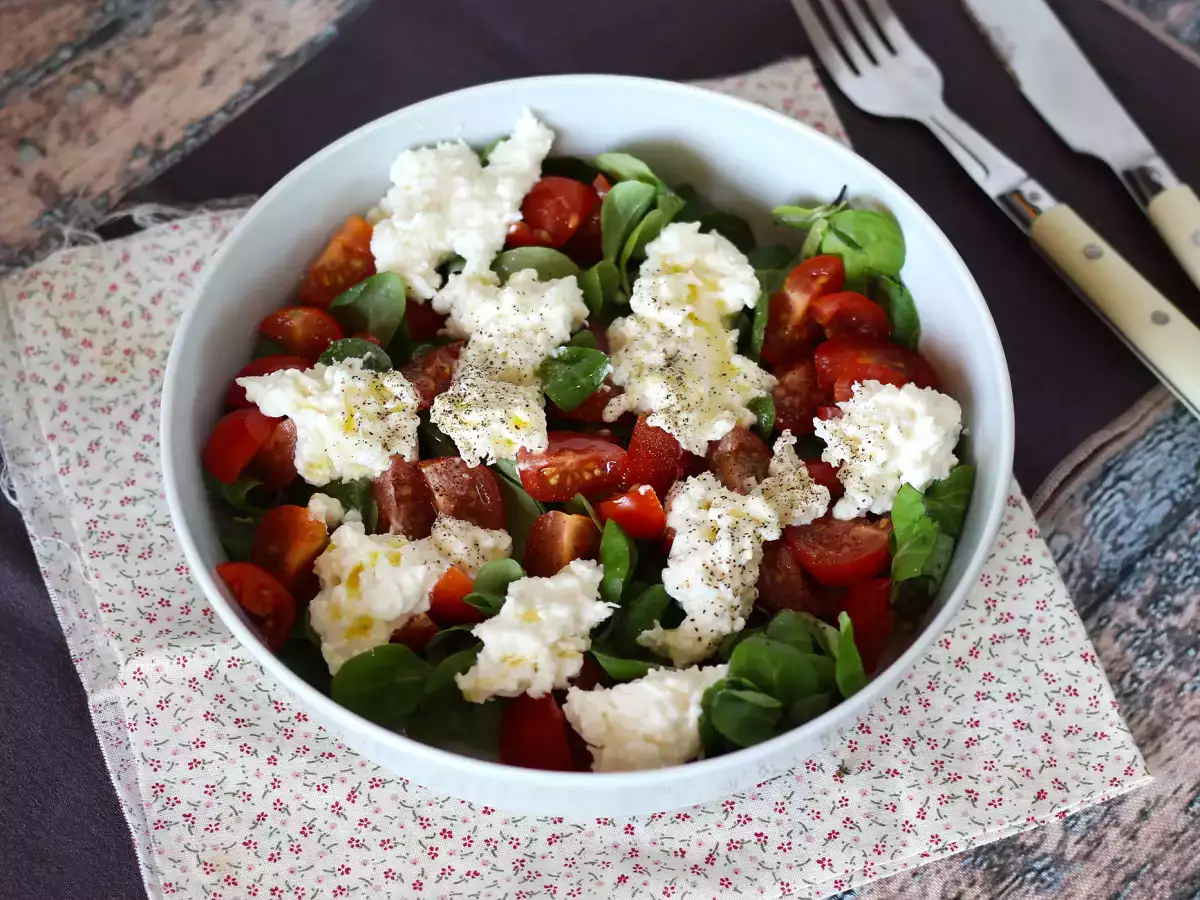
Who hasn’t dreamed of adding a creamy burrata to their salad ? This ingredient has a way of elevating any recipe. But let’s admit it: the price often makes us hesitate... Not anymore, though, because we’re showing you how to make your own burrata at...
How to choose each one without making a mistake
The choice depends less on trends and more on how you plan to use it. For a caprese salad, a simple salad, or a pizza, mozzarella remains the most logical choice. For a dish that needs visual impact and a creamy texture when it breaks apart, burrata has the edge. To top off recipes without adding a whole piece of cheese, stracciatella is probably the most practical choice.
It’s also worth considering the temperature. These cheeses are best enjoyed when not ice-cold. Taking them out a few minutes before serving allows their flavor and texture to shine through. In all cases, these are fresh and delicate products, so it’s best to buy them frequently, store them properly in the refrigerator, and consume them soon after opening.
Similar, yes; interchangeable, no
Mozzarella, burrata, and stracciatella share a common origin, color, and a certain sense of dairy-based indulgence. But they shouldn’t be treated as if they were variations of the same ingredient. Mozzarella provides structure and freshness; burrata, visual appeal and creaminess; stracciatella, immediate richness and spreadability
Perhaps that is why they have conquered so many tables: they require no grand speeches or lengthy preparations. They ask only for something that Italian cuisine has always understood very well: good ingredients, minimal intervention, and just the right touch to bring them to the table at their peak.
 Patricia González
Comments